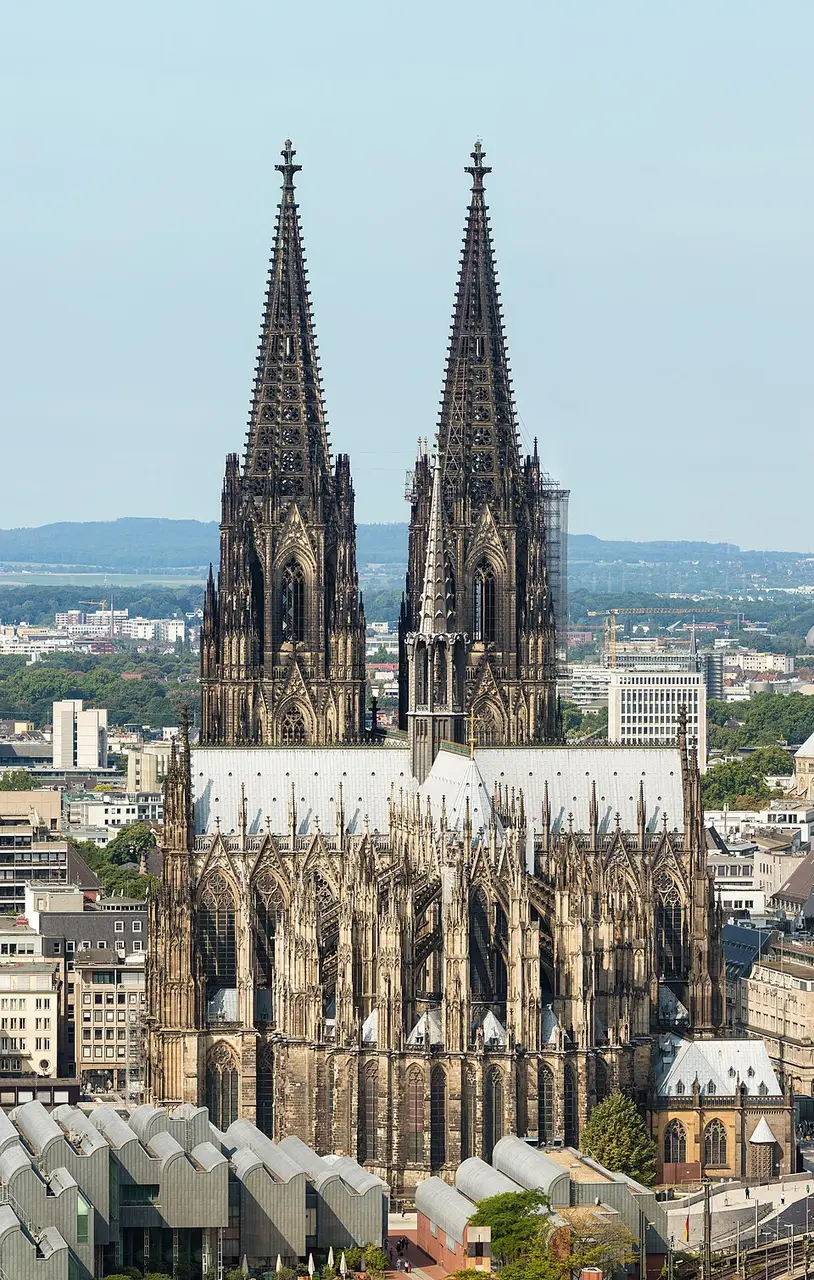
About Kölner Domturm
Cologne Cathedral, officially the High Cathedral Church of Cologne (Hohe Domkirche zu Köln), is one of the most important Roman Catholic churches in the world and the cathedral of the Archdiocese of Cologne. As the metropolitan church of the Church Province of Cologne and dedicated to the Apostle Peter, it houses the relics of the Three Kings, which makes it one of the most important pilgrimage sites in Europe. At 157.22 meters (516 feet) tall, it ranks among the four tallest churches in the world and is the second-tallest church in Germany after Ulm Minster. Art historians often call its architecture the "perfect cathedral" because it has a unified, well-balanced Gothic design.
The history of the site reaches far back beyond today's Gothic building. As early as late antiquity, around 313, the first Christians gathered in private houses on the northern edge of the Roman city, near the city wall of the time. The first bishop's church, which served as a cathedral, was later built on this spot. Archaeological finds beneath the present choir, such as a baptismal pool from the 5th century that you can walk into, testify to the early Christian presence. In the 6th century, Merovingian kings built a new, larger church here, which also served as a burial place for members of the royal family.
In the Carolingian period, the so-called Hildebold Cathedral was built on Cathedral Hill and consecrated in 870. This basilica with two choirs served as an architectural model for numerous other churches in the Holy Roman Empire and was regarded as the "St. Peter's of the North," underscoring Cologne's claim to a special closeness to the Roman Church. The decisive turning point for today's cathedral came in 1164, when Archbishop Rainald of Dassel brought the relics of the Three Kings from Milan to Cologne. These relics made Cologne an international pilgrimage destination and called for a more worthy place to keep them.
Construction of the Gothic cathedral began on August 15, 1248, on the orders of Archbishop Konrad von Hochstaden. The design came from master builder Gerhard, who took his cue from the French cathedrals, especially Amiens Cathedral. The choir was designed with a ring of seven chapels, whose shape was derived from a regular twelve-sided polygon. The main building material was trachyte from the Siebengebirge hills. Work progressed quickly, so that the ring of chapels was completed up to the vaulting as early as 1265 and could be used as a burial place.
From 1271, completion of the high choir was in the hands of master builder Arnold, who gave the building a unified form that soars upward. His successors, including Johannes von Köln, turned the interior into a complex total work of art meant to reflect theological and mystical ideas of the "Heavenly Jerusalem." A highlight of this phase was the installation of the 17.15-meter-high (56-foot) windows in the upper choir between 1304 and 1311. These High Gothic stained-glass windows show 48 kings and have been largely preserved to this day. They give the space a delicate, luminous hue and are considered one of the largest surviving stained-glass cycles of the Middle Ages.
After the choir was consecrated in 1322, the Shrine of the Three Kings was moved into the new building. The ambulatory was designed as a pilgrimage route that led past the relics and the tombs of the archbishops. The choir chapels were decorated with wall paintings and brilliant stained-glass windows to convey the saints to pilgrims in images. In the 14th century, work began on the south aisles, which were built as a two-aisled hall and served temporarily as a parish church. At the same time, construction of the southwest tower began, with its foundation laid around 1360.
Construction of the west facade and the towers continued in the 14th and 15th centuries. Master builder Michael of Savoy planned an imposing facade based on a famous facade drawing. In 1437, the south tower reached a height of 59 meters (194 feet), and the first large bells were hung in it. In the second half of the 15th century, work focused on making the cathedral's entire floor area usable by building the north aisles and stretching temporary roofs over the naves. The foundation stone for the north tower was laid around 1500.
Despite this progress, construction largely came to a halt after 1528. The Gothic style no longer suited the spirit of the Renaissance, and the Reformation led to a decline in pilgrim traffic and, with it, funding. For almost 300 years, work stood still, while the cathedral crane atop the stump of the south tower became a symbol of an unfinished city. In the 17th and 18th centuries, the interior was redesigned in the Baroque style, which led to the loss of medieval furnishings. Gothic window panes were removed, stonework was whitewashed, and new altars were installed.
The turn toward completion came in the 19th century, when the cathedral was elevated to a national symbol for Germany. Writers and artists such as Goethe and Schlegel celebrated the building, and the art dealer Sulpiz Boisserée campaigned intensively for its completion. The Prussian crown under Frederick William IV took over responsibility for the construction costs, and the foundation stone for the resumed work was laid in 1842. Master builder Ernst Friedrich Zwirner developed plans that matched the Romantic ideal and had the cathedral completed according to the original medieval design, including the flying buttresses and the fully articulated transept facades.
Modern construction methods were used for the completion, such as a wrought-iron roof frame that was the largest iron structure in the world until the Eiffel Tower was built. Financing came from a mix of state funds and private donations, in particular through the Central Cathedral Building Association and a cathedral lottery. On October 15, 1880, the official completion of the cathedral was celebrated, with the towers reaching their present record height. After more than 600 years, the construction was finished, although smaller expansion work continued into the 20th century.
In World War II, the cathedral was badly damaged by about 70 bomb hits, with nine vaults destroyed and six severely damaged. Even so, the building rose seemingly unscathed from the ruins of the city, making it an emotional symbol of the population's will to live. Restoration lasted into the 1950s, and archaeological excavations beneath the cathedral, which began in 1946, yielded new insights into the earlier buildings. Today, Cologne Cathedral is a UNESCO World Heritage Site and one of the most visited attractions in Germany, where you can experience the majestic architecture, the precious relics, and the history of a place that shaped the city's religious and cultural life for centuries.
At a glance
- Category
- Sight › Historic sites
- Rating
- no reviews yet · write a review
- Address
- —
Cologne, Germany - District
- Altstadt-Nord
- Phone
- —
- Website
- —
- —
- Coordinates
- 50.94119° N · 6.95720° E
- Data quality
- confidence 0.77
- Identifier
- ID 7920e54e-086…
Part of the tour
Cologne in One Day: Cathedral, Old Town, and Rhine Views →Location & surroundings
Toggle layersRatings & comments
none yetNear Kölner Domturm
closest 5 per category · 2 kmSights
Museums
Hotels
More:Historic sites in Cologne (173)Sights in Altstadt-Nord (59)All sights in Cologne (212)
297 places within 2 km loaded.
Don't miss in Cologne
All sights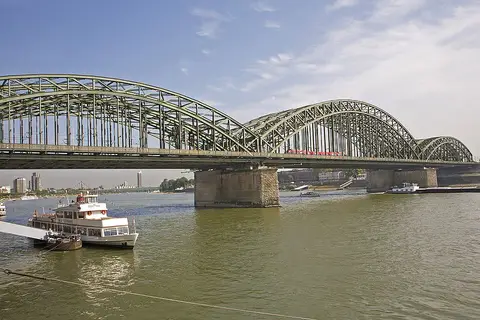 Historic sites01
Hohenzollernbrücke
Trankgasse 20 · Cologne● Website● Phone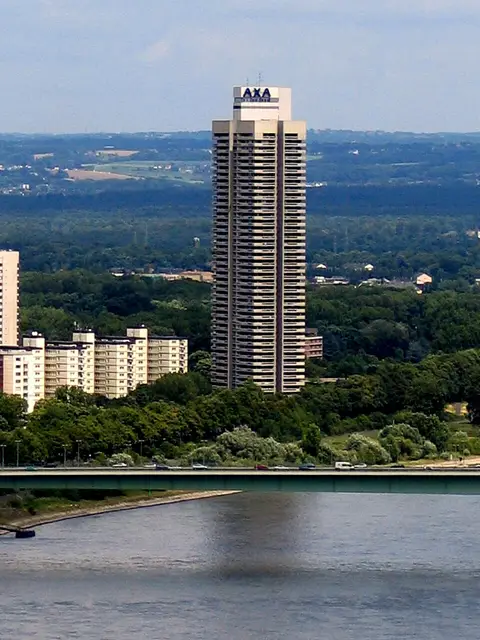 Historic sites02
Colonia-Haus
An d. Schanz 2 · Cologne● Website● Phone Monuments03
Memorial to Gay and Lesbian Victims of National Socialism
· Cologne○ Website● Phone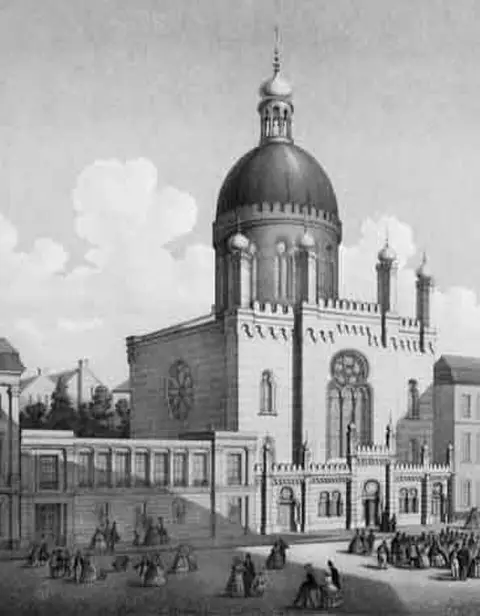 Historic sites04
You need a free account to leave reviews and photos – that keeps comments genuine and lets you edit them later.