Museum · Art museums
Wallraf-Richartz-Museum & Fondation Corboud
Obenmarspforten 40, 50667 Cologne
About Wallraf-Richartz-Museum & Fondation Corboud
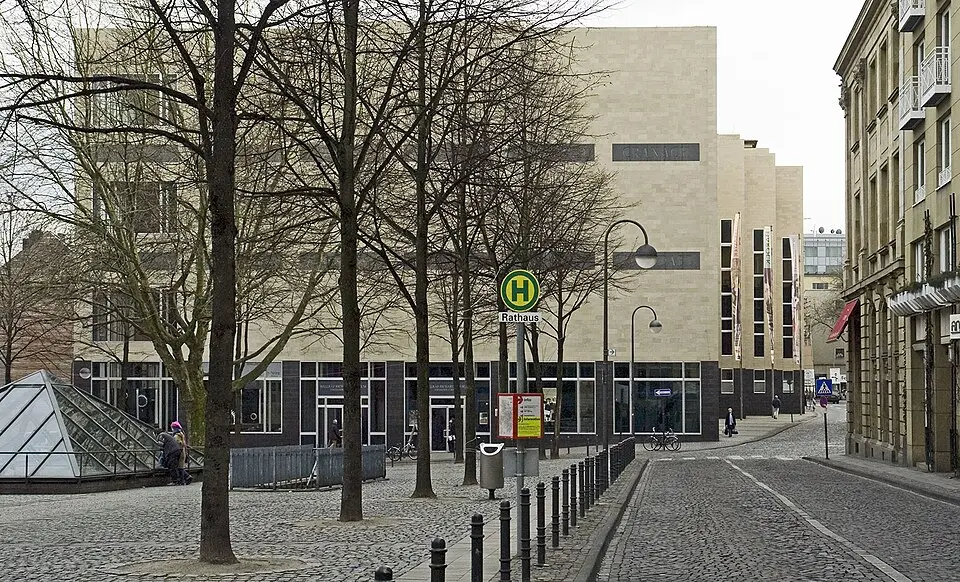
The Wallraf-Richartz-Museum & Fondation Corboud is one of Germany's most important galleries of classical painting and the oldest museum in the city of Cologne. Housed in a modern building complex dating from 2001, it holds one of the world's most extensive collections of medieval painting, with a special focus on the Cologne School of painters. The museum also presents a representative selection of artworks from the 16th to the 19th century. Thanks to the affiliated Fondation Corboud, it also has the largest collection of Impressionist and Neo-Impressionist art in Germany. This holding is complemented by a significant Graphic Collection of more than 75,000 sheets ranging from the Middle Ages to the 20th century. Marcus Dekiert has directed the museum since 2013, but it has been closed for several years since early August 2026 for a general renovation and the construction of an extension.
The museum's history goes back to 1824, when the Cologne canon Ferdinand Franz Wallraf bequeathed his extensive collection to the city. During the secularization, Wallraf had collected numerous altarpieces from desecrated churches, monasteries, and religious foundations, which form the core of today's medieval department. His will of May 1818 stipulated that the collection should remain in Cologne permanently and serve the benefit of art and science. Three years after his death, part of the works was opened to the public in 1827 in rooms of the former "Kölner Hof." This interim location, known as the Wallrafianum, was initially curated by Matthias Joseph de Noël, a friend of Wallraf's, who managed the collection until 1842.
The wish for a museum building of its own was realized by the Cologne merchant Johann Heinrich Richartz, who provided a generous endowment for a new building in 1851. After the ceremonial laying of the foundation stone in 1855 in the presence of the Prussian king Frederick William IV, the architects Josef Felten, Julius Carl Raschdorff, and Friedrich August Stüler erected a building in the English Neo-Gothic style. The museum opened on July 1, 1861, as the Wallraf-Richartz-Museum. In 1900, the city of Cologne honored the two initiators, Wallraf and Richartz, with two statues. The building served the museum until it was destroyed in an air raid during the so-called Peter and Paul Night on June 28 and 29, 1943.
After World War II, a new museum designed by the architects Rudolf Schwarz and Josef Bernard opened on the old site in 1957. This so-called Schwarz-Bernard building, however, offered too little space, which fueled discussions about a larger new building elsewhere. In particular, the takeover of Peter Ludwig's art collection in 1968 pressed for a solution. In 1986, a new building complex between the cathedral and the Rhine opened, uniting the Wallraf-Richartz-Museum, the newly founded Museum Ludwig, and the Cologne Philharmonic under one roof. Since the collection kept growing, however, the city council decided in 1995 to build a new home for the Wallraf-Richartz-Museum in the city center.
The design by the Cologne architect Oswald Mathias Ungers won the architectural competition in 1996. The new, cube-shaped building between City Hall and Alt St. Alban opened on January 19, 2001. Its exhibition space of 3,500 square meters provides room for graphic art and painting from the Middle Ages to the 19th century, while 800 square meters are reserved for special exhibitions. That same year, the Swiss collector Gérard Corboud and his wife Marisol gave the museum numerous paintings from their private foundation as a permanent loan, whereupon the museum's name was extended. The slogan "Wallraf das Museum" was introduced in 2006.
The collection of medieval painting is unique worldwide, since, unlike in other cities, Cologne suffered neither major fires nor iconoclastic outbreaks that could have destroyed such holdings. Alongside works by Stefan Lochner, numerous masters of the Cologne School are represented, including the Master of St. Veronica, the Master of St. Lawrence, and the Master of the St. George Legend. These panel paintings attest to the great craftsmanship of the period and are a central attraction for visitors. The Baroque department offers a cross-section of art production since about 1550, with an emphasis on painting from the northern Netherlands. Major works by Rembrandt, Peter Paul Rubens, Anthony van Dyck, and François Boucher can be found here.
The department for 19th-century art illustrates the development from the German-Romans through Romanticism to the Nazarenes. Works by Caspar David Friedrich, Carl Blechen, and Gerhard von Kügelgen are on view, as is an extensive collection by the Cologne painter Wilhelm Leibl. The museum also shows works by Gustave Courbet and Max Liebermann as well as representatives of Symbolism such as Arnold Böcklin, Franz von Stuck, and Edvard Munch. Sculptures by artists such as Jean-Antoine Houdon, Rudolf Schadow, and Auguste Rodin are also part of the holdings. The affiliated Fondation Corboud presents Germany's most extensive collection of French and international Impressionism, although a large share of the works had been kept in storage until now for lack of space.
The museum's Graphic Collection comprises about 75,000 works of art on paper, including miniatures, drawings, sketchbooks, and prints. The artists represented include Leonardo da Vinci, Albrecht Dürer, Rembrandt van Rijn, Caspar David Friedrich, and Edvard Munch. Of particular significance is the estate of the architect Jakob Ignaz Hittorff, which offers a panorama of international archaeology and architecture of the 19th century. The Graphic Cabinet regularly hosts smaller exhibitions on changing themes related to art on paper, offering deeper insight into the holdings.
An important aspect of the museum's work is the support of the Kuratorium Wallraf-Richartz-Museum und Museum Ludwig e. V., a friends' association that has existed since 1959. This nonprofit association has financed the acquisition of important exhibits over the past decades, including works by Marc Chagall, Édouard Manet, and Claude Monet. The association also publishes the Wallraf-Richartz-Jahrbuch, an art-historical journal. The museum's special exhibitions, such as those on Dutch masters or Baroque floral splendor, regularly attract large numbers of visitors and shed light on specific aspects of art history.
The museum is currently facing a major transformation. Since August 3, 2026, it has been closed for a general renovation of the Ungers building. At the same time, an extension is being built on the site of the former Kutz department store, which will be connected to the existing building underground. This new building is meant to allow the long-promised appropriate presentation of the Fondation Corboud. Work began with the groundbreaking in May 2024, and the foundation stone for the extension was laid in October 2025. The joint opening of both buildings is expected to take place at the end of 2028, ushering the museum into a new era and further cementing its role as one of Germany's most important art museums.
At a glance
- Category
- Museum › Art museums
- Rating
- no reviews yet · write a review
- Address
- Obenmarspforten 40
50667 Cologne, Germany - District
- Altstadt-Nord
- Phone
- +4922122121119
- Website
- www.wallraf.museum
- info@wallraf.museum
- Coordinates
- 50.93754° N · 6.95837° E
- Data quality
- confidence 1.00
- Identifier
- ID ee10c0f5-c32…
Location & surroundings
Toggle layersRatings & comments
none yetNear Wallraf-Richartz-Museum & Fondation Corboud
closest 5 per category · 2 kmRestaurants
Museums
Hotels
More:Museums in Altstadt-Nord (24)All museums in Cologne (108)
296 places within 2 km loaded.
Don't miss in Cologne
All sights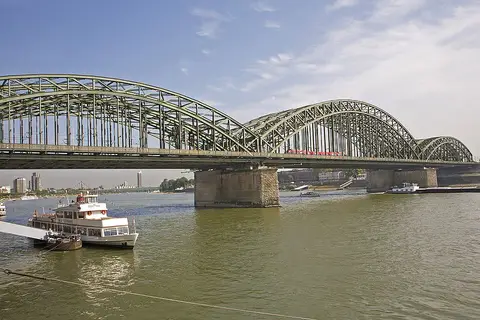 Historic sites01
Hohenzollernbrücke
Trankgasse 20 · Cologne● Website● Phone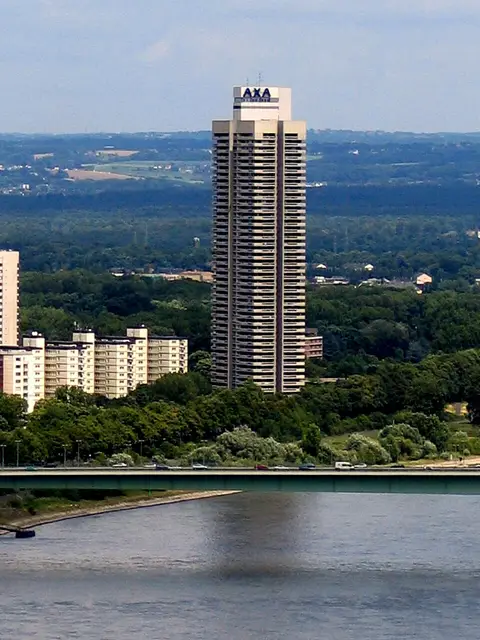 Historic sites02
Colonia-Haus
An d. Schanz 2 · Cologne● Website● Phone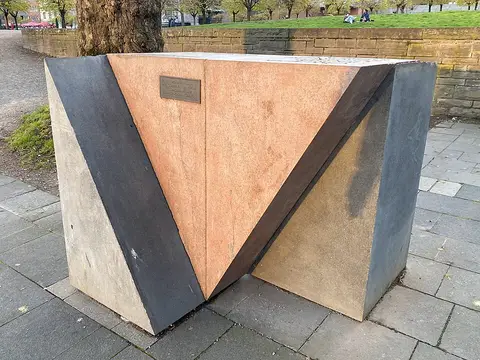 Monuments03
Memorial to Gay and Lesbian Victims of National Socialism
· Cologne○ Website● Phone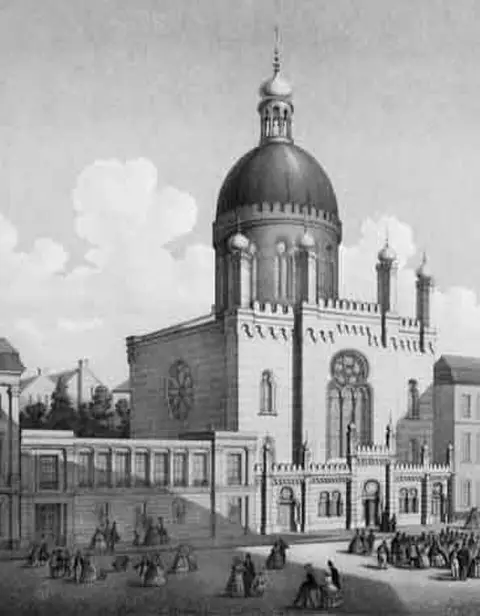 Historic sites04
You need a free account to leave reviews and photos – that keeps comments genuine and lets you edit them later.
The Wallraf-Richartz Museum is an art gallery with a collection of fine art from the medieval period through to the early 20th century.
Source: Wikivoyage, „Cologne“ · authors per page history · CC BY-SA 4.0 · as of 5/28/2022