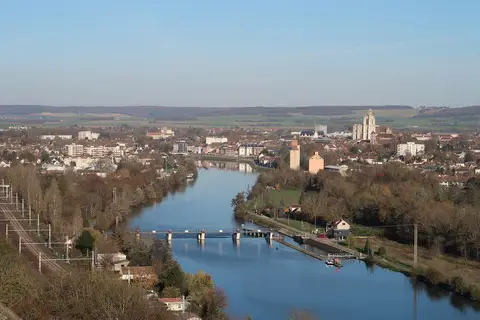
Bourgogne-Franche-Comté: Vineyards and Jura Heights
Travel guide · editorialBourgogne-Franche-Comté combines the wine country of Burgundy with the heavily forested Franche-Comté along the Jura. A vacation in Bourgogne-Franche-Comté leads you to the famous Climats of the Côte d’Or, to Romanesque abbeys, Vauban's fortress towns, and high plateaus where cows graze for Comté cheese.
Landscapes in Eastern France
In the west lies Burgundy, with gentle hills, canals, and the Morvan, a wooded low mountain range dotted with lakes. The vineyards of the Côte d’Or stretch in a narrow band from Dijon south past Beaune, followed farther south by the Côte Chalonnaise and the Mâconnais. The Franche-Comté in the east is defined by forests, rivers, and the Jura, with waterfalls such as the Cascades du Hérisson, deep blue lakes, and high plateaus that invite cross-country skiing in winter. In the north, the Burgundian Gate opens near Belfort between the Vosges and the Jura.
Cities and Towns
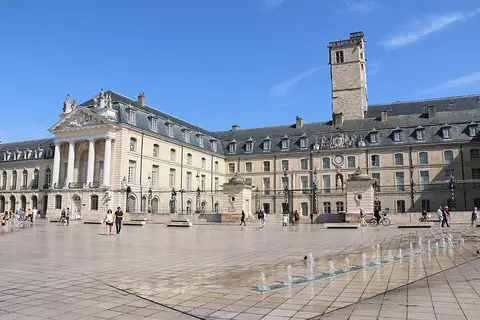
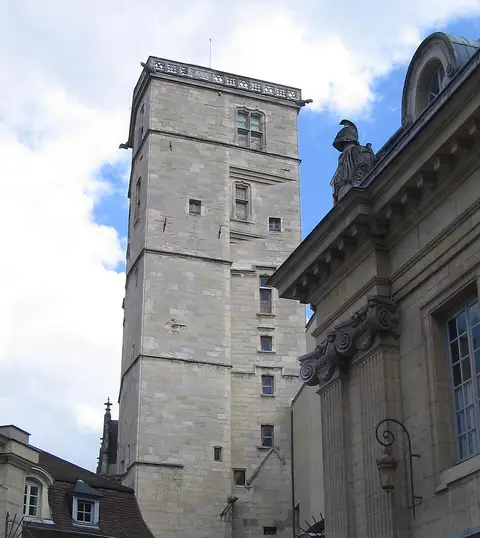
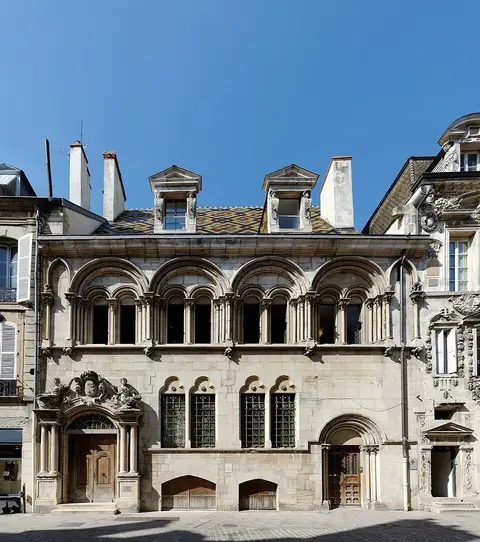
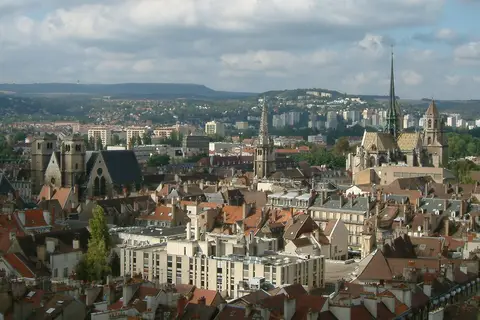
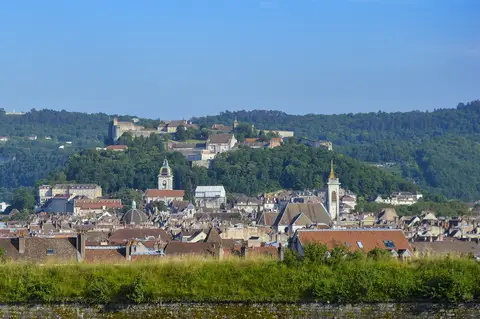
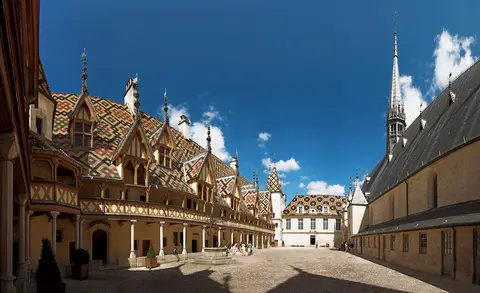
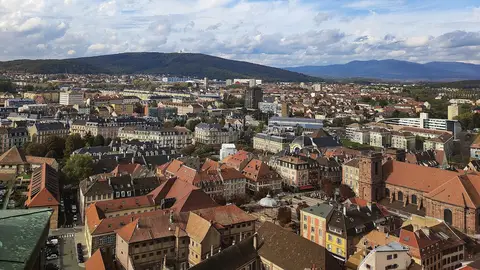
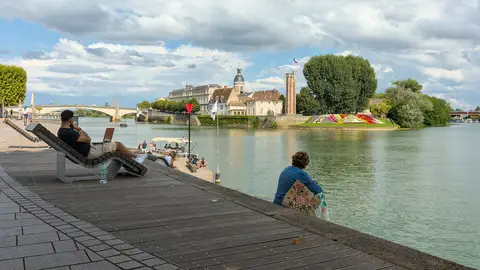
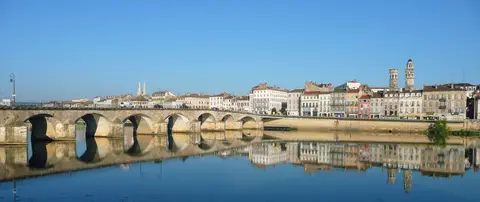
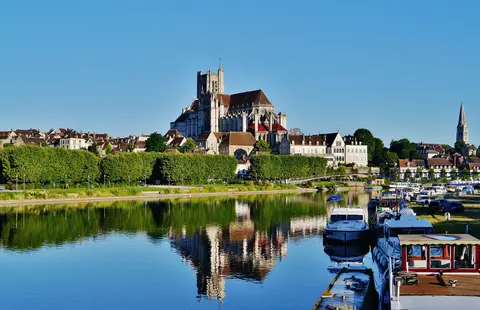
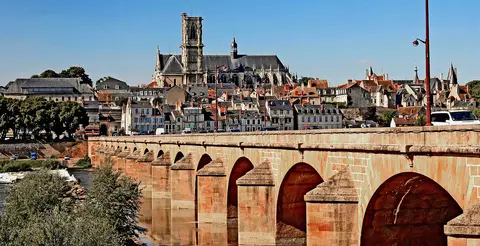
Dijon, once the residence of the Dukes of Burgundy, has a rich old town center with the Ducal Palace, the Musée des Beaux-Arts, and colorful glazed tile roofs. An owl symbol set into the pavement marks the "Parcours de la Chouette" walking trail, and the Cité internationale de la Gastronomie et du Vin celebrates French cuisine. Beaune is the center of the wine trade; the Hôtel-Dieu, a hospice from 1443 with a gleaming tiled roof, hosts a famous wine auction every November. Besançon sits in a loop of the Doubs beneath a Vauban citadel and is the birthplace of Victor Hugo as well as a watchmaking city. Belfort is guarded by Bartholdi’s Lion, carved into the rock of the fortress. Chalon-sur-Saône is the city of Nicéphore Niépce, the inventor of photography; Mâcon is the gateway to the Mâconnais; Auxerre is a town on the Yonne with a Gothic cathedral; and Nevers is famous for faience and the tomb of Saint Bernadette.
In the Franche-Comté, also worth a visit are Arbois, the wine capital of the Jura and hometown of Louis Pasteur; Baume-les-Messieurs, with its abbey in a limestone amphitheater; and Ornans, birthplace of the painter Gustave Courbet, on the Loue. In Burgundy, Semur-en-Auxois with its towers above the Armançon, Flavigny-sur-Ozerain, where anise candies are made, and Noyers-sur-Serein are counted among the most beautiful villages in France. The Canal de Bourgogne and the Canal du Nivernais are ideal for houseboat vacations.
Sights in Bourgogne-Franche-Comté
Among the most important sights in Bourgogne-Franche-Comté are the Basilica of Vézelay on its hilltop, a starting point of a Camino de Santiago route, and Cluny Abbey, once the largest church in Christendom. Fontenay Abbey, the Cistercian monastery, the salt works of Salins-les-Bains, and the Royal Saltworks of Arc-et-Senans by the architect Ledoux are UNESCO World Heritage Sites, as are the Climats, Burgundy’s parceled vineyard plots. Le Corbusier’s chapel Notre-Dame-du-Haut in Ronchamp is considered an icon of modern architecture. Near Treigny, the castle of Guédelon is still under construction, being built using medieval methods.
For hikers, the Morvan Regional Park, with its lakes and forests, offers a quiet alternative, and in the Jura, Lac de Vouglans and Lac de Chalain invite you to swim. The Burgundy Wine Route, the Route des Grands Crus, connects Dijon and Santenay over roughly 60 kilometers.
Food and Drink
Burgundy stands for bœuf bourguignon, coq au vin, snails in herb butter, and œufs en meurette. Dijon is the city of mustard, crème de cassis, and the spice bread pain d’épices. Pinot noir and Chardonnay from vineyards such as Gevrey-Chambertin, Vosne-Romanée, Meursault, and Chablis are among the most sought-after wines in the world. The Franche-Comté gives us Comté, Mont d’Or, and Morbier, the Saucisse de Morteau, and vin jaune, an oxidatively aged white wine from the Jura.
Getting There and Best Time to Visit
Dijon is reachable by TGV from Paris in just over 1.5 hours; Besançon and Belfort lie on the TGV Rhin-Rhône line with connections to Strasbourg, Freiburg, and Zurich. The best time to visit is May through October; during the grape harvest in September and the wine auction in Beaune in November, the Côte d’Or is especially lively. In winter, the Jura and the cross-country skiing areas around Métabief are the draw.
The region is especially relaxing to experience by houseboat or by bike along the canals.