Discover Nice: the Promenade, Vieux-Nice and the Côte d'Azur
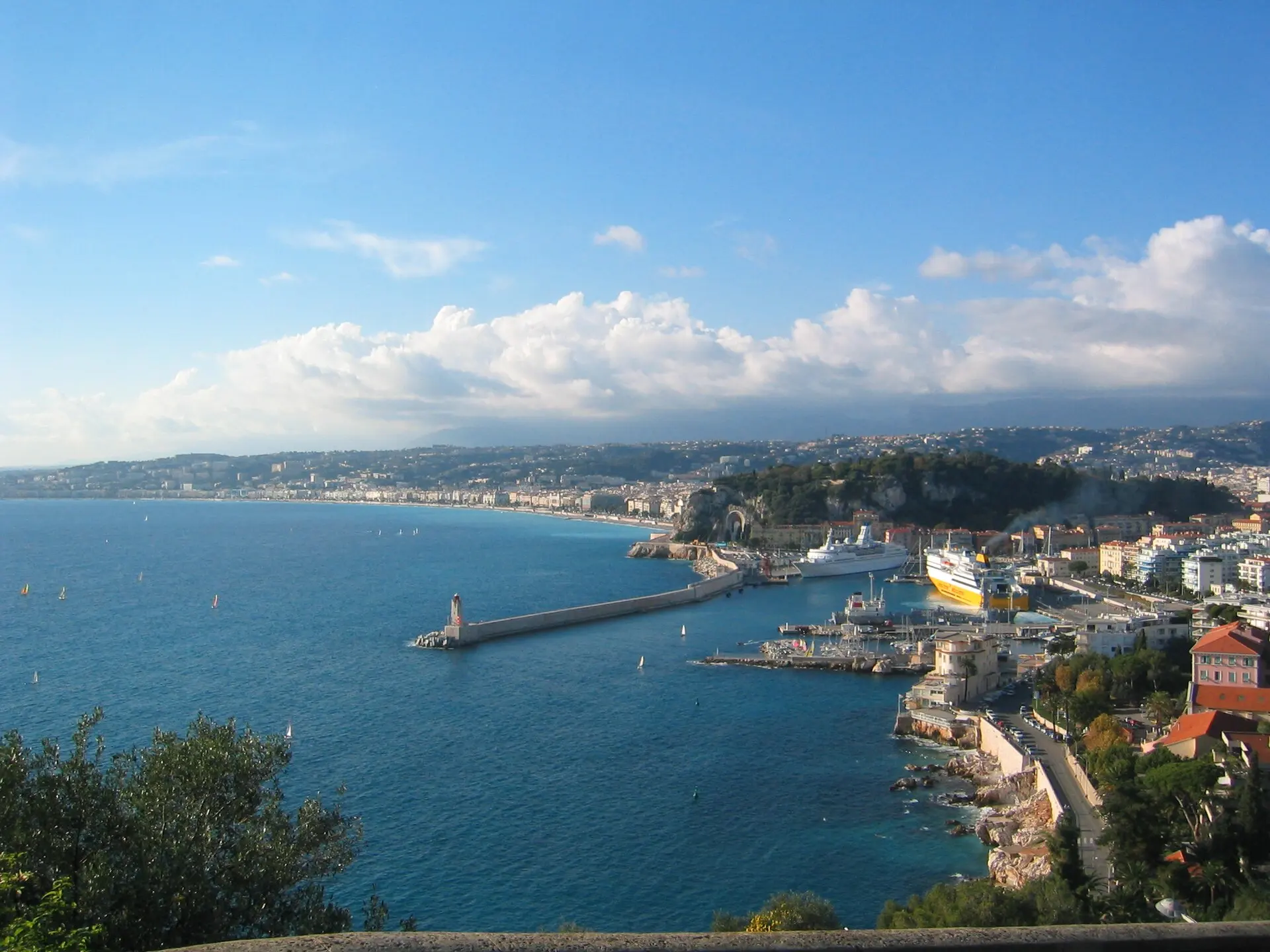
Travel guide · editorialThe light over the Baie des Anges drew painters like Matisse and Chagall to Nice – and even today it makes the water glow in a shade of blue you'll only find on the Côte d'Azur. The capital of the French Riviera combines an Italian-influenced old town with Belle Époque palaces and a beach in the middle of the city. A vacation in Nice is also the perfect base for excursions along the coast.
Between Italy and France
Greeks from Massalia founded the settlement of Nikaia here, and the Romans built a city on the hill of Cimiez, whose ruins can still be seen. For centuries Nice belonged to the Duchy of Savoy and later to the Kingdom of Sardinia – it was not until 1860 that the city became part of France following a referendum. Giuseppe Garibaldi, the hero of Italian unification, was born here. In the 19th century, British aristocrats discovered Nice as a winter retreat and financed the waterfront path that later became the Promenade des Anglais, and Russian nobles also came in droves. This legacy as a winter resort was recognized as a UNESCO World Heritage Site in 2021.
Sights in Nice
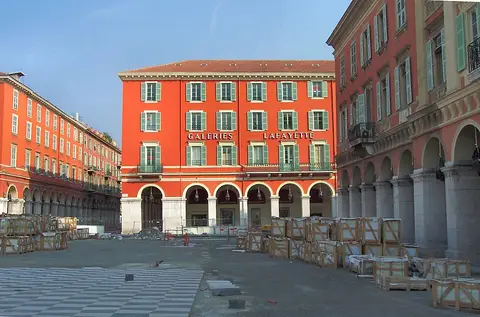
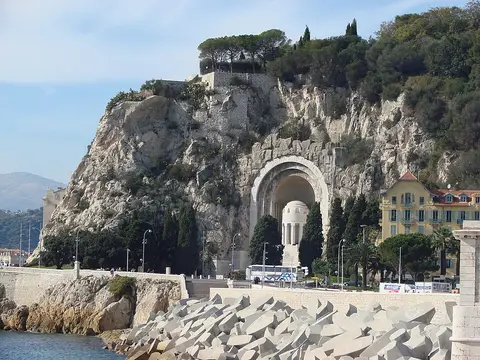
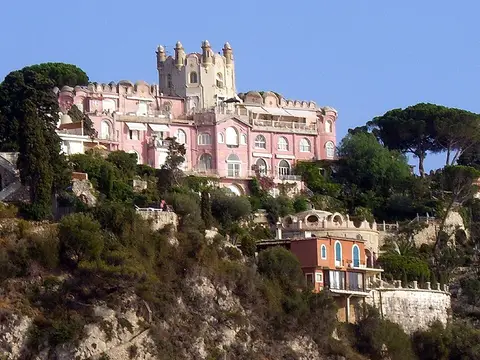
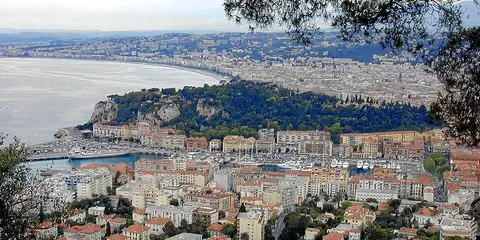
The Promenade des Anglais stretches for about four miles (seven kilometers) along the sea; the blue chairs along the railing are a symbol of the city. Grand buildings such as the Hotel Negresco with its pink dome line the route. Castle Hill (Colline du Château) offers a waterfall and the best view over the bay and the harbor. Place Masséna, with its red facades and black-and-white paving, links the old town and the new town, and right next to it lies the Promenade du Paillon, a park with water features. In the hillside district of Cimiez you'll find the Musée Matisse and, a little farther down, the Musée Marc Chagall with its biblical paintings. The Russian Orthodox Cathedral of Saint-Nicolas, with its onion domes, recalls the czarist family who spent winters here.
Vieux-Nice and neighborhoods
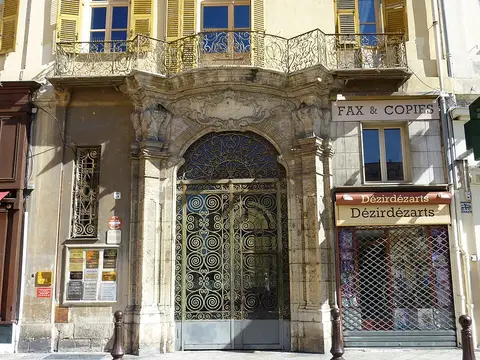
Vieux-Nice, the old town, is a tangle of narrow lanes lined with ochre-colored houses and Baroque churches such as Sainte-Réparate Cathedral, with laundry hanging between the windows. A flower and vegetable market takes place on the Cours Saleya every morning, and an antiques market on Mondays. Around Avenue Jean-Médecin, the main shopping street in the Jean-Médecin district, you'll find department stores and shops, and the area around the Port Lympia harbor has developed into a popular nightlife district with bars, antiques shops and restaurants. To the north, the Libération district draws visitors with its lively market around the old station hall.
Eating in Nice: socca and salade niçoise
Nice's cuisine is Mediterranean and closely related to that of Italy. Socca, a thin flatbread made from chickpea flour, is baked in large pans and eaten hot with pepper, best enjoyed on the Cours Saleya. Pissaladière, an onion tart with anchovies and olives, pan bagnat, a bread roll filled with salade niçoise, and petits farcis, stuffed vegetables, are all part of the repertoire. The authentic salade niçoise, by the way, contains neither potatoes nor green beans. Local restaurants with the "Cuisine Nissarde" label guarantee traditional cooking. A rosé from Provence or a Bellet, a wine from the hills around the city, goes well with it.
Carnival and excursions
The Nice Carnival in February is one of the largest in the world: giant papier-mâché figures parade through the streets, and during the flower parades performers throw mimosa and gerbera daisies into the crowd. Worthwhile excursions lead to Èze, an eagle's nest perched above the sea, to Villefranche-sur-Mer with its bay, to Cap Ferrat, to Monaco, to Antibes or to the perfume town of Grasse. By train you can reach Monaco in a good 15 minutes, and the local bus along the Corniches offers breathtaking views of the steep coastline along the way. If you're looking for nature, head inland to the hill villages of Saint-Paul-de-Vence with the Fondation Maeght or to the gorges of Mercantour National Park.
Getting around and best time to visit
Nice Côte d'Azur Airport (NCE) sits right on the sea, only about four miles (seven kilometers) west of the center, and is connected by tram. Regional trains run along the coast to Monaco, Menton and Cannes, and buses serve the hill villages. The best times to visit are spring and fall; winter is mild, and in high summer the pebble beaches are packed.