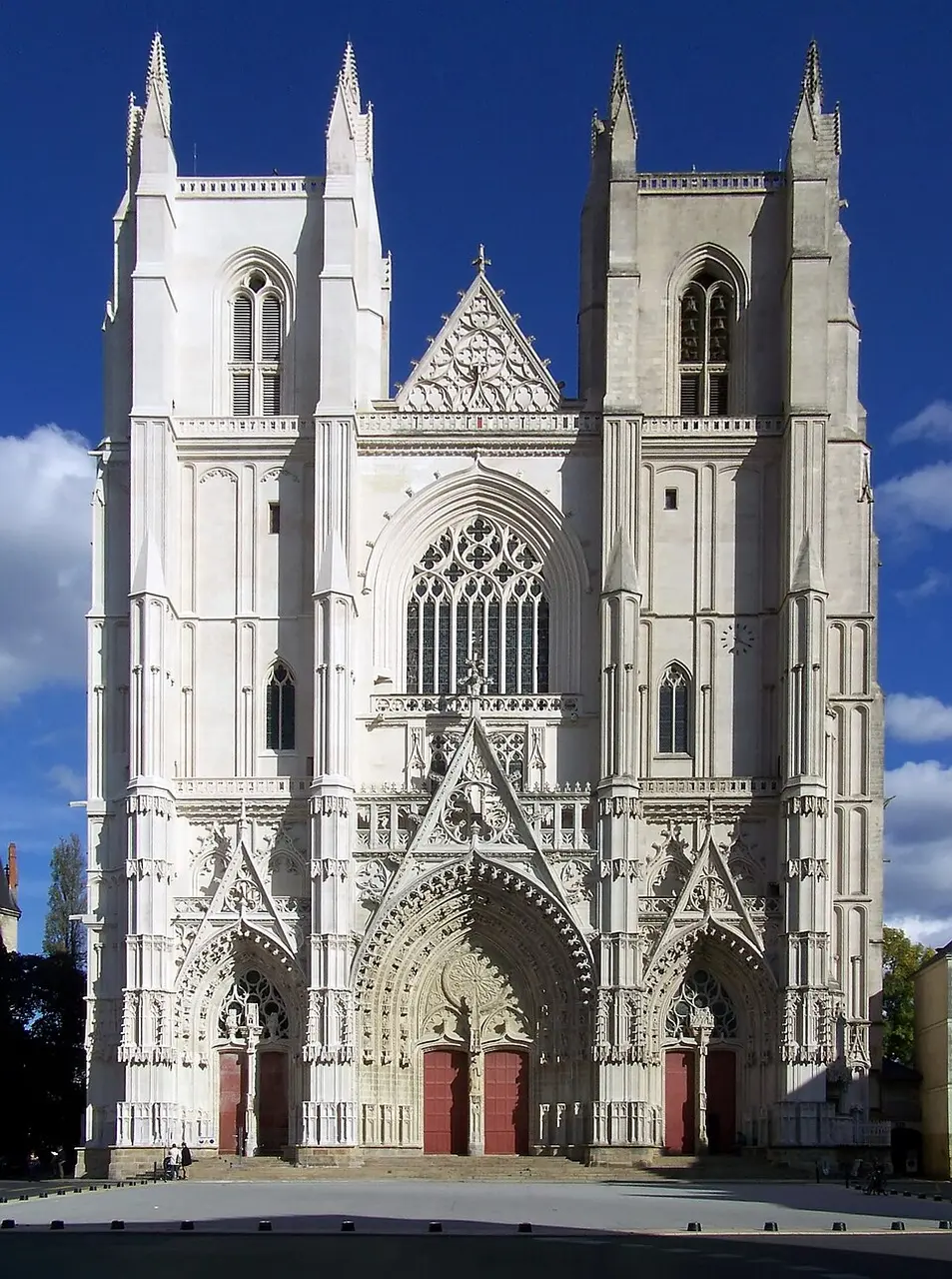
About Cathédrale Saint-Pierre
The Cathedral of Saint Peter and Saint Paul (Cathédrale Saint-Pierre-et-Saint-Paul) in Nantes is the city's bishop's church and is dedicated jointly to the apostles Peter and Paul. Its construction was the result of a process that spanned centuries, reaching from the beginnings of the Christian church in the region to modern times. A first house of worship was already built here in the sixth century, but it was largely destroyed by Norman raids in the ninth century. After it was rebuilt in the Romanesque style, construction of today's Gothic cathedral began in the early fifteenth century. A distinctive feature of the building method at the time was that work began with the west facade, which has two square towers with large portals. Construction advanced in stages over the centuries: the nave was not consecrated until the sixteenth century, and the cathedral was not fully completed in the Gothic style until the nineteenth century.
Architecturally, the building ranks among the outstanding works of French Late Gothic in the Flamboyant style. Despite its location outside the classic cathedral regions, the church impresses with its monumental height and its complex vaulting. The interior combines Gothic structures with later additions from the sixteenth and seventeenth centuries that blend harmoniously into the overall picture. Characteristic features include the strongly molded columns, which flow directly into the deep vault ribs without capitals, as well as the intricately crafted keystones. The facade also has an unusual exterior pulpit, which was once used to preach to large crowds gathered on the square in front.
The cathedral's history has been marked by several episodes of destruction. During the French Revolution, many art treasures were destroyed and the building was used for a time as a storehouse and horse stable. Only after Napoleon's Concordat was it restored as a church and completed in the Gothic style in the nineteenth century. In World War II, the choir suffered severe bomb damage that was not repaired until decades later. Another serious setback came in 2020, when a fire broke out inside. The historic main organ, several stained-glass windows, and an important painting by Hippolyte Flandrin were completely destroyed. The arsonist, a refugee who worked as a volunteer for the diocese, confessed to the crime.
Today the cathedral invites visitors to experience its spacious, light-filled interior, whose harmony and grandeur were brought out by the extensive restoration of the 1970s and 1980s. Highlights of the furnishings include the high altar with its marble angels, the Renaissance tomb of Duke Francis II in the south aisle, and the tomb of Lamoricière in the north section. The south tower holds eight bells and a twelve-bell carillon cast in 1843. Despite the recent destruction, the cathedral remains an important testimony to architectural history and a central site of cultural heritage in Nantes.
At a glance
- Category
- Sight › Monuments
- Rating
- no reviews yet · write a review
- Address
- 8 Place Saint-Pierre
44000 Nantes, France - District
- Decré - Cathédrale
- Phone
- +33240478464
- Website
- www.cathedrale-nantes.cef.fr
- cathedraledenantes@wanadoo.fr
- Coordinates
- 47.21787° N · -1.55121° E
- Data quality
- confidence 0.97
- Identifier
- ID 66d8aa78-2bf…
Location & surroundings
Toggle layersRatings & comments
none yetNear Cathédrale Saint-Pierre
closest 5 per category · 2 kmSights
Restaurants
Museums
Hotels
More:Monuments in Nantes (34)Sights in Decré - Cathédrale (45)All sights in Nantes (183)
223 places within 2 km loaded.
Don't miss in Nantes
All sights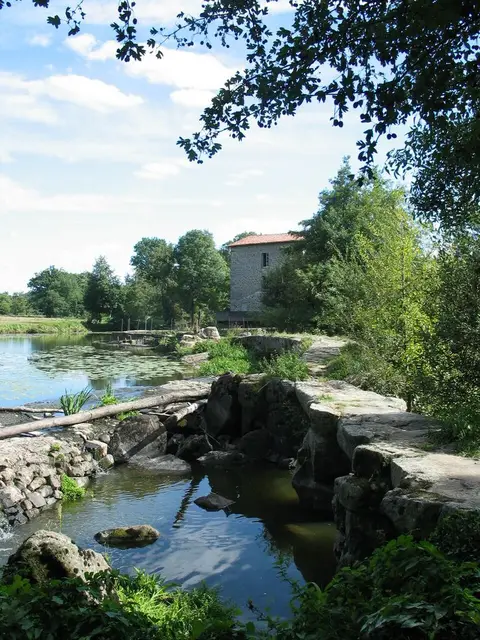 Monuments01
Sèvre nantaise
4 Rue Éric Tabarly · Nantes○ Website● Phone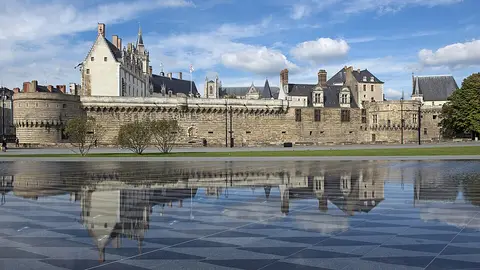 Castles02
Chateau des Ducs de Bretagne
4 Pl. Marc Elder · Nantes● Website● Phone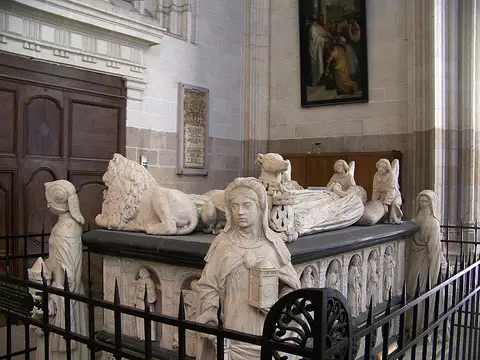 Historic sites03
Tomb of Francois II, Duke of Brittany
7 Imp. Saint-Laurent · Nantes○ Website● Phone Historic sites04
You need a free account to leave reviews and photos – that keeps comments genuine and lets you edit them later.
Magnificent Gothic cathedral built in fits and starts from 1434. In modern times it has been seriously damaged by Allied bombing in 1945, by an accidental fire in 1972, and by arson in 2020. It therefore remains closed. The arsonist was later given shelter in a church mission, in the spirit of "turning the other cheek". He then murdered the mission priest.
Source: Wikivoyage, „Nantes“ · authors per page history · CC BY-SA 4.0 · as of 6/11/2023