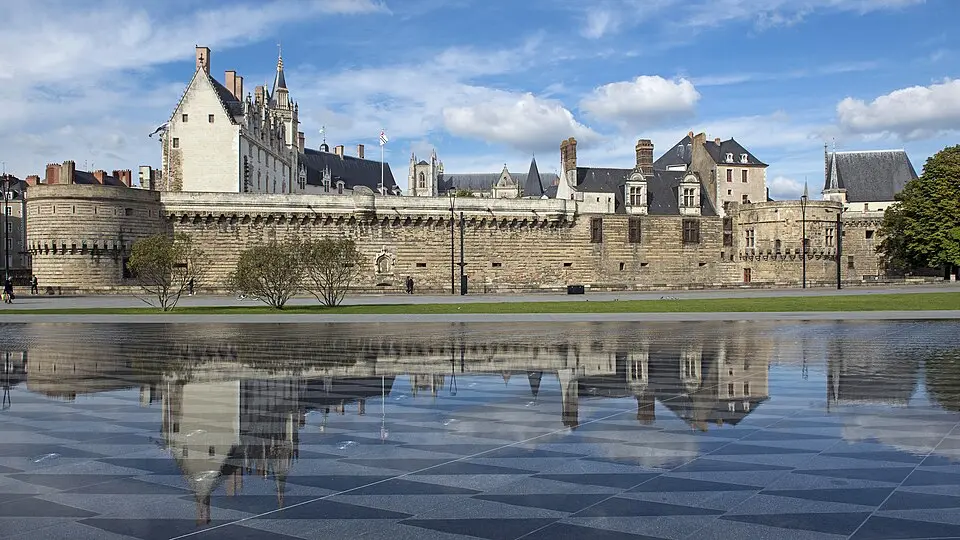
About Schloss Nantes
The Castle of the Dukes of Brittany in Nantes is a sprawling fortress on the right bank of the Loire that served as a residence from the 13th century onward. The history of the complex begins in 1207, when Guy de Thouars had the first castle built to underscore the dukes' claim to power. The polygonal Old Donjon is the only remnant of this early phase. In the 15th century, Duke François II had a new castle built, designed to serve both as a stately seat and as a military fortress. Its architecture combines an elegant courtyard side of white tuffeau stone with massive defensive towers of slate and granite, linked by a long wall walk.
Over the centuries, ownership passed from the Breton dukes to the French kings after Brittany was united with France in 1532. The complex is especially well known for the signing of the Edict of Nantes by Henry IV in 1598, even though the actual ceremony took place in another building. The castle later served as an arsenal and a prison before being declared a historic monument in 1841. After an extensive restoration that began in the 1990s, the complex was reopened to the public in 2007. Today, you can experience the blend of ducal splendor and military fortification that reflects the region's complex history.
At a glance
- Category
- Museum › Museums (general)
- Rating
- no reviews yet · write a review
- Address
- —
Nantes, France - District
- Decré - Cathédrale
- Phone
- —
- Website
- —
- —
- Coordinates
- 47.21583° N · -1.55000° E
- Data quality
- confidence 0.82
- Identifier
- ID 3bb411bd-15a…
Location & surroundings
Toggle layersRatings & comments
none yetNear Schloss Nantes
closest 5 per category · 2 kmSights
Restaurants
Museums
Hotels
More:All museums in Nantes (25)
223 places within 2 km loaded.
Don't miss in Nantes
All sights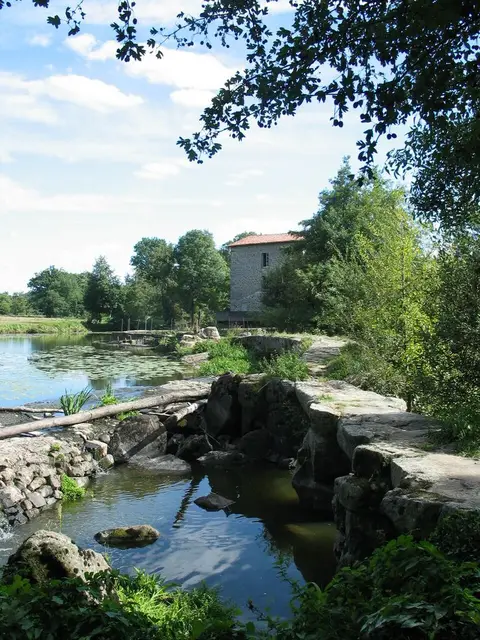 Monuments01
Sèvre nantaise
4 Rue Éric Tabarly · Nantes○ Website● Phone Castles02
Chateau des Ducs de Bretagne
4 Pl. Marc Elder · Nantes● Website● Phone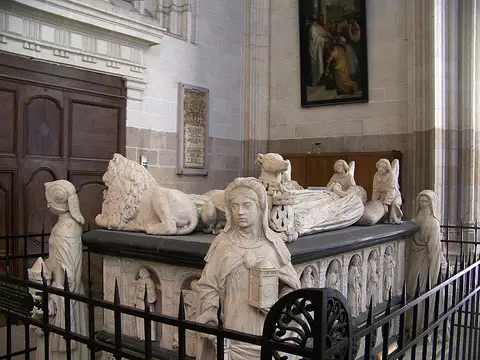 Historic sites03
Tomb of Francois II, Duke of Brittany
7 Imp. Saint-Laurent · Nantes○ Website● Phone Historic sites04
You need a free account to leave reviews and photos – that keeps comments genuine and lets you edit them later.
Sturdy moated castle built from 1207, though most of it is from 1466. It was a ducal and royal seat, notably of Duchess Anne, whose dynastic marriages sealed the union of Brittany with France in 1532. The Revolution did it little harm until a powder magazine explosion of 1800. It became a museum in 1924 but closed for reconstruction in 1990, re-opening in 2007. The main entrance is west by the tourist office and you can also approach north or south; these all bring you into the courtyard and the ticket office for the museum. Courtyard, ramparts and garden are free to enter.
Source: Wikivoyage, „Nantes“ · authors per page history · CC BY-SA 4.0 · as of 7/10/2023