Discover Hangzhou: West Lake, Longjing Tea and Pagodas
Travel guide · editorial"Above there is heaven, below there are Suzhou and Hangzhou," goes an old Chinese saying. A trip to Hangzhou takes you to West Lake, which has inspired poets and painters for centuries, to tea plantations and to Buddhist cave carvings.
Capital of the Song
Hangzhou grew into a wealthy trading city at the southern end of the Grand Canal. In the 12th and 13th centuries, it served as the capital of the Southern Song dynasty under the name Lin'an and was probably one of the largest cities in the world. Marco Polo is said to have described it as the "most splendid city in the world." Later, Hangzhou became a center of silk weaving and the tea trade. Today the city is home to major technology companies, above all Alibaba, and hosted the Asian Games in 2023.
Sights in Hangzhou
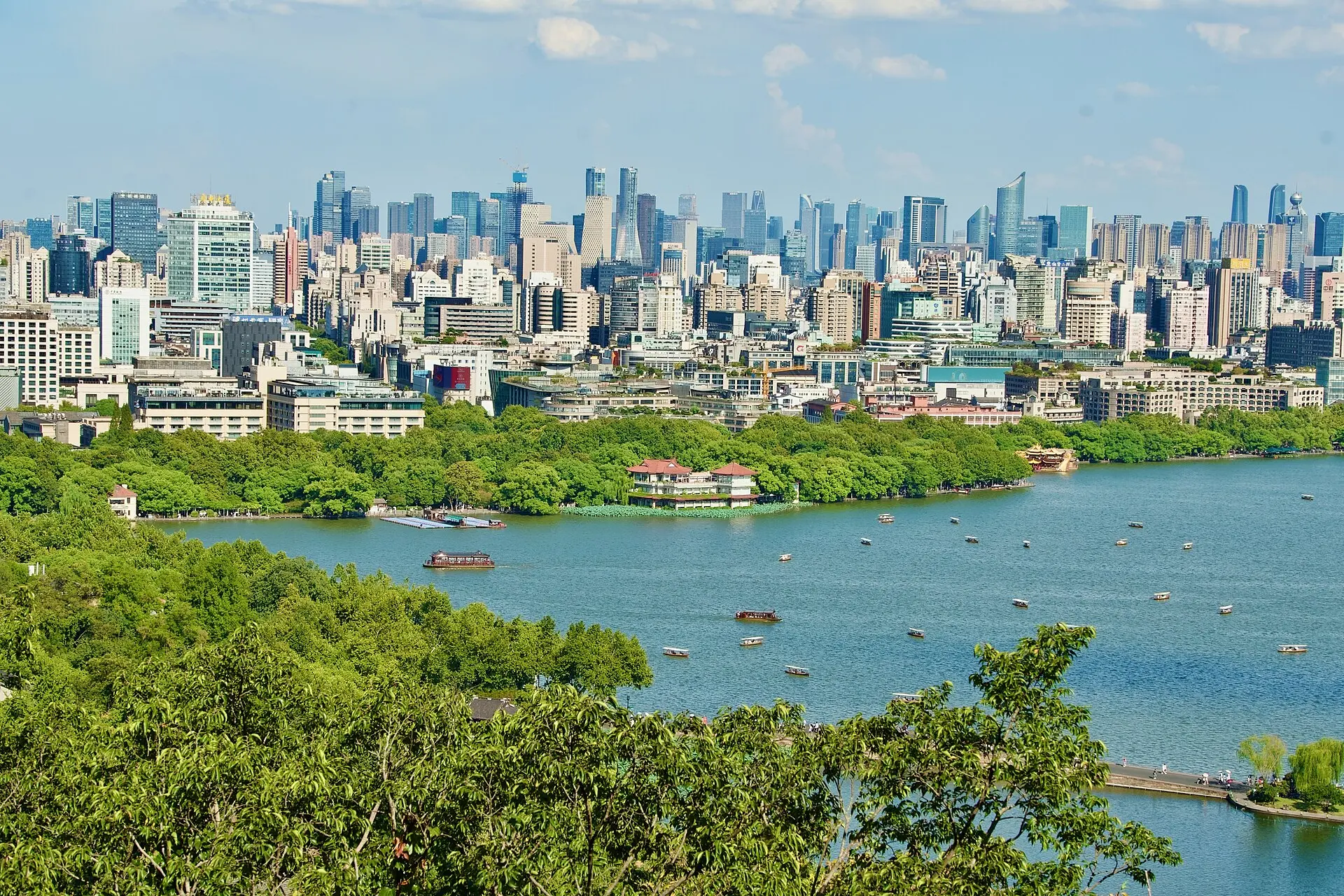
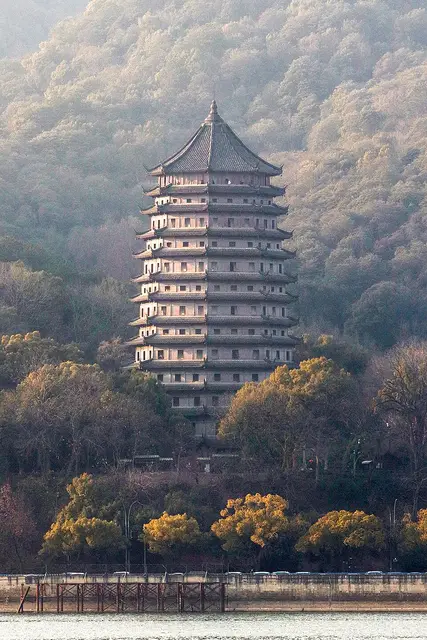
West Lake is the heart of the city and has been a UNESCO World Heritage Site since 2011. Two causeways, the Su Causeway and the Bai Causeway, named after the poets Su Dongpo and Bai Juyi, cross the water, lined with willows and peach trees. By rowboat, you can reach Xiaoyingzhou Island with its "Three Pools Mirroring the Moon," which appear on the one-yuan note. On the south shore rises the rebuilt Leifeng Pagoda, setting of the legend of the White Snake. To the west lies Lingyin Temple, one of the most important Buddhist monasteries in China, and in front of it the rock reliefs of Feilaifeng show hundreds of Buddha figures. On the north shore, in the area around Baoshi Hill and along the Hubin Promenade, families stroll in the evening, and a water show on the lake draws crowds.
Tea and Silk
In the hills west of the lake grows the famous Longjing tea, "Dragon Well," one of China's best-known green teas. In villages such as Longjing and Meijiawu, you can visit plantations and taste freshly roasted tea. The National Tea Museum explains its history and preparation. The National Silk Museum displays fabrics from many centuries. Along the Grand Canal in the north of the city, old neighborhoods such as Qiaoxi recall the trade once carried on the water.
Eating in Hangzhou
Hangzhou cuisine is delicate and slightly sweet. Classics include Dongpo pork, slow-braised pork belly named after the poet Su Dongpo, West Lake fish in vinegar sauce, beggar's chicken, cooked in lotus leaves and clay, and shrimp with Longjing tea. Restaurants in Hangzhou often have views of the lake, and Hefang Street in the old town is full of snack stalls and teahouses. For breakfast, locals eat congbao huier, dough rolls with scallions, and pianerchuan noodles with pickled vegetables. If you plan to go out for dinner, reserve a table at one of the restaurants on the north shore, where you can look out over the illuminated Su Causeway by candlelight.
Getting There and Best Time to Visit
Xiaoshan Airport is about 30 kilometers to the east and is connected by metro. High-speed trains reach Shanghai in less than an hour. Around the lake, rental bikes and walking are ideal, and boats connect the shores. Worthwhile excursions lead to the water town of Wuzhen with its canals and stone bridges, to the bamboo forests of Moganshan and to Liangzhu, whose Neolithic city ruins have been a UNESCO World Heritage Site since 2019. The best time to visit is in spring, when the peach trees bloom and the tea harvest begins, as well as in fall, with the scent of osmanthus blossoms. Summer is hot and humid, and on public holidays the lake is very crowded.