Zhejiang: West Lake, Tea Mountains, and Port Cities
Travel guide · editorial"Above is heaven, below are Suzhou and Hangzhou," the Chinese say – and Zhejiang delivers the second half of that praise. A vacation in Zhejiang means West Lake and tea terraces, canal towns and mountain temples, but also an encounter with one of the most entrepreneurial regions in the country, from online commerce in Hangzhou to the wholesale market of Yiwu.
Landscape Between Mountains and Sea
Zhejiang is surprisingly mountainous: Around two-thirds of the province consists of hills and mountains, crossed by rivers such as the Qiantang, whose tidal bore becomes a natural spectacle near Haining in the fall. To the north, the flat, water-rich Yangtze Delta begins, with Jiaxing and Huzhou. Off the rugged coast lie thousands of islands, including the Zhoushan Archipelago with the Buddhist pilgrimage island of Putuoshan.
Sights in Zhejiang
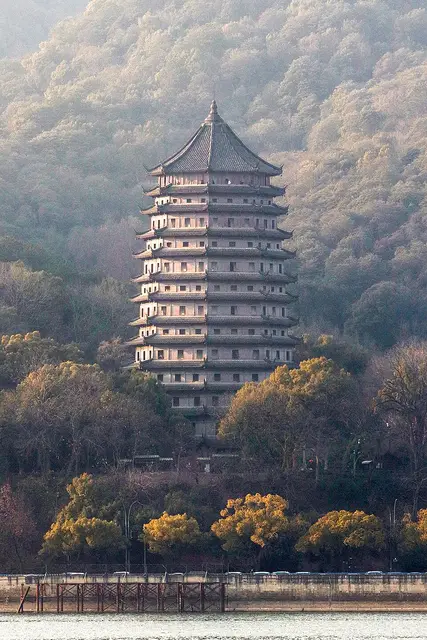
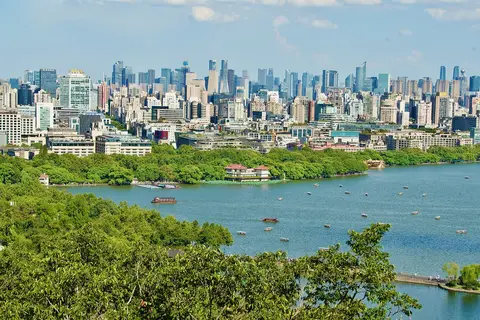
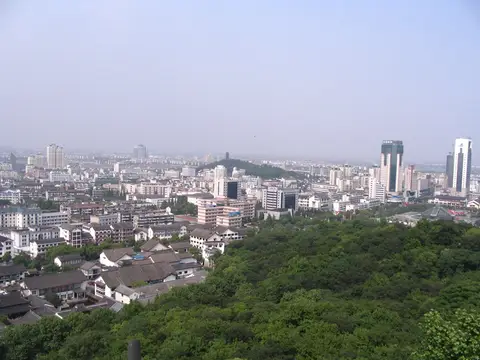
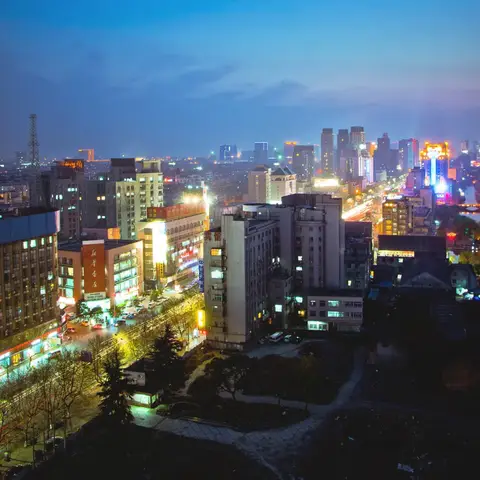
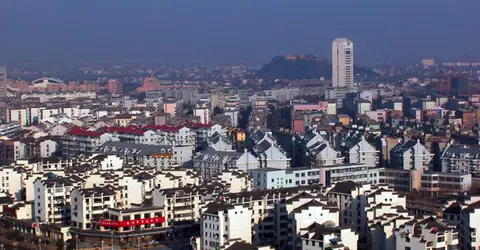
Hangzhou, the provincial capital, was China's capital under the Southern Song Dynasty. Its West Lake, with causeways, pagodas, and lotus fields, is a UNESCO World Heritage Site and the archetype of the Chinese lake landscape. On its shores stand Leifeng Pagoda and Lingyin Temple with its rock reliefs; in the hills behind, Longjing tea is grown. Ningbo, one of the largest ports in the world, is home to Tianyi Ge, one of the oldest private libraries in Asia. Shaoxing is a city of canals and black-canopied boats, hometown of the writer Lu Xun. The water towns of Wuzhen and Xitang near Jiaxing attract visitors with stone bridges and lanterns, and in Huzhou the village of Nanxun, with its merchant villas, is worth a visit. In the south, Mount Yandang near Wenzhou and Xianju National Park offer spectacular rock formations. In the hills of Anji, north of Hangzhou, bamboo forests sway that became known as a film backdrop, and Qiandao Lake, west of the capital, with more than a thousand islands, is a popular excursion destination.
Commerce, Culture, and History
Zhejiang is the heart of China's private economy. Alibaba is headquartered in Hangzhou, Yiwu operates the International Trade Mart, one of the largest wholesale markets for small goods in the world, and Wenzhou traders have a presence all across Europe. At the same time, the province is rich in tradition: silk weaving, Longquan celadon ceramics, Yue opera, and the art of bamboo carving. The Grand Canal ends in Hangzhou, and many towns owe their prosperity to it. In Yiwu you can stroll through miles of halls filled with toys, Christmas decorations, and household goods that are shipped from here all over the world; traders from Africa and the Middle East have shaped their own restaurant districts.
Food and Drink
Zhejiang cuisine is fresh, lightly sweet, and emphasizes the natural flavor of the ingredients. Hangzhou classics include West Lake fish in vinegar sauce, Dongpo pork, and shrimp with Longjing tea leaves. Shaoxing supplies the amber-colored rice wine huangjiu, which is drunk warm and used in cooking, along with stinky tofu and drunken chicken. In Ningbo, seafood and sweet tangyuan dumplings are on the table.
Getting There and Best Time to Visit
Hangzhou can be reached from Shanghai by high-speed train in about an hour, and Xiaoshan Airport also offers international connections. Ningbo and Wenzhou have their own airports. To reach Zhejiang's rural destinations, it's best to travel by train and bus. The best time to visit is spring, when tea is harvested and peach trees bloom around West Lake, as well as fall with the scent of osmanthus; summer is hot and humid.