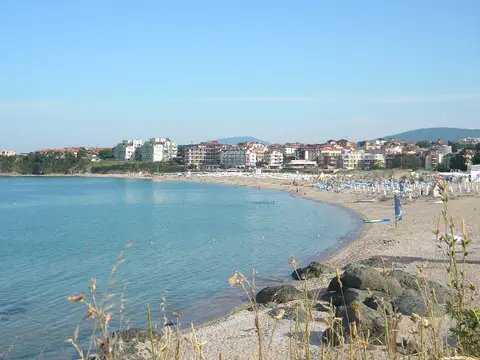
Burgas Province: Bulgaria's Southern Black Sea Coast
Travel guide · editorialBetween Cape Emine in the north and the Turkish border at the Rezovska River lies the longest and most visited stretch of Bulgaria's Black Sea coast. Most people who think of a vacation in Burgas Province picture Sunny Beach – but between the hotel chains you'll find ancient peninsula towns, salt lakes full of pelicans, and the quiet forested Strandzha mountains.
Coast, Lagoons, and Strandzha Forests
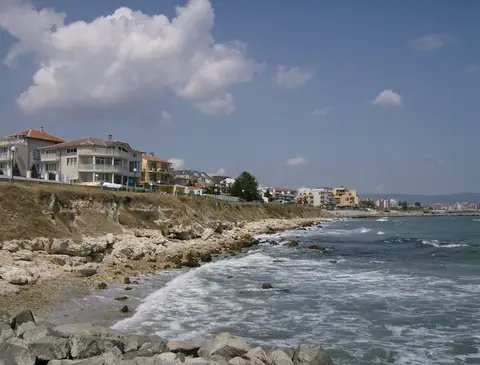
The province extends far inland, all the way to the slopes of the Balkan Mountains near Aytos and Karnobat. Its heart, though, is the sea: about 150 kilometers of coastline with long sandy beaches, dunes near Primorsko, and rocky coves south of Sozopol. Around the city of Burgas lie four large lakes – Lake Burgas (Vaya), Atanasovsko, Mandra, and Pomorie. Some are salt pans, some are protected areas, and all lie along the Via Pontica, one of Europe's most important bird migration routes. In late summer, tens of thousands of storks, pelicans, and birds of prey pass over the city. To the south begins Strandzha Nature Park, a densely forested low mountain range with oaks, beeches, and evergreen rhododendron undergrowth, whose villages, such as Brashlyan and Malko Tarnovo, see hardly any tourism.
Cities and Seaside Resorts
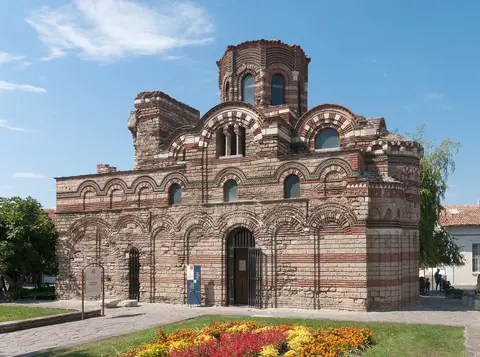
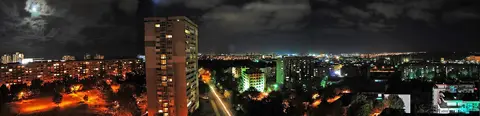
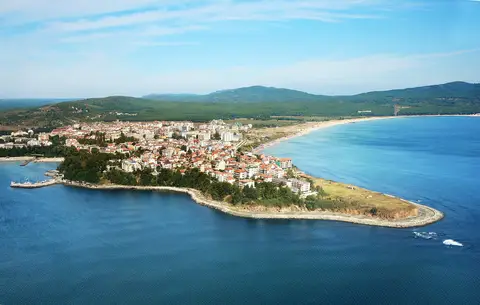
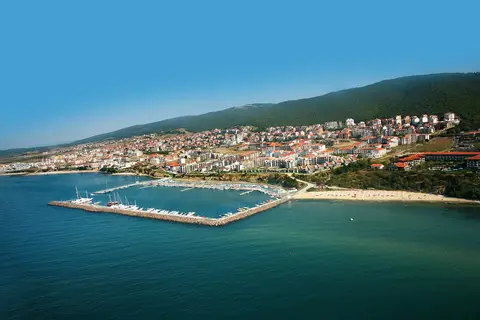
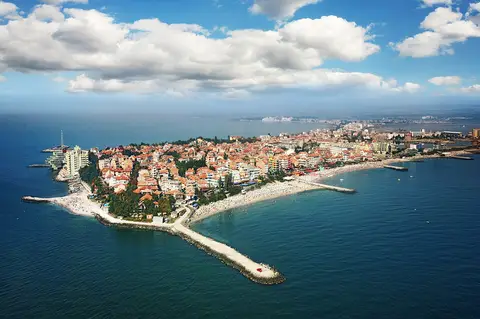
Burgas itself is a relaxed port city with a long sea garden, a pier, and a pedestrian zone around Aleksandrovska Street. In summer, the sea garden hosts concerts and the sand sculpture festival. To the north lies Nessebar, whose old town, on a narrow peninsula, has been a UNESCO World Heritage Site since 1983: remains of Thracian walls, Byzantine churches of brick and natural stone, and wooden houses from the Bulgarian National Revival period. Right beyond it begins Sunny Beach, Bulgaria's largest resort area, with discos, water parks, and a beach stretching for miles, and farther north the quieter Sveti Vlas, built into the hillside, with its marina. Ravda and Pomorie are smaller towns; Pomorie is known for its therapeutic mud baths and the wine of the Pomorie winery.
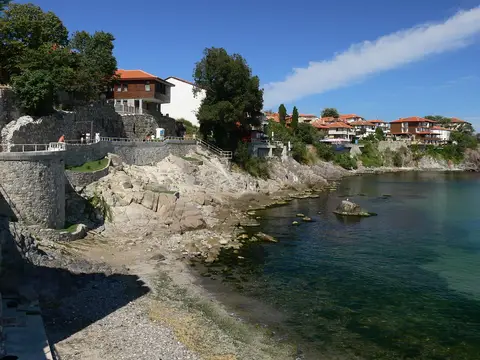
South of Burgas, things get more tranquil. Sozopol, ancient Apollonia, has an old town of wooden houses on stone foundations and hosts the Apollonia Arts Festival in September. Primorsko and Kiten sit on broad sandy bays, and at the mouth of the Ropotamo River you can take small boats through floodplain forest where water lilies bloom. Farthest south, Sinemorets with its river mouth and the village of Rezovo on the Turkish border are worth a visit.
Sights in Burgas Province
Besides the old town of Nessebar with the Church of Christ Pantocrator and the Old Metropolis, popular excursions include St. Anastasia Island off Burgas, with its monastery, and St. Ivan Island off Sozopol; in 2010, relics attributed to John the Baptist were found on St. Ivan. In Pomorie, the Roman-era Thracian domed tomb is worth seeing, and in Burgas the Salt Museum at the Pomorie Lagoon. The ruins of the Akra fortress and the Thracian hilltop sanctuaries in Strandzha, such as Begliktash near Primorsko, show how long people have lived on this coast.
Eating and Drinking on the Coast
In the coastal taverns, fish takes center stage: fried sprats (tsatsa), grilled mullet, bluefish (lefer), and in autumn horse mackerel. These come with shopska salad with sirene cheese, cold cucumber soup called tarator, and rakia made from grapes or plums as an aperitif. In Strandzha, dishes are prepared with wild mushrooms and lamb, and the wineries around Pomorie and Sungurlare produce white wines from Misket and Traminer grapes. If you're looking for peace and quiet, head to the coast south of Sozopol, where campgrounds and small guesthouses predominate, or inland to Aytos with its nature park and to Karnobat, a center of wine growing. Water sports fans will find surf schools and boat rentals in Burgas and Sveti Vlas, and families will like the shallow sandy beaches of Kiten and Lozenets.
Getting There and Best Time to Visit
In summer, Burgas Airport has direct flights from many German cities; off-season it mainly connects to Sofia. From Sofia, you can reach Burgas in about four hours via the Trakia Motorway or by train. Buses and minibuses run along the coast, and a rental car makes sense for Strandzha. The best time for a beach vacation is between mid-June and mid-September, when the sea is warmer than 22 degrees Celsius (72°F). September is especially pleasant: quieter, still warm, and the time of bird migration over the lakes. In winter, many hotels at Sunny Beach are closed, but Burgas and Nessebar stay lived-in and can be explored at your leisure.