Discovering Adelaide: Festivals, Markets, and Vineyards
Travel guide · editorialAdelaide is often dismissed as Australia's biggest village – until you get to know the city. Ringed by a belt of parks, just half an hour from some of the best wine regions in the world, and home every spring to one of the largest arts festivals on the planet, Adelaide has far more to offer than its reputation suggests. A city break in Adelaide is relaxed, delicious, and surprisingly cultural.
A Planned City
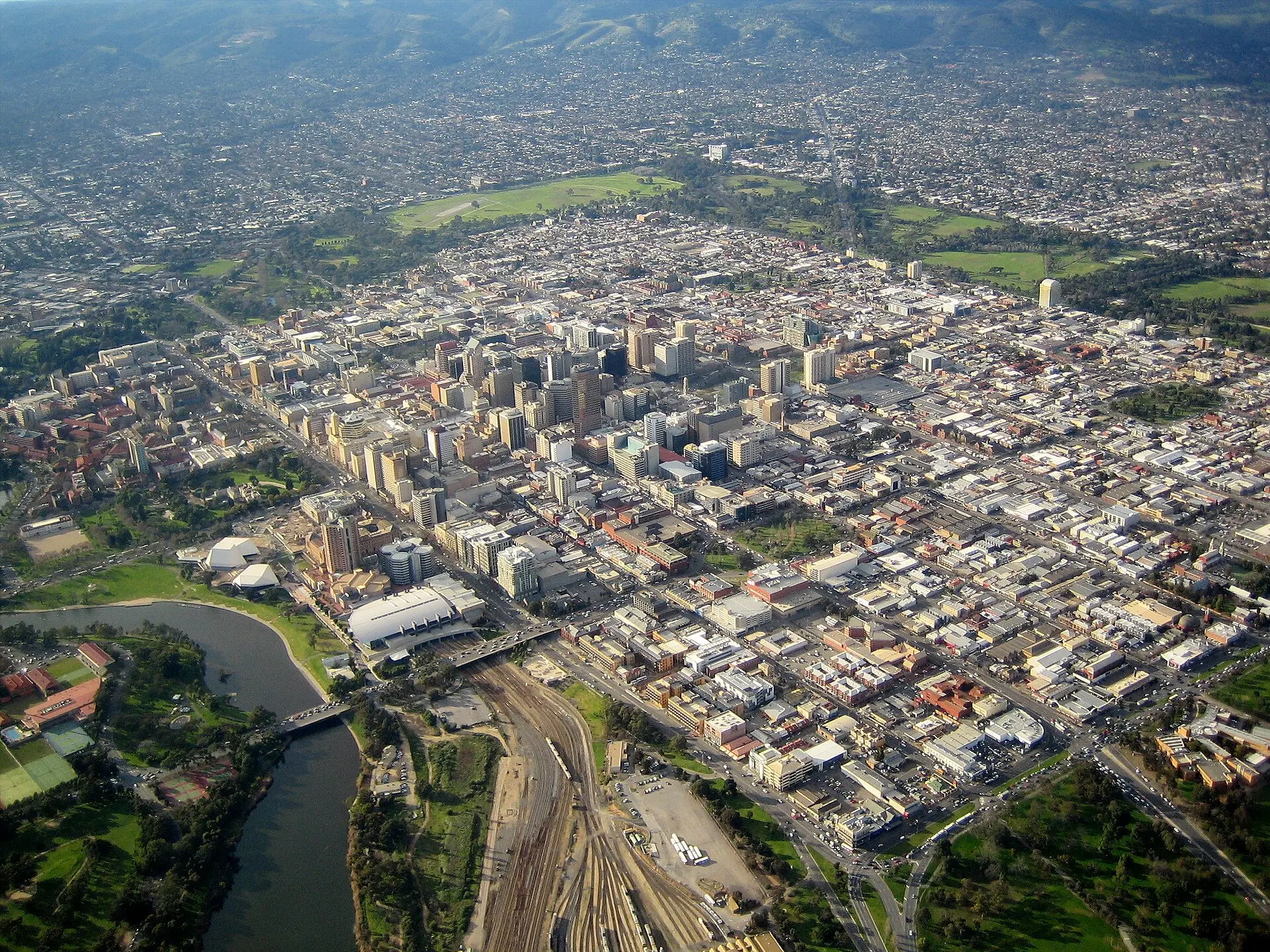
The land of the Kaurna people was settled in 1836 by British colonists who laid out a city in a grid pattern based on plans by surveyor William Light, surrounded by a belt of parklands – a design that survives to this day. Unlike Sydney or Hobart, Adelaide was never a convict colony but was founded by free settlers, among them many German Lutherans who started growing grapes in the Barossa Valley. In 1894, South Australia became one of the first places in the world where women won the right to vote.
Sights in Adelaide
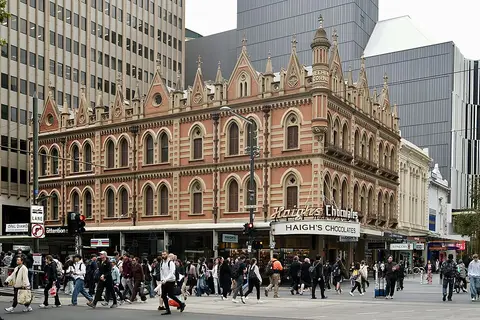
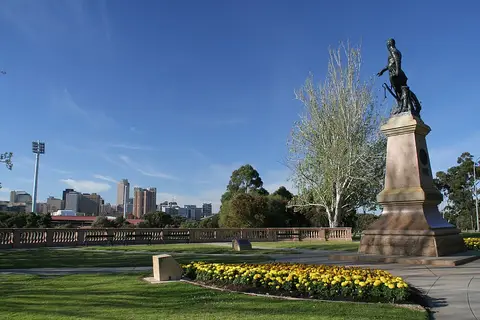
North Terrace is the city's cultural mile: here you'll find the Art Gallery of South Australia with an important collection of Australian art, the South Australian Museum with one of the largest collections on Aboriginal culture, the State Library with a magnificent 19th-century reading room, and the Botanic Garden with a palm house from Germany. Adelaide Oval, a historic cricket and football stadium on the Torrens River, offers roof climbs with views across the city. Paddleboats can be rented on the river, and Rundle Mall is the shopping street where two bronze pigs sniff around a trash can.
Neighborhoods and Beaches
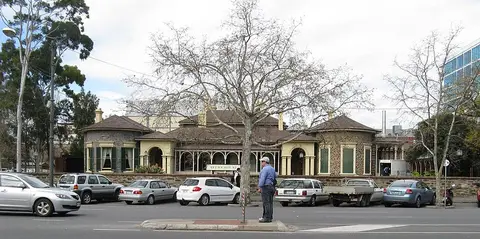
North Adelaide, beyond the Parklands, is the oldest neighborhood, with stone villas, pubs, and cafés on O'Connell Street and Melbourne Street. Prospect to the north has developed into a neighborhood of restaurants and small bars. Glenelg, about 25 minutes by tram from the center, is the best-known beach, with a pier, promenade, and restaurants; the first settlers landed here in 1836. Port Adelaide, the old harbor, has Victorian buildings, the maritime museum, and a railway museum; boats leave from the port for dolphin watching on the Port River.
Food, Wine, and Markets
Adelaide Central Market is one of the largest covered markets in the Southern Hemisphere, with stalls selling cheese, fruit, meat, and delicacies. Restaurants in Adelaide use ingredients from South Australia: oysters from Coffin Bay, prawns from Spencer Gulf, and tuna from Port Lincoln. The most famous snack is the pie floater, a meat pie floating in pea soup. Well-known wine regions surround the city: the Barossa Valley with bold Shiraz and German-influenced towns like Tanunda, the Adelaide Hills with cooler sites and the half-timbered village of Hahndorf, McLaren Vale, and the Clare Valley with Riesling. Many wineries offer tastings and restaurants with views over the vineyards.
Festivals and Going Out
In February and March, Adelaide becomes the "Festival State": the Adelaide Fringe is the second-largest arts festival of its kind in the world after Edinburgh, with comedy, theater, and music at hundreds of venues. At the same time, the Adelaide Festival, the world music festival WOMADelaide, and motorsport events take place. Nightlife is concentrated on Peel Street, Leigh Street, and the East End area with small bars, rooftops, and wine bars.
Even outside festival season, Adelaide is culturally vibrant: orchestras, theater companies, and dance ensembles perform at the Adelaide Festival Centre on the river, and in autumn the Tasting Australia festival draws crowds with cooking classes, market stalls, and wine tastings. Fans of Australian football can catch games of the city's two clubs, locked in a fierce rivalry, at Adelaide Oval.
Getting Around and Best Time to Visit
Adelaide Airport (ADL) is only about 7 kilometers west of the center. A tram connects downtown with Glenelg, and it's free within the city center. The best time to visit is from October to April; summer can get very hot, though. Excursions lead to Kangaroo Island with sea lions and kangaroos, the Flinders Ranges, or the wineries of the Barossa Valley.