About Museum at the Gateway Arch
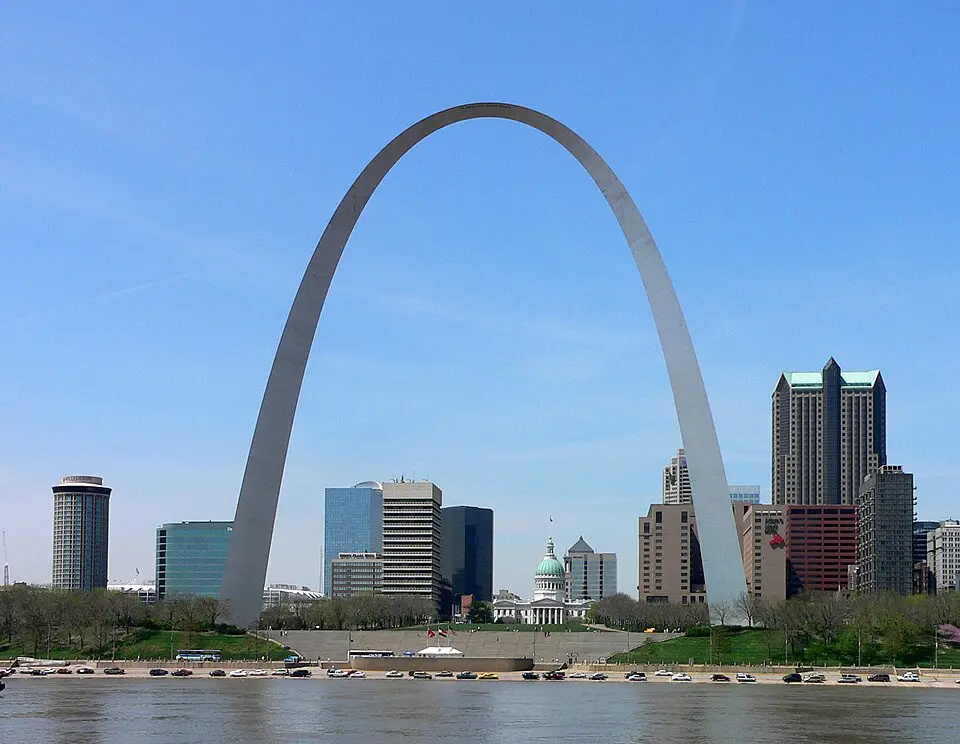
Gateway Arch National Park in St. Louis, Missouri, is a major historic site commemorating the westward expansion of the United States. The park covers 193 acres in eastern downtown and is managed by the National Park Service. At its center stands the 630-foot Gateway Arch, an iconic structure that opened in 1967 and is regarded as the Gateway to the West. The memorial honors not only the Lewis and Clark Expedition but also the Louisiana Purchase, the first civil government west of the Mississippi, and the historic court case Dred Scott v. Sandford. The site was designated a national park in 2018, having previously been a national monument, and is considered a culturally significant protected area.
The memorial's history reaches back to the 19th century, when ideas for honoring the historic events along the Mississippi riverfront first emerged. Attorney Luther Ely Smith raised the idea in 1933 and persuaded President Franklin D. Roosevelt to support creating a site commemorating the purchase of the Louisiana Territory. Roosevelt, who saw the project as a symbol of the pioneer spirit and as a way to combat unemployment during the Great Depression, officially established the memorial in December 1935. Funding came from a mix of federal money, municipal bonds, and private donations, which made it possible to acquire the land and begin planning.
In 1946, an architectural competition was announced for the design of the central feature, drawing entries from numerous prominent architects. Finnish-American architect Eero Saarinen won with his design for an arch, which later contributed to the international fame of his work. His idea of a modern, monumental form resembling an inverted catenary curve was praised by the jury as an unconventional reinterpretation of a classic architectural form. Saarinen worked closely with landscape architect Dan Kiley to ensure the structure blended harmoniously into its urban surroundings.
Construction of the arch began in 1961, after railroad tracks had been rerouted through tunnels to clear the space. Saarinen did not live to see its completion; he died in 1961. The structure is made of stainless steel and concrete and forms a double-walled, triangular hollow-box cross section. The two legs were built up in parallel and stabilized with temporary scaffolding until they met at the top. One remarkable detail: when the keystone was set in 1965, firefighters had to spray the arch with water to compensate for thermal expansion caused by the heat.
Visitors can reach the top of the Gateway Arch via a special transport system made up of eight cylindrical cabins. These cabins travel along the inside of the arch and keep passengers upright throughout the ride. The trip takes about ten minutes and ends at the observation deck at the top. On a clear day, it offers sweeping views over St. Louis, St. Louis County, the Mississippi River, and all the way to Illinois. The deck is fitted with narrow, outward-slanting windows set into the arch's structure.
Beneath the arch is the underground visitor center, which houses the entrance to the arch ride as well as the Museum of Westward Expansion. The museum, which opened in 1976, tells the story of westward expansion in the 19th century. It shows how people lived during that era and presents the development of the riverfront. A theater at the center screens a documentary about the building of the arch, while a second theater shows changing film programs. Admission to the museum is free, making it a popular destination for families and history buffs.
Another important structure on the grounds is the Old Courthouse, an impressive Greek Revival building constructed between 1816 and 1864. It originally served as a federal and state courthouse and was the setting of the historic trial in which Dred Scott, an enslaved man, sued for his freedom. The building is dominated by a tall dome and features Doric columns and triangular pediments reminiscent of the Parthenon. Today it houses dioramas depicting the history of St. Louis from French settlement to the present day.
The park grounds themselves were designed by landscape architect Dan Kiley and are distinguished by rolling topography and asymmetrical pathways. Two artificial lakes, North Pond and South Pond, flank the central area and, with their curving shorelines, provide a peaceful contrast to the monumental architecture. The grounds are richly planted with thousands of trees and shrubs, watered by an underground irrigation system. Sight lines from the ponds and the Old Courthouse lead straight to the Gateway Arch, heightening the spatial impact of the site.
Over the years, the memorial has received various honors and is a major tourist attraction. It has been listed on the National Register of Historic Places and designated a National Historic Landmark. Annual visitation runs to several million, underscoring the site's popularity. In recent years, the grounds have been architecturally upgraded to better integrate them with the city and improve traffic flow. One major project involved covering the main thoroughfare and extending the park over it, making the site easier and more comfortable for visitors to reach.
Gateway Arch National Park is more than a historic monument; it is a living place of remembrance and education. It links the past of American expansion with modern urban development and gives visitors many ways to experience the region's history. Whether you ride up inside the arch, visit the museum, or explore the Old Courthouse, the site invites you to reflect on the profound historical forces that shaped the United States. The combination of imposing architecture, green parkland, and informative exhibits makes it an unforgettable destination in St. Louis.
At a glance
- Category
- Museum › History museums
- Rating
- no reviews yet · write a review
- Address
- 11 N 4th St
63102 Saint Louis, USA - District
- Downtown
- Phone
- (314) 655-1600
- Website
- www.gatewayarch.com
- —
- Coordinates
- 38.62470° N · -90.18547° E
- Data quality
- confidence 0.97
- Identifier
- ID d7b41ce1-06d…
Part of the tour
St. Louis in One Day: The Arch, Downtown and the City Museum →Location & surroundings
Toggle layersRatings & comments
none yetNear Museum at the Gateway Arch
closest 5 per category · 2 kmSights
Restaurants
Museums
Hotels
More:History museums in Saint Louis (22)All museums in Saint Louis (56)
205 places within 2 km loaded.


You need a free account to leave reviews and photos – that keeps comments genuine and lets you edit them later.
Designed by Eero Saarinen and built in 1965, this is the world's tallest national monument, built to be a symbolic gateway to the West. The icon of the city, the Arch is right on the bank of the Mississippi and offers an inspiring sight to travelers coming in from Illinois. There's a gift shop and a confectionery, as well as an inspiring film called "Monument to the Dream," about the building of the Arch; it is an exceptionally well-made and memorable tribute to how a vision was made tangible. But the main attraction is the Journey to the Top; you'll ride a unique tram/elevator—essentially a cross between a cable railway and a Ferris wheel—up either the north or south leg to the top of the arch, where you can see for dozens of miles into Illinois and Missouri. The cars are very small ; they hold five very close friends or relatives each, and are not suitable for the claustrophobic. Tickets sell out during peak season; expect a long wait on major summer holidays to go to the top.
Source: Wikivoyage, „St. Louis“ · authors per page history · CC BY-SA 4.0 · as of 8/21/2015