West Virginia: Gorges, Whitewater, and Mining Heritage
Travel guide · editorial"Almost Heaven, West Virginia" – John Denver's song "Take Me Home, Country Roads" is practically a second anthem here, and the scenery proves him right. A vacation in West Virginia means whitewater rafting, deep gorges, and winding roads through the Appalachians, combined with the story of a mining region that powered America.
Landscape: the "Mountain State"
No other state east of the Mississippi has a higher average elevation. West Virginia lies entirely within the Appalachians, and roughly three-quarters of its land is forested. In the east, the Allegheny Mountains rise to Spruce Knob, the state's highest point, while in the west the land slopes down to the Ohio River, which forms the border with Ohio. In between, rivers such as the New, the Gauley, and the Greenbrier have carved narrow valleys. Monongahela National Forest protects a large part of the highlands, with bogs, spruce forests, and rock formations such as Seneca Rocks.
Sights in West Virginia
Designated in 2020, New River Gorge National Park is the state's showpiece. The steel arch bridge spans the gorge at a height of nearly 900 feet (270 meters); on the third Saturday in October, it opens to pedestrians and BASE jumpers for Bridge Day. Below, the New River and Gauley River offer some of the best rafting in the eastern U.S., and the cliffs attract climbers. Harpers Ferry, at the confluence of the Potomac and Shenandoah rivers, is a historic small town where John Brown staged his uprising against slavery in 1859; the Appalachian Trail runs right through it. Blackwater Falls plunges over dark, tannin-stained rock, and at the luxury resort The Greenbrier in White Sulphur Springs, visitors can tour a once-secret nuclear bunker built for Congress.
Cities: from Charleston to Wheeling
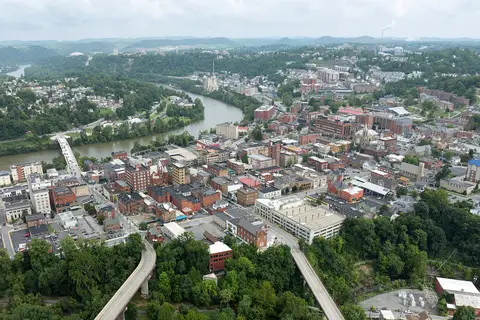
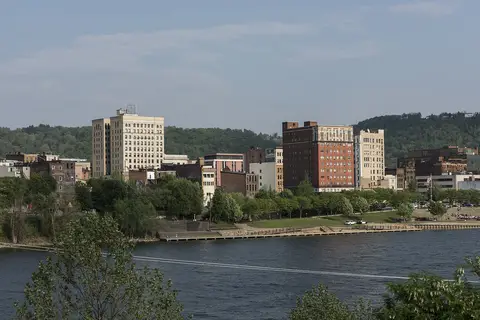
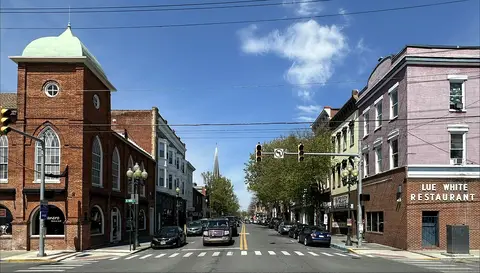
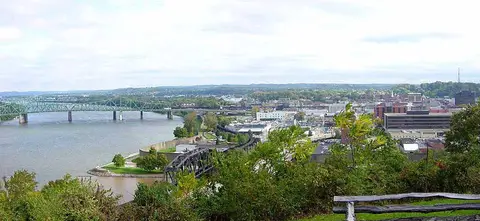
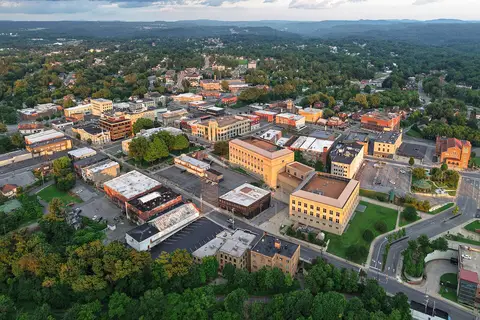
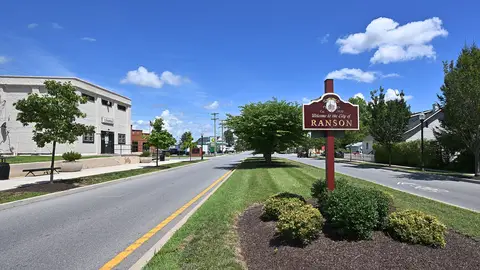
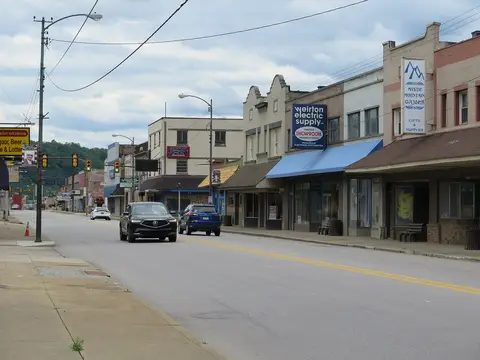
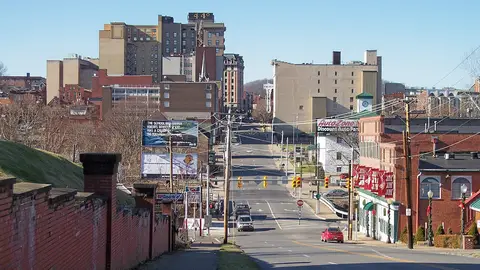
Charleston, the capital on the Kanawha River, has a capitol with a gilded dome and a lively market in the Capitol Market district. Huntington, on the Ohio River, is home to Marshall University, while Morgantown in the north thrives on West Virginia University and its driverless personal rapid transit system. Wheeling was once an industrial center; its suspension bridge from 1849 is among the oldest in the U.S. Parkersburg is the jumping-off point for Blennerhassett Island in the Ohio River, and in Beckley, the Exhibition Coal Mine invites you to ride into a real mine tunnel. In the east, Martinsburg and Ranson near Charles Town are part of the commuter belt around Washington. The capital also has the Clay Center, a cultural complex with a concert hall and science museum, and in summer, boat regattas take place on the river.
History and culture
West Virginia came into being during the Civil War: the mountain regions rejected Virginia's secession from the Union and founded their own state in 1863. For more than a century afterward, coal shaped the economy and society, with bitter labor struggles such as the Battle of Blair Mountain in 1921. Today the state is changing, and tourism and outdoor sports are gaining importance. The musical tradition of bluegrass and old-time fiddle is alive and well, and you can hear it on the radio show "Mountain Stage" broadcast from Charleston.
Food and drink
The pepperoni roll, a soft bread roll with salami baked inside, was invented for Italian miners and remains the state's signature food to this day. In spring, towns celebrate ramps, or wild leeks, with festivals of their own, and in Preston County you'll find buckwheat pancakes. Add beans with cornbread and homemade apple butter. Small distilleries have also settled in the hills, carrying on the Appalachian moonshine tradition entirely legally and with guided tours.
Getting there and best time to visit
Charleston's airport has domestic connections, and many travelers arrive via Washington or Pittsburgh. Amtrak's Cardinal train runs through the New River Gorge and is considered one of the most scenic rail routes in the East. West Virginia is at its best from May to October; the rafting season on the Gauley River, with its scheduled dam releases, runs in September and October, when the forests also change color. In winter, ski areas such as Snowshoe are open. If you're driving, allow plenty of extra travel time, since many roads follow the twists and turns of the valleys.