New Mexico: Pueblos, Chiles, and White Desert Sands
Travel guide · editorialAdobe buildings in ocher, ristras of dried red chiles hanging by the doors, and a light that held Georgia O'Keeffe in its grip for her entire life: New Mexico feels different from the rest of the U.S. A vacation in New Mexico combines Indigenous culture, Spanish colonial heritage, and desert landscapes found nowhere else in the world.
Landscape and Location
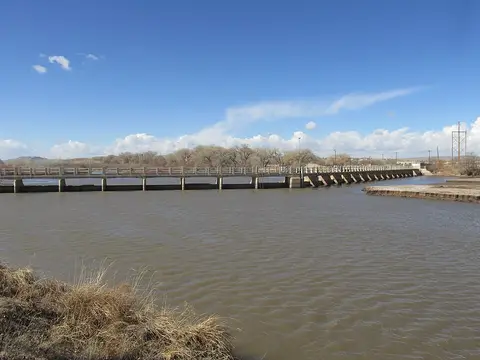
Known as the "Land of Enchantment," this southwestern state borders Mexico and is one of the Four Corners, where four states meet at a single point. From the north, the foothills of the Rocky Mountains reach in with the Sangre de Cristo Mountains; Wheeler Peak near Taos is the highest summit at just over 13,000 feet (4,000 meters). The Rio Grande runs through the state from north to south, forming the lifeline along which the pueblos and Spanish settlements arose. The Chihuahuan Desert dominates the south, while the northwest is home to the Colorado Plateau, with its mesas and the volcanic rock formation Shiprock, a sacred mountain to the Navajo.
Sights in New Mexico
Three sites are on the UNESCO World Heritage list. Taos Pueblo has been inhabited for roughly a thousand years; its multistory adobe houses set against the mountain backdrop are among the oldest continuously inhabited settlements in North America. In remote Chaco Canyon you'll find the monumental ruins of the Ancestral Puebloans, and Carlsbad Caverns in the south impress with vast halls of stalactites and stalagmites and, in summer, evening flights of bats. Another natural wonder is White Sands National Park, the largest gypsum dune field on Earth, where you can walk barefoot or slide down the dunes on a sled. Around Abiquiú and Ghost Ranch, Georgia O'Keeffe painted her rocks and hills; her museum is in Santa Fe.
Cities: Albuquerque, Santa Fe, and Las Cruces
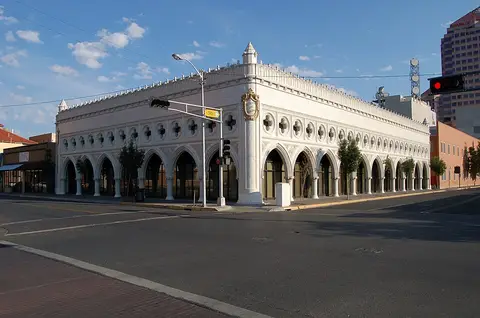
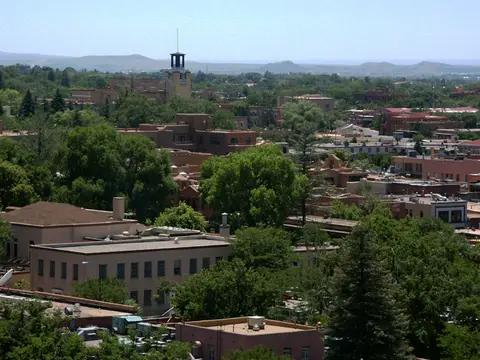
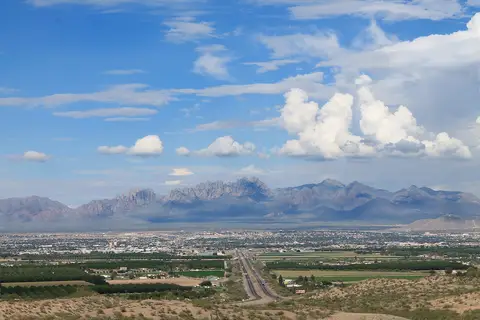
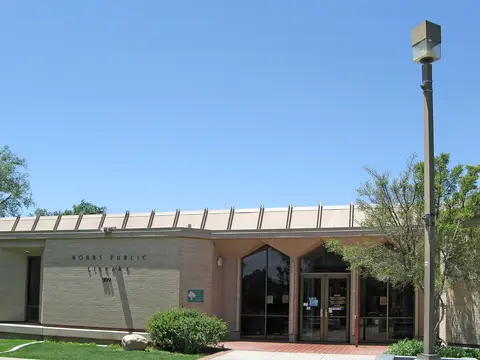
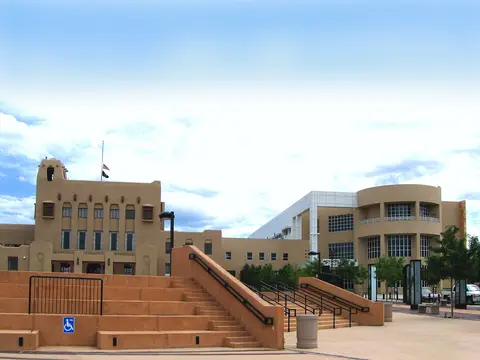
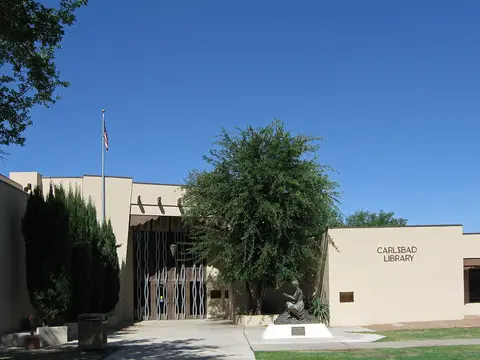
Albuquerque is the largest city, with a historic Old Town around San Felipe de Neri Church, the Indian Pueblo Cultural Center, and the Sandia Peak Tramway, one of the longest aerial tramways in America. Every October, hundreds of hot-air balloons rise into the morning sky here at the International Balloon Fiesta. Fans will recognize filming locations from the series "Breaking Bad." Santa Fe, founded in 1610, is the oldest state capital in the U.S.; its Plaza, the Palace of the Governors, the galleries on Canyon Road, and a significant opera scene make it the state's cultural center. Las Cruces in the south has a charming old core in neighboring Mesilla. Gallup is a trading hub for Navajo and Zuni jewelry and crafts, and Farmington is the starting point for the Four Corners. Roswell thrives on the alleged UFO crash of 1947, Carlsbad on its caves, and Hobbs on oil. Along the way, the mountain villages on the High Road to Taos are also worth a stop, such as Chimayó with its pilgrimage church and Truchas with its weaving workshops.
Culture and History
Pueblo peoples, Apache, and Navajo lived here long before the Spanish arrived in the 16th century. After Mexican independence, the territory passed to the U.S. in 1848 and did not become a state until 1912. During World War II, the atomic bomb was developed in Los Alamos and first detonated in 1945 at the Trinity Site in the desert. Today many people speak Spanish, and the pueblos hold festivals with dances where visitors are sometimes welcome, though photography is often prohibited.
Food and Drink
The official state question is "Red or green?" – referring to the chile sauce served with enchiladas, burritos, or eggs. If you can't decide, order "Christmas," meaning both. Green chiles from the Hatch Valley are roasted everywhere in late summer. You'll also find sopaipillas with honey, posole stew, and the state cookie, the anise-flavored biscochito.
Getting There and Best Time to Visit
Albuquerque International Sunport is the main gateway, with connections via Dallas, Denver, or Phoenix. Route 66 and Interstate 40 cross the north. At elevations of around 5,000 feet (1,500 meters) and higher, the climate is dry; the best time to visit is spring and fall, and October brings the Balloon Fiesta and golden cottonwoods. In summer, monsoon thunderstorms roll in during the afternoon, and in winter there is snow for skiing in the mountains around Taos.