Nebraska: Cranes, Sandhills and the Oregon Trail
Travel guide · editorialEvery spring, hundreds of thousands of sandhill cranes land along the Platte River in Nebraska, a natural spectacle that draws bird lovers from around the world. A trip to Nebraska follows the trails of the wagon trains west, through grass-covered sand hills, and to a big-city zoo that ranks among the best in the country.
Landscape: Great Plains and Sandhills
Nebraska lies in the central Great Plains and climbs from roughly 1,000 feet in the east along the Missouri River to more than 5,000 feet at the Wyoming border. Cornfields and soybean fields dominate the east, while the Sandhills stretch across the middle, the largest dune area in the Western Hemisphere, now covered in grass and turned into cattle country. Beneath them lies the enormous Ogallala Aquifer. The Platte River runs wide and shallow from west to east, and in the north the Niobrara River cuts a wooded canyon with waterfalls into the prairie, a popular spot for canoe and tubing trips.
Sights in Nebraska
Between late February and early April, sandhill cranes gather between Grand Island and Kearney; from observation blinds along the river, you can watch them lift off at dawn. In the west, Chimney Rock and Scotts Bluff National Monument mark the route that hundreds of thousands of emigrants once followed along the Oregon Trail and the Mormon Trail; in some of the rock, wagon ruts are still visible. One of a kind is Carhenge near Alliance, a replica of Stonehenge made from gray-painted cars. Toadstool Geologic Park in the far northwest shows off bizarre badlands, and Agate Fossil Beds National Monument holds mammal fossils from the Miocene.
Cities: Omaha, Lincoln and the Towns Along the Platte
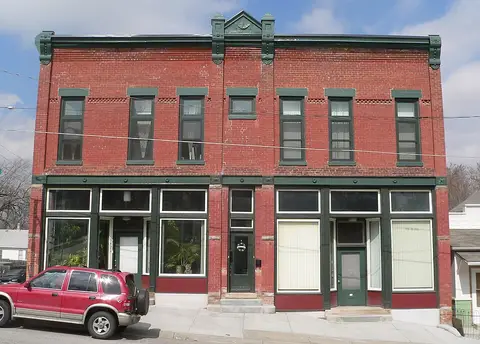
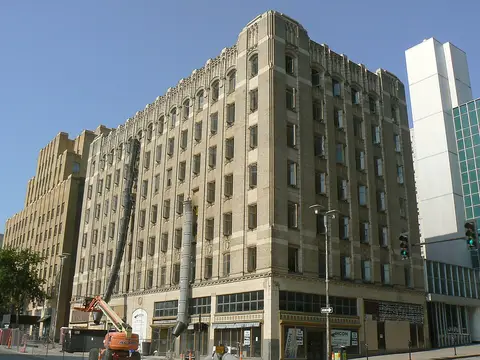
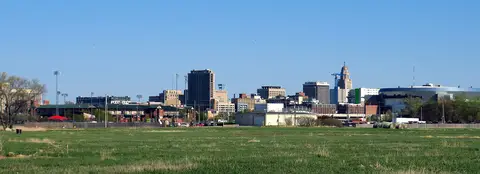
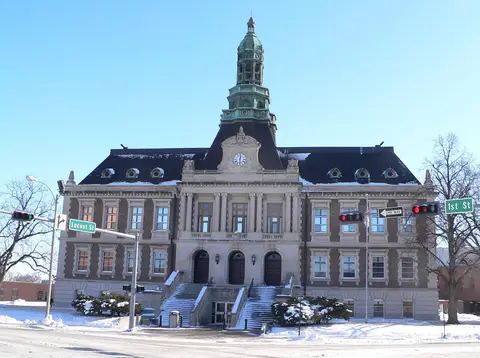
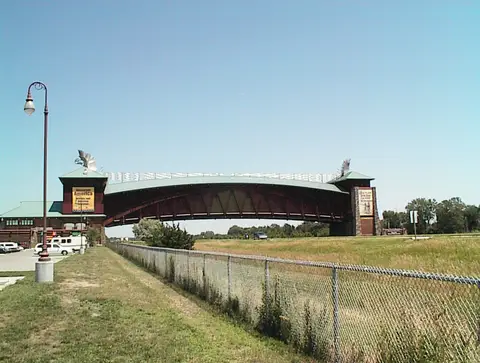
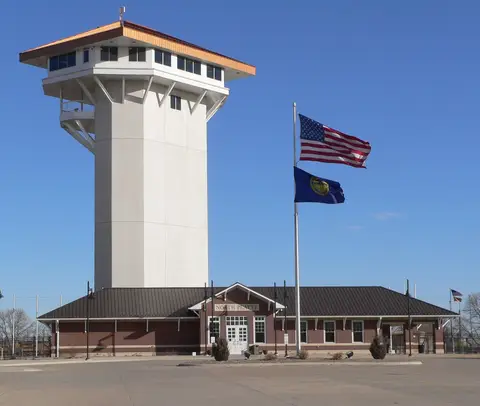
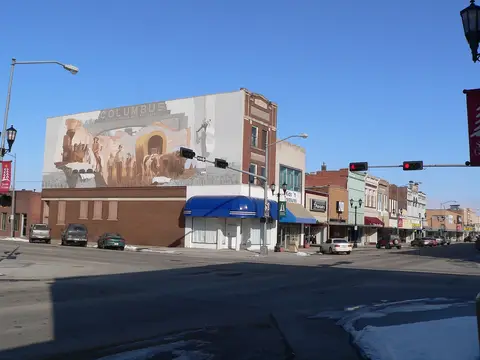
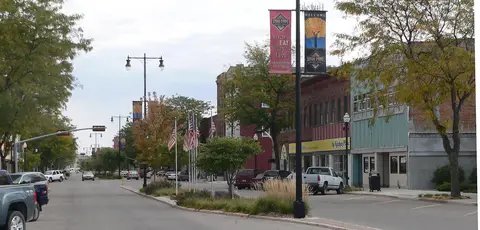
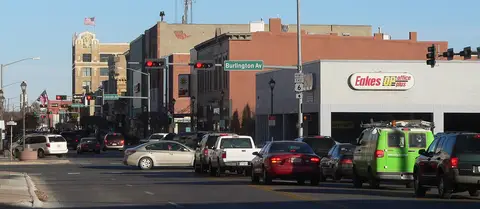
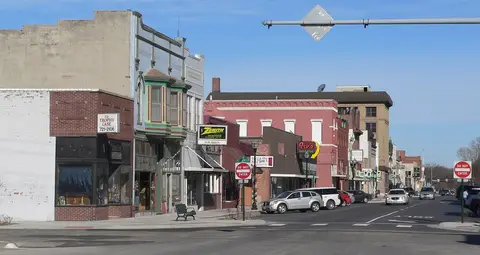
Omaha on the Missouri River is the largest city. In the Old Market, a district of brick warehouses and cobblestone streets, restaurants, galleries and pubs line up side by side. The Henry Doorly Zoo, with its desert dome and indoor rainforest, is one of the most visited zoos in the U.S., and every June the College World Series brings baseball fever to town. Warren Buffett's Berkshire Hathaway is headquartered here; Bellevue to the south is one of the oldest settlements in the state. The capital, Lincoln, impresses with an Art Deco capitol topped by a tower more than 400 feet tall, and on University of Nebraska game days the whole city turns red. In Kearney, the Great Platte River Road Archway spans the interstate, Grand Island preserves a pioneer town at the Stuhr Museum, and North Platte offers a view of Bailey Yard, the largest rail yard in the world, as well as Buffalo Bill's ranch. Columbus and Norfolk are quiet country towns in the east.
History
The Pawnee, Omaha, Ponca, Lakota and other peoples lived on the Plains before the area became part of the U.S. in 1803. Nebraska Territory was established in 1854, and statehood followed in 1867. With the Homestead Act and the Union Pacific Railroad came settlers, many from Germany, the Czech lands and Scandinavia. Politically, Nebraska is an exception: it is the only U.S. state with just one legislative chamber, which is officially nonpartisan.
Food and Drink
Nebraska is cattle country, and a good steak belongs on every visit. Typical is the Runza, a pastry filled with ground beef, cabbage and onions that traces back to Volga German immigrants. The Reuben sandwich is said to have been invented in a hotel in Omaha, and Kool-Aid was created in Hastings, which still celebrates it with a festival. In Omaha, the Old Market district is worth a visit, with steakhouses, bistros and small breweries close together in old warehouses. A slice of pie or cake from one of the many Czech and German bakeries in Wilber and the surrounding area makes a fitting dessert.
Getting There and Best Time to Visit
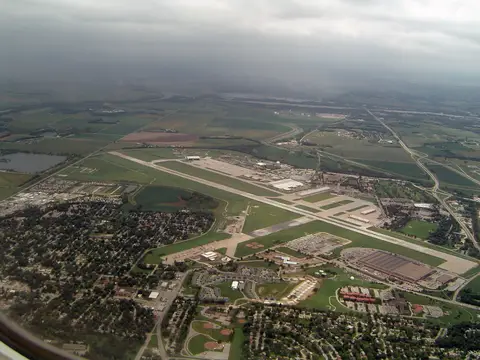
Omaha's airport is the main gateway, and Interstate 80 crosses the state along the Platte River. For the west and the Sandhills, back roads such as the Sandhills Journey Scenic Byway are more rewarding. The best time to visit depends on your destination: March to April for the crane migration, May to October for road trips. Summers are hot with thunderstorms, and winters are cold. For crane watching, book spots in the viewing blinds early.