Maine: Lighthouses, Lobster, and Northern Woods
Travel guide · editorialNowhere in the U.S. does the sun rise earlier in fall and winter than on Cadillac Mountain in Maine. A vacation in Maine takes you to a rugged rocky coast of lighthouses and lobster boats, and deep into forests where moose outnumber people.
Landscape: Coast and Interior
Maine is the northeasternmost state and the only one that borders just one other U.S. state, New Hampshire; otherwise it borders Canada and the Atlantic. As the crow flies, the coastline measures only a few hundred miles, but its countless bays, peninsulas, and more than 3,000 islands make it many times longer. In the south you'll find sandy beaches, while farther north granite cliffs and spruce trees dominate. Almost 90 percent of the interior is forested; Moosehead Lake and Mount Katahdin in Baxter State Park, the end point of the Appalachian Trail, stand for the rugged wilderness of the north.
Sights in Maine
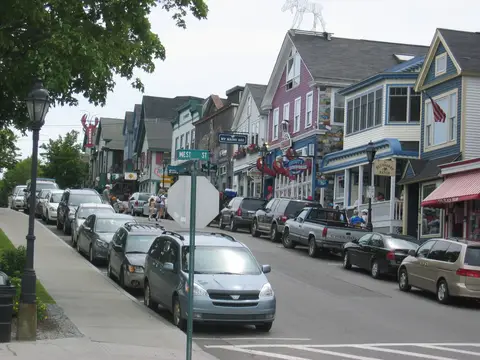
Acadia National Park on Mount Desert Island is the best-known destination: gravel carriage roads built at the behest of John D. Rockefeller Jr., granite summits with views over Frenchman Bay, and Thunder Hole, where the surf crashes thunderously into a rock crevice. Bar Harbor is the lively base town, with whale-watching tours. Around 60 lighthouses line the coast; Portland Head Light near Cape Elizabeth is one of the most photographed in the U.S. Harbor towns such as Camden with its windjammer sailing ships, Boothbay Harbor, or Kennebunkport invite you to stroll. In the interior, you can canoe the Allagash River and watch for moose in the fall.
Cities: Portland and Bangor
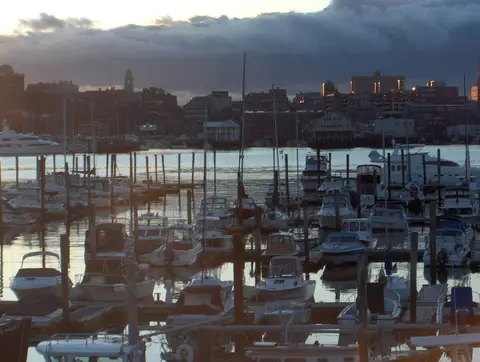
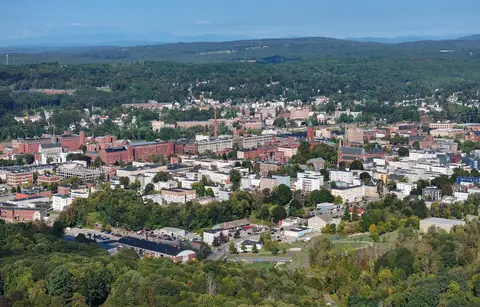
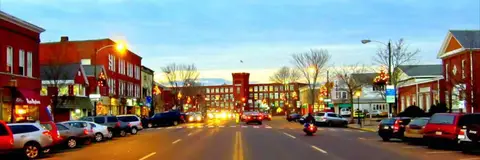
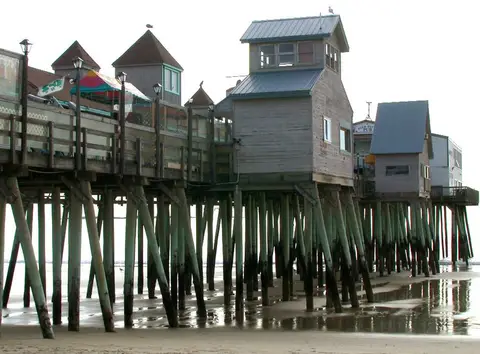
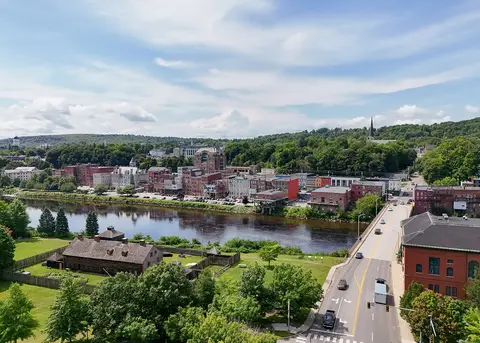
Portland is the largest city and one of the best small food cities in America. In the Old Port, with its 19th-century brick buildings, restaurants, breweries, and fish markets crowd together; ferries run to the islands of Casco Bay. South Portland across the water has its own lighthouses and the airport. To the south, Old Orchard Beach, with its pier and boardwalk, has drawn summer visitors for over a hundred years, many of them from French-speaking Québec. Bangor on the Penobscot River is the hometown of Stephen King, whose Victorian house with its wrought-iron fence makes a good photo stop. Lewiston, once a textile town, has a large Franco-American community, Brunswick is home to Bowdoin College, and Augusta on the Kennebec River is a modest-sized capital. Farther northeast along the "Downeast" coast, the towns get smaller and quieter; Lubec is the easternmost town in the U.S., and across the water on Canada's Campobello Island stands Franklin D. Roosevelt's summer home.
History and Culture
The Wabanaki peoples, including the Penobscot and Passamaquoddy, have lived here for thousands of years. In the 17th century, the French and English fought over the coast. Maine long belonged to Massachusetts and only became its own state in 1820. Lumber, shipbuilding, and fishing shaped the economy; warships are still built in Bath today. The painter Winslow Homer worked on the coast near Prouts Neck, and the Farnsworth Art Museum in Rockland shows works by the Wyeth family of artists.
Food and Drink
Lobster is everywhere, best as a lobster roll in a buttered bun or boiled at a shack on the harbor. Clam chowder and fried clams round out the menu. Maine is also the largest producer of wild blueberries in the U.S., which end up in pies and pancakes. The whoopie pie, two chocolate cakes with a cream filling, is the official state treat.
Getting There and Best Time to Visit
Many travelers fly into Boston and drive to Portland in a little over two hours; the Amtrak Downeaster train also runs there. For the coast, Route 1 is the classic route. The best time to visit is between June and October: summers are mild, though the ocean stays chilly. In late September and October, the forests glow with fall color. Winters are long, cold, and snowy, and cross-country and downhill skiers head to Sugarloaf or Sunday River. In summer, lodging in Bar Harbor and Kennebunkport books up early.