
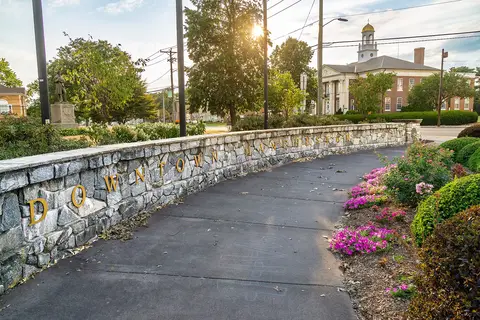
Connecticut: New England Between Yale and the Coast
Travel guide · editorialConnecticut is the third-smallest state in the U.S., wedged between New York and Boston – and many travelers simply drive straight through it. Yet a vacation in Connecticut offers white church steeples on village greens, oyster beds on Long Island Sound, one of the country's oldest universities, and a pizza tradition that connoisseurs argue about with real passion.
Coast, River Valley, and the Litchfield Hills
Southern Connecticut borders Long Island Sound, a sheltered arm of the Atlantic with coves, salt marshes, and small islands such as the Thimble Islands off Branford. The Connecticut River, New England's longest, flows through the middle of the state; its mouth at Old Saybrook is so choked with sandbars that a major port city never developed here – today its banks remain largely natural. In the northwest lie the Litchfield Hills, gentle uplands of forests, lakes, farms, and antiques shops, which the Appalachian Trail also crosses. The east, known as the "Quiet Corner," is rural and sparsely populated.
Cities: New Haven, Hartford, and the Gold Coast
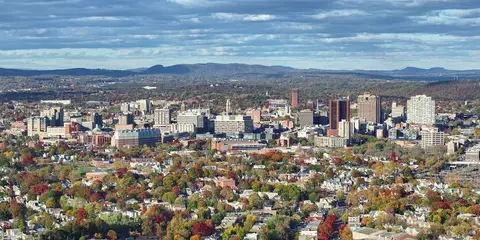
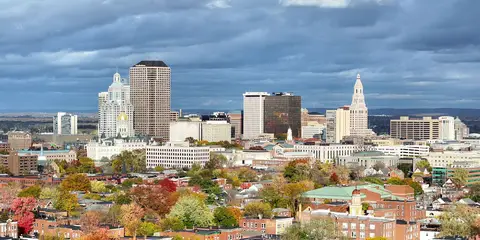
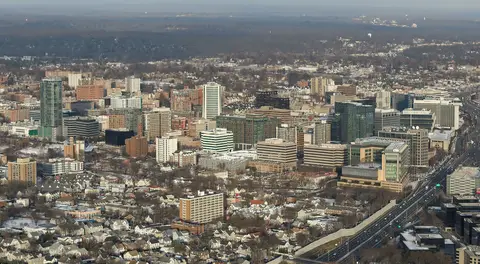
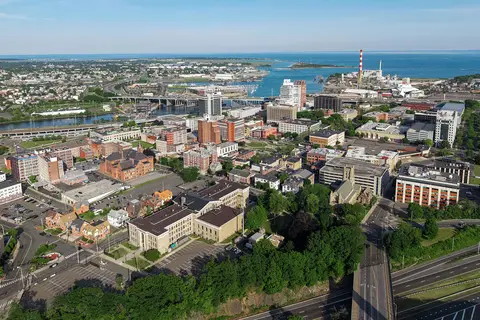
New Haven is inseparable from Yale University, founded in 1701. The Gothic Revival campus, the Beinecke Library with its translucent marble walls (home to a Gutenberg Bible on display), and the free art museums – the Yale University Art Gallery and the Yale Center for British Art – make the city well worth a visit. Hartford, the state capital, was long the center of the insurance industry. Mark Twain lived here in an eccentric Victorian house, and right next door lived Harriet Beecher Stowe, author of "Uncle Tom's Cabin"; both houses are now museums. The Wadsworth Atheneum is considered the oldest public art museum in the U.S. In the southwest, the so-called Gold Coast, you'll find Stamford, Norwalk, and upscale Greenwich – commuter towns for New York City with corporate headquarters and mansions. Bridgeport is the most populous city, Waterbury a former brass-manufacturing town, Danbury was once known as "Hat City" because hats were made here, and Milford has a long stretch of coastline.
Sights in Connecticut
Mystic Seaport in the east is an open-air museum with a re-created 19th-century port village and the Charles W. Morgan, the last surviving wooden whaling ship in the world. Next door, the Mystic Aquarium shows beluga whales. In Groton, you can tour the world's first nuclear-powered submarine, the USS Nautilus. Essex on the Connecticut River draws visitors with a steam train and riverboat cruise. The Philip Johnson Glass House in New Canaan is a pilgrimage site for architecture fans. In the southeast, the Mashantucket Pequot and Mohegan tribes operate two of the largest casinos in the U.S., Foxwoods and Mohegan Sun; the Pequot Museum tells the story of the region's Native peoples.
History and Nickname
Connecticut was one of the thirteen original colonies. The Fundamental Orders of 1639 are regarded by some as one of the first written constitutions in the world, hence the nickname "Constitution State." In the 19th century, the state became an industrial center: clocks, Colt and Winchester firearms, and sewing machines were all manufactured here.
Food and Drink
New Haven is famous for its "apizza," thin, slightly charred pies baked in coal-fired ovens. Frank Pepe's and Sally's on Wooster Street are the classics, and the white clam pizza is the specialty. Along the coast, you'll find lobster rolls, which in Connecticut are served warm with melted butter, while in Maine they prefer mayonnaise. Louis' Lunch in New Haven claims to have invented the hamburger in 1900. In fall, farm stands in the Litchfield Hills sell fresh apple cider, and around Mystic, oysters from Long Island Sound appear on many menus.
Best Time to Visit and Getting There
The best time to visit runs from May to October; in early to mid-October, the forests of the Litchfield Hills turn brilliant red and yellow. Winters are cold and snowy. Bradley International Airport (BDL) near Hartford is the main gateway, though many visitors arrive via the New York airports. Metro-North trains connect New York with Stamford and New Haven, and Amtrak continues on to Boston. A rental car is worthwhile for coastal towns and the hill country.