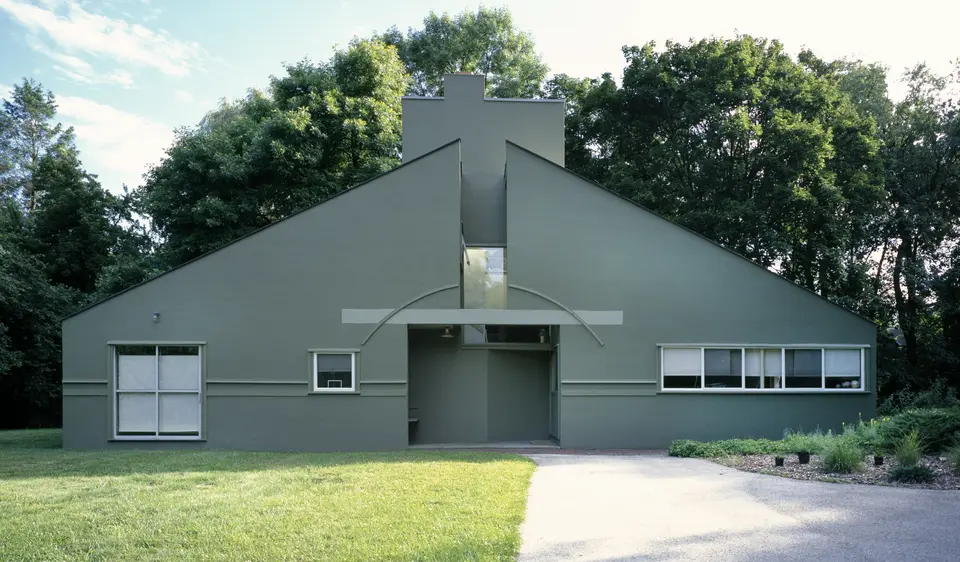
About Vanna Venturi House
The Vanna Venturi House in the Chestnut Hill neighborhood of Philadelphia is considered one of the first significant works of postmodern architecture. The architect Robert Venturi designed the building between 1962 and 1964 for his mother, who lived there until she moved into a nursing home. The small house, only about 30 feet tall, impresses with its monumental facade, created through the deliberate manipulation of architectural elements such as a non-structural appliqué arch and distinctive window openings. These design elements were a conscious provocation against the strict rules of modern architecture, as Venturi described them in his influential book "Complexity and Contradiction in Architecture." The architect saw the house as the embodiment of his theory, which favored hybrid, contradictory, and complex forms over pure, clean lines.
Inside, the central chimney dominates, forming the heart of the house together with the staircase. The two elements compete for the center, with the staircase adapting its shape and path to form a unit with the chimney. Also remarkable is the staircase on the upper floor, which appears to lead to a nonexistent third story, lending the house a playful character. The design took into account the needs of its resident, who wanted to carry out all her daily activities on one level. The bedroom, bathroom, kitchen, and living area are therefore on the ground floor, while the architect himself was housed on the upper floor with his studio and a private balcony. The house was designed specifically for the antiques and furniture of its resident, which she had collected over decades.
The building has gained great historical and architectural significance. In 1989 it received the prestigious Twenty-five Year Award from the American Institute of Architects, and in 2005 it appeared on a U.S. Postal Service stamp in a series on modern masterpieces of American architecture. Models of the house are held at the Museum of Modern Art in New York. In the neighborhood of Chestnut Hill, a historic district with many Victorian mansions, the house stands in interesting contrast to other contemporary buildings such as Louis Kahn's Esherick House. While Kahn relied on proportion and symmetry, Venturi uses fragments and asymmetries to reflect the complexity of living.
At a glance
- Category
- Sight › Historic sites
- Rating
- no reviews yet · write a review
- Address
- Millman St
19118 Philadelphia, USA - District
- Chestnut Hill
- Phone
- —
- Website
- en.wikipedia.org
- —
- Coordinates
- 40.07065° N · -75.20809° E
- Data quality
- confidence 0.63
- Identifier
- ID 442291bd-81c…
Location & surroundings
Toggle layersFAQ about Vanna Venturi House
quick answersWhat is the Vanna Venturi House in Philadelphia?
The Vanna Venturi House is a private home in the Chestnut Hill neighborhood of Philadelphia, USA, and is considered one of the first major works of postmodern architecture. Architect Robert Venturi designed it between 1962 and 1964 for his mother, Vanna, who lived there until she moved into a nursing home. The house stands on Millman Street and was designed specifically for the antiques and furniture its resident had collected over decades.
Why is the Vanna Venturi House so important architecturally?
The Vanna Venturi House in Philadelphia is seen as a deliberate provocation against the strict rules of modern architecture and as the built realization of Robert Venturi's theory from his book "Complexity and Contradiction in Architecture." Instead of pure, clean lines, the house, only about 30 feet (9 meters) tall, relies on hybrid, contradictory forms, such as a non-structural applied arch and unusual window openings that create a monumental facade. In 1989 it received the Twenty-five Year Award from the American Institute of Architects, and in 2005 the U.S. Postal Service featured it on a stamp in its series on modern masterpieces of American architecture. Models of the house are held by the Museum of Modern Art in New York.
What is special about the interior of the Vanna Venturi House?
Inside the Vanna Venturi House in Philadelphia, a central fireplace and the staircase form the heart of the home, competing for the center of the house, with the staircase adjusting its shape to the fireplace. A staircase on the upper floor appears to lead to a nonexistent third story, lending the house a playful character. The bedroom, bathroom, kitchen, and living area are all on the ground floor because Vanna Venturi wanted to carry out all her daily activities on one level. Upstairs, Robert Venturi had his studio and a private balcony.
What can you see around the Vanna Venturi House in Chestnut Hill?
Around the Vanna Venturi House in Chestnut Hill, Philadelphia, the most worthwhile stop is Louis Kahn's Margaret Esherick House, which travelguide195 places about 240 meters away. Kahn's building emphasizes proportion and symmetry, making for a fascinating contrast with Venturi's fragments and asymmetries. About 440 meters away, the Chestnut Hill Historic District begins, a historic neighborhood with many Victorian mansions. For a break, travelguide195 lists a restaurant within 500 meters.
Ratings & comments
none yetNear Vanna Venturi House
closest 5 per category · 2 kmSights
Restaurants
Museums
Hotels
Cocktail bars
More:Historic sites in Philadelphia (962)All sights in Philadelphia (1,030)
85 places within 2 km loaded.
Don't miss in Philadelphia
All sights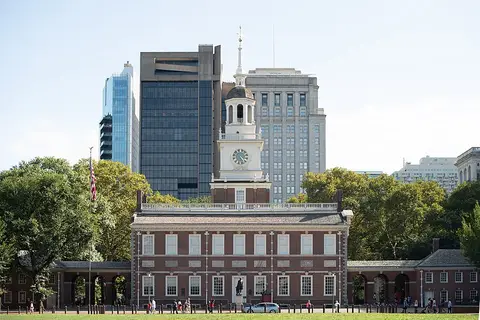 Historic sites01
Independence Hall
520 Chestnut St · Philadelphia● Website● Phone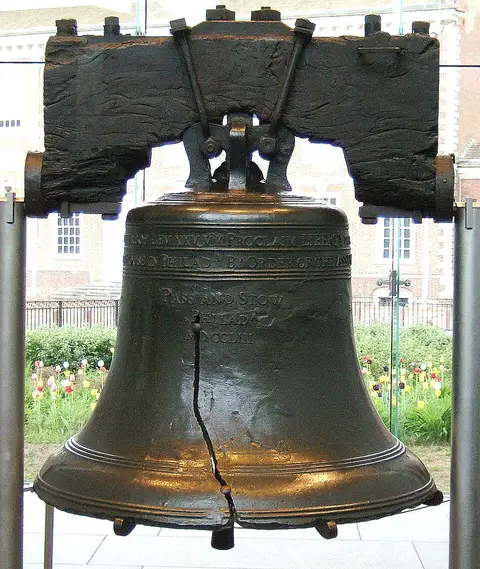 Historic sites02
Liberty Bell
526 Market St · Philadelphia● Website● Phone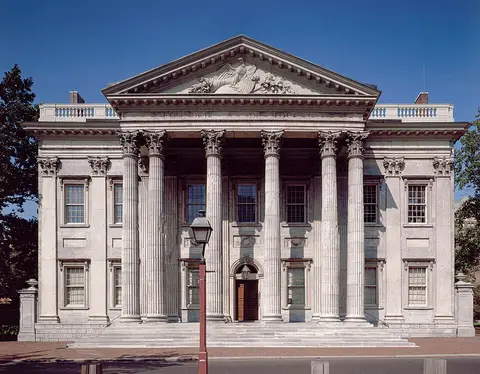 Historic sites03
First Bank of the United States
120 S 3rd St · Philadelphia● Website● Phone Historic sites04
You need a free account to leave reviews and photos – that keeps comments genuine and lets you edit them later.