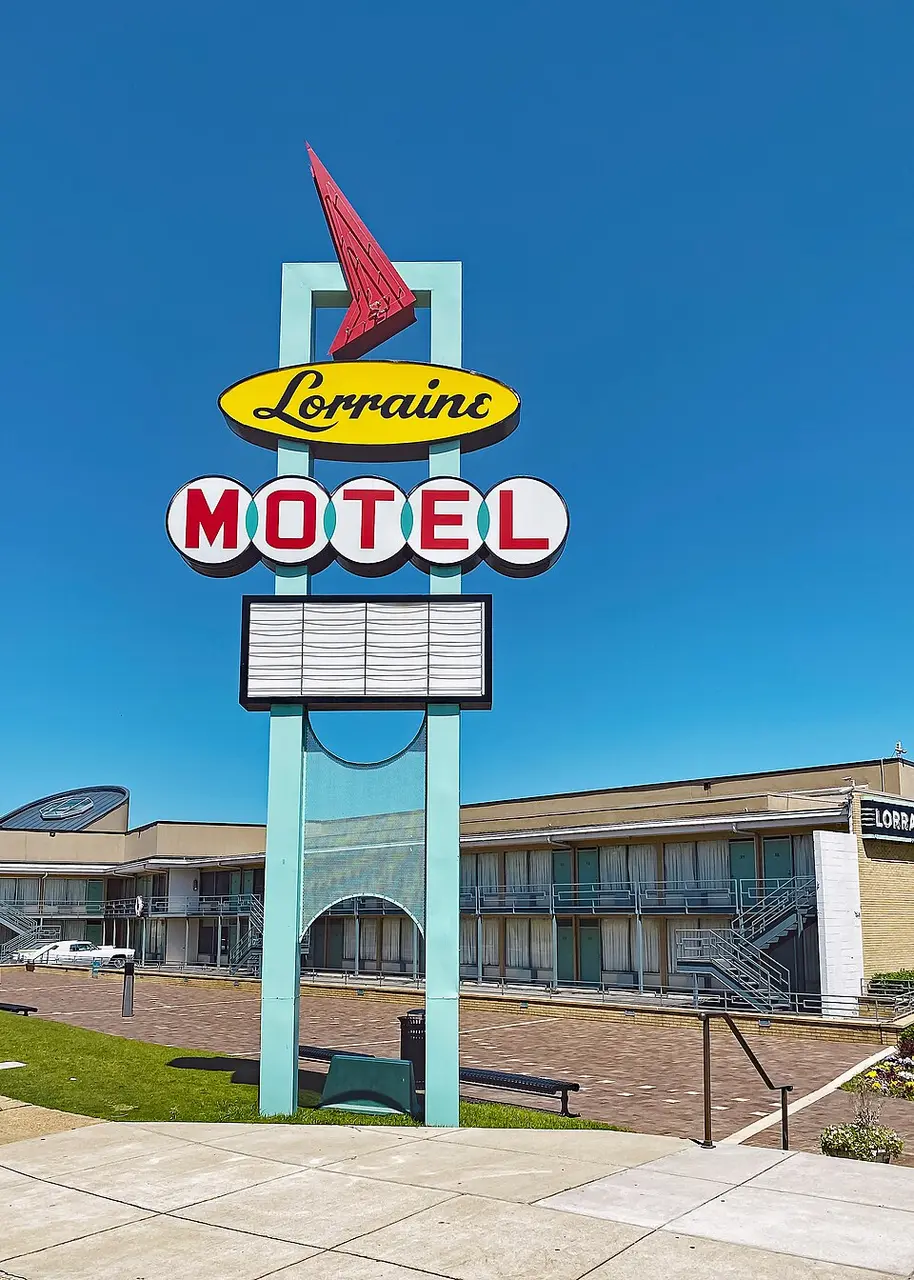
About National Civil Rights Museum
The National Civil Rights Museum in Memphis, Tennessee, is housed in the historic Lorraine Motel building on Mulberry Street. Martin Luther King Jr. was staying in a room here, built in the early 1920s, when he was assassinated in 1968. After the Martin Luther King Jr. Memorial Foundation acquired the property and a renovation lasting several years, the museum opened its doors in 1991. The permanent exhibition takes visitors chronologically through the history of the American civil rights movement. It begins with the arrival of the first Black people in the British colonies in the seventeenth century and ends with King's assassination. This makes the site a central place of remembrance and learning for engaging with this defining era of American history.
At a glance
- Category
- Museum › History museums
- Rating
- no reviews yet · write a review
- Address
- 450 Mulberry St
38103-4214 Memphis, USA - Phone
- +19015219699
- Website
- www.civilrightsmuseum.org
- cdyson@civilrightsmuseum.org
- Coordinates
- 35.13455° N · -90.05750° E
- Data quality
- confidence 0.99
- Identifier
- ID 8cca3d57-747…
Location & surroundings
Toggle layersRatings & comments
none yetNear National Civil Rights Museum
closest 5 per category · 2 kmSights
Restaurants
Museums
Hotels
More:All museums in Memphis (58)
204 places within 2 km loaded.
You need a free account to leave reviews and photos – that keeps comments genuine and lets you edit them later.
The museum was built out of the Lorraine Motel, where Dr. Martin Luther King, Jr. was assassinated on April 4, 1968. Although better known for his role in the Civil Rights movement that secured equal rights for African-Americans at least on paper, King was also a vociferous supporter of the labour movement who saw the two movements as natural allies, and sought to build bridges between them. King was in Memphis to show support for African-American sanitation workers who were on strike to demand better pay and safer working conditions at the time of his assassination.
Source: Wikivoyage, „History of organized labor“ · authors per page history · CC BY-SA 4.0