About Sugar Hill Historic District
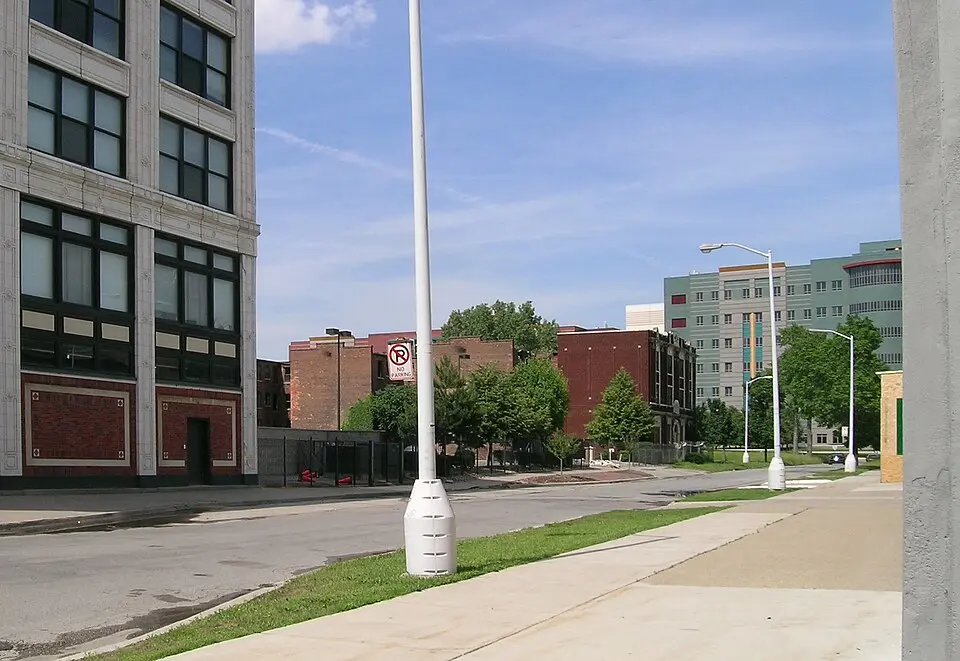
The Sugar Hill Historic District in Detroit, Michigan, is a protected historic zone that was added to the National Register of Historic Places in 2003. It comprises fourteen buildings spread along East Forest, Garfield, and East Canfield streets between Woodward Avenue and John R. Built between 1885 and 1938, these structures include single-family homes, apartment complexes, a church, and commercial buildings. The district is considered the largest surviving section of a neighborhood that was a center of the jazz scene in the 1940s and 1950s, home to numerous clubs and businesses run by African Americans.
The history of the area is closely tied to Detroit's demographic shifts. Originally home to wealthy citizens and later to Jewish families and medical staff, the neighborhood changed beginning in the 1930s. With the arrival of African American residents and the opening of nightclubs, Sugar Hill developed into a lively entertainment district. Famous musicians such as Count Basie, Billie Holiday, and Muddy Waters performed here, and young talents who would later shape the Motown sound began their careers in this scene. Although urban redevelopment and hospital expansions in the 1960s and 1990s destroyed many buildings, some survived the test of time. Today, former garages and print shops house the N'Namdi Center for Contemporary Art, while renovated apartment buildings such as Garfield Manor serve as artist residences and are equipped with modern technology such as solar power.
Visitors can explore the district's architectural variety, which ranges from Queen Anne houses with polygonal bay windows to brick buildings in the Beaux-Arts style. The Agnes Inglis House and the house of Dr. N.W. Webber still show characteristics of the Victorian era, while the Carver Hotel, with its Renaissance Revival facade and arches on the ground floor, reflects the commercial history of the area. The Church of the New Jerusalem, a simple Gothic-style brick building, is also part of the ensemble and is currently being converted into apartments. Despite the loss of some striking buildings such as the Randora Hotel, the district remains an important place for understanding Detroit's cultural and social development.
At a glance
- Category
- Sight › Historic sites
- Rating
- no reviews yet · write a review
- Address
- 71 Garfield St
48201-1905 Detroit, USA - District
- Medical Center
- Phone
- —
- Website
- —
- —
- Coordinates
- 42.35444° N · -83.06111° E
- Data quality
- confidence 0.82
- Identifier
- ID 51fda556-e5d…
Location & surroundings
Toggle layersRatings & comments
none yetNear Sugar Hill Historic District
closest 5 per category · 2 kmSights
Museums
Hotels
More:Historic sites in Detroit (500)All sights in Detroit (529)
167 places within 2 km loaded.


You need a free account to leave reviews and photos – that keeps comments genuine and lets you edit them later.