About Penobscot Building
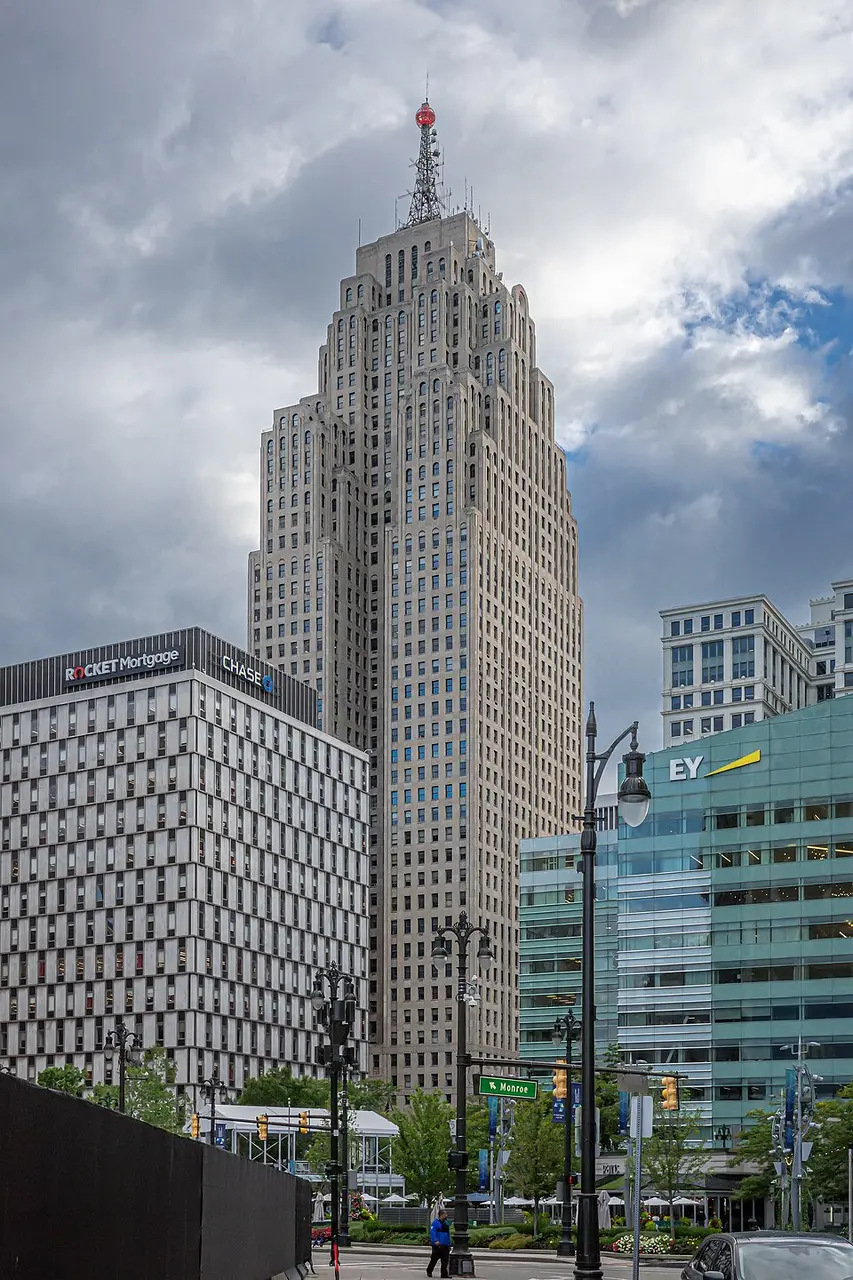
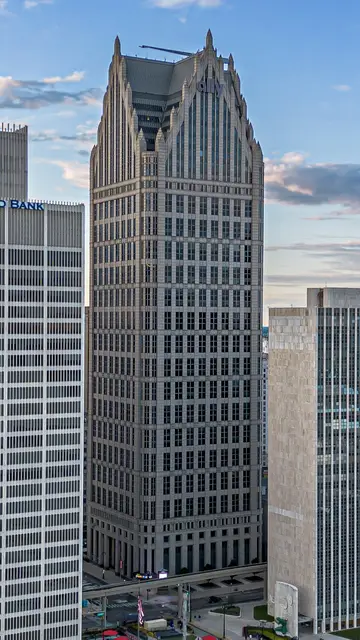
The Penobscot Building is a striking office tower in the heart of the Financial District in Detroit, Michigan. Part of the so-called Penobscot Block, which also includes two older buildings from 1905 and 1916, the 45-story tower was built between 1927 and 1928 and rises high above the skyline. Named after the river of the same name in Maine, it recalls the early career of its builder, Simon J. Murphy, in the lumber industry there. Designed by Wirt C. Rowland in the Art Deco style, the building stands out for its Indiana limestone facade and granite base. Its distinctive H-shaped floor plan and the stepped setbacks near the top not only let in plenty of daylight but also give the building a sculptural look reminiscent of a crumbling cliff.
Visitors can admire the building's rich ornamentation, created by the artist Corrado Parducci. Especially eye-catching are the motifs inspired by Native Americans, which appear above all in the entrance area and in the metalwork of the lobby. At night, floodlights put the building on display, with the upper floors and the glowing red radio mast taking center stage. During the holidays, the tower is also lit in color, making it a popular photo subject and a symbol of the city. The tower is also historically significant as the place where the first television sets in Michigan were sold, and as the former home of the Caucus Club, where singer Barbra Streisand performed in the early 1960s.
Today the building houses a variety of institutions and businesses. The largest tenant is the Wayne County Friend of the Court, which occupies the lower floors. On the 13th floor you'll find the Smart Detroit Conference Center, which offers modern meeting rooms. For many years the tower was also home to radio station WJLB, from which the well-known DJ The Electrifying Mojo broadcast his shows, making an important contribution to spreading the Detroit techno scene. As part of the Detroit Financial Historic District, the Penobscot Building is also listed on the National Register of Historic Places and is considered an important testament to the city's architectural development in the 1920s.
At a glance
- Category
- Sight › Historic sites
- Rating
- no reviews yet · write a review
- Address
- 645 Griswold St
48226 Detroit, USA - Phone
- +13139618800
- Website
- www.penobscotbuilding.com
- info@penobscotbuilding.com
- Coordinates
- 42.33016° N · -83.04752° E
- Data quality
- confidence 0.95
- Identifier
- ID b49678c2-66a…
Location & surroundings
Toggle layersFAQ about Penobscot Building
quick answersWhat is the Penobscot Building in Detroit?
The Penobscot Building is a historic 45-story Art Deco skyscraper at 645 Griswold St in Detroit's Financial District. The tower was built between 1927 and 1928 and is part of the so-called Penobscot Block, which also includes two older buildings from 1905 and 1916. It is named after the Penobscot River in Maine, where its builder, Simon J. Murphy, began his career in the lumber industry. Today the building is home to a variety of institutions and companies; its largest tenant is the Wayne County Friend of the Court.
Who designed the Penobscot Building, and what makes its architecture special?
The Penobscot Building in Detroit was designed in the Art Deco style by architect Wirt C. Rowland. The facade is made of Indiana limestone over a granite base, and the H-shaped floor plan and stepped setbacks in the upper section let in plenty of daylight. These setbacks give the tower a sculptural look, similar to a crumbling cliff face. The rich architectural ornamentation is the work of Corrado Parducci; particularly striking are the Native American-inspired motifs at the entrance and in the metalwork of the lobby.
Why is the Penobscot Building in Detroit historically significant?
The Penobscot Building is considered an important example of Detroit's architecture of the 1920s and is listed on the National Register of Historic Places as part of the Detroit Financial Historic District. The first televisions in Michigan were sold in the tower, and Barbra Streisand performed in the building's former Caucus Club in the early 1960s. For many years the radio station WJLB also broadcast from here, where DJ The Electrifying Mojo played a major role in spreading Detroit techno.
What does the Penobscot Building in Detroit look like at night?
At night, the Penobscot Building in Detroit is lit by floodlights that highlight the upper floors and the glowing red radio mast in particular. On holidays, the building also gets colored lighting. This makes the tower a popular photo subject and a symbol of the city.
What can you see around the Penobscot Building in Detroit?
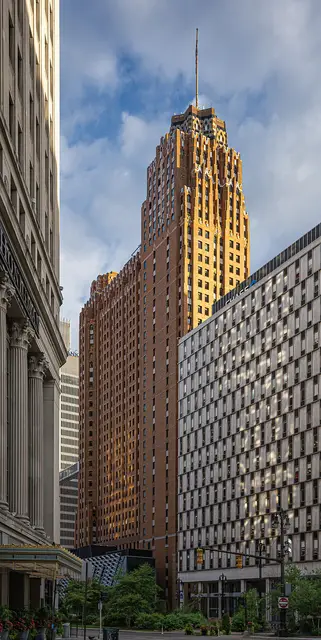
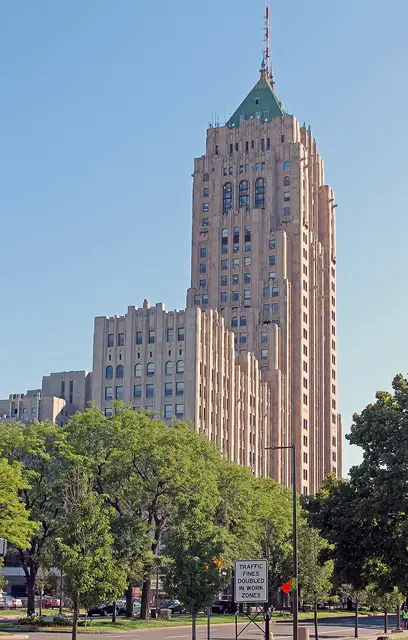
Around the Penobscot Building in Detroit, several historic skyscrapers and bank buildings of the Financial District are just a few minutes' walk away. travelguide195 lists the Ford Building (about 55 m), the State Savings Bank (about 67 m), the Buhl Building (about 81 m), the Chrysler House (about 86 m), and the Guardian Building (about 117 m), as well as the Selfie Museum Of Detroit (about 89 m). If you'd like to explore the area on foot, you'll find the Penobscot Building on the tour "Skyscrapers and Bank Palaces: On Foot Through Detroit's Financial District." For a break, travelguide195 lists around 106 restaurants within 500 m.
Ratings & comments
none yetNear Penobscot Building
closest 5 per category · 2 kmSights
Restaurants
Museums
Hotels
More:Historic sites in Detroit (500)All sights in Detroit (529)
227 places within 2 km loaded.
You need a free account to leave reviews and photos – that keeps comments genuine and lets you edit them later.
The building was the tallest in Michigan from its completion in 1928 until the construction of the Renaissance Center's central tower in 1977. It is now the third tallest. Like many of the city's other Roaring Twenties buildings, it has Art Deco influences, including its "H" shape, which allows maximum sunlight into the building, and the sculptural setbacks that cause the upper floors to seem to "erode".
Source: Wikivoyage, „Detroit/Downtown“ · authors per page history · CC BY-SA 4.0