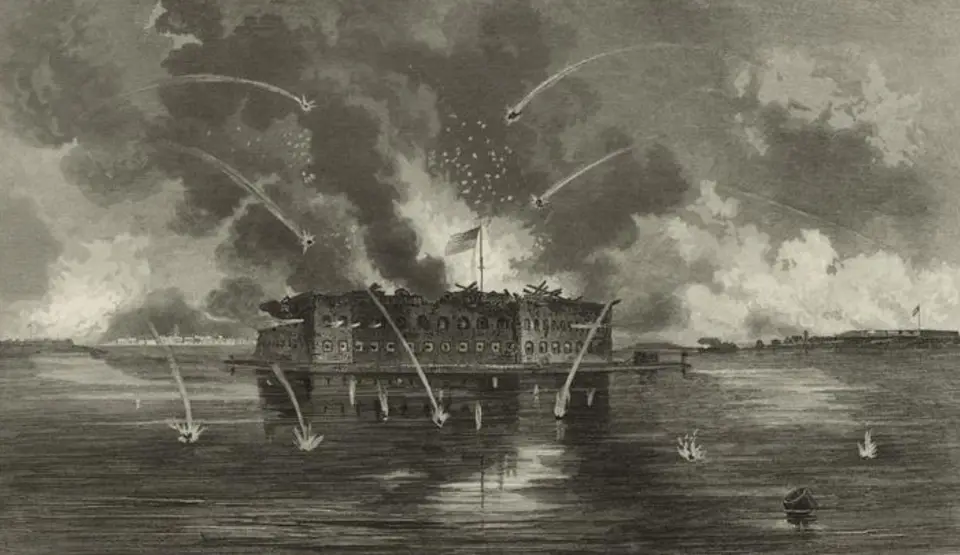
About Fort Sumter Charleston Harbor
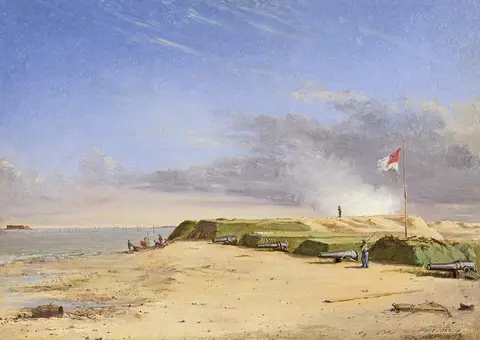
Fort Sumter in Charleston Harbor, South Carolina, is far more than a historic fortification. The site is inseparably linked to the start of the American Civil War and is considered the place where the first shots of the conflict were fired on April 12 and 13, 1861. For visitors today, the ruins are a powerful place for reflecting on the deep social and political divisions that the United States went through in the 19th century. The history of the fort mirrors the complex tensions between the Northern and Southern states, which had built up over decades and ultimately led to a four-year war.
The roots of the conflict lie in the question of slavery and the political balance of power between the regions. After the election of Abraham Lincoln as president in November 1860, who was regarded as a moderate opponent of slavery, South Carolina became the first state to declare its independence from the Union. This decision set off a chain reaction in which other slaveholding states followed its example and formed the Confederate States of America. Fort Sumter, which stood on the territory of the new state, initially remained under federal control, making it a symbolic and strategic flashpoint.
The fort itself was built on an artificial island about 3.7 miles (6 km) from the port of Charleston. The fort's architecture was advanced and sturdy for its time. It had high brick walls measuring between 8 and 12 feet (2.5 to 3.5 m) thick and was armed with a large number of guns. The fort was originally designed for a garrison of up to 650 men. At the time of the critical events in the spring of 1861, however, only a small garrison of about 80 soldiers was stationed there under the command of Major Robert Anderson. Anderson, who was himself from the South and had previously been a slaveholder, had decided to remain loyal to the Union and defend the fort.
The situation escalated considerably in the months before the attack. President James Buchanan, who was still in office, tried to resolve the conflict diplomatically but failed because of the irreconcilable claims of both sides. An attempt to reinforce the garrison in January 1861 with an unarmed ship failed when the vessel came under fire as it entered the harbor. After Lincoln took office in March 1861, the garrison was facing collapse as supplies ran low. Lincoln ultimately decided to send a relief fleet, which was to intervene militarily only if the Confederates opened fire.
The Confederates, under the command of General Pierre G.T. Beauregard, saw this maneuver as a threat to their independence. To keep the North from holding the fort, and to demonstrate their will to self-determination, Jefferson Davis ordered the fort to be taken. At 4:30 a.m. on April 12, 1861, Confederate artillery opened fire on the fort. The Union relief fleet was nearby but could not intervene in time because of a storm. The small garrison of Fort Sumter was unable to effectively return the massive fire of the besiegers, which lasted more than 33 hours.
Despite the intense bombardment with thousands of shells and cannonballs, remarkably there were no direct deaths from the fighting during the attack itself. The garrison surrendered on the afternoon of April 13, after large parts of the fort had been destroyed. Only the following day did a tragic accident occur, when a cannon exploded during a ceremonial salute, killing two soldiers and injuring two others. This incident underscores the danger and unpredictability of the war technology of the time.
The capture of Fort Sumter had immediate and far-reaching political consequences. In the North, the defeat triggered a wave of shock and anger. Lincoln called for the mobilization of 75,000 troops, which led to spontaneous rallies and broad public support for the war. The events also prompted the states of the Upper South, which had until then remained in the Union, to join the Confederacy. Virginia, Arkansas, North Carolina, and Tennessee left the Union in the following weeks, turning the conflict into a true civil war between two great power blocs.
For visitors today, Fort Sumter offers a fascinating look into America's military history. The ruins of the fort, marked by time, tell the story of the siege. You can walk along the surviving walls and imagine how the soldiers lived and fought under the harsh conditions of spring 1861. The location on the small island in Charleston Harbor also offers a breathtaking view of the harbor and the Charleston skyline; the city is now one of the most beautiful in the United States.
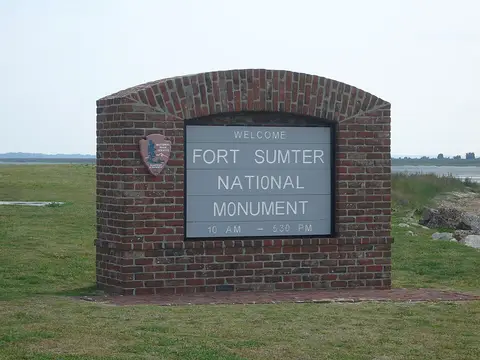
Today the site serves as a national monument and is an important place of remembrance. It commemorates the victims of the Civil War and the complex questions of freedom, slavery, and national identity that set off the war. The story of Fort Sumter is a central part of understanding American history and shows how political decisions and social tensions could lead to one of the most devastating conflicts in the country's history. A visit here is therefore not only a journey into the past but also an invitation to reflect on the meaning of unity and freedom.
At a glance
- Category
- Sight › Forts
- Rating
- no reviews yet · write a review
- Address
- —
Charleston, USA - Phone
- —
- Website
- www.charlestonharborresort.com
- —
- Coordinates
- 32.75239° N · -79.87475° E
- Data quality
- confidence 0.97
- Identifier
- ID f76d47cc-812…
Location & surroundings
Toggle layersRatings & comments
none yetNear Fort Sumter Charleston Harbor
closest 5 per category · 2 kmSights
Restaurants
None within 2 km.
Museums
None within 2 km.
Hotels
None within 2 km.
Cocktail bars
None within 2 km.
More:All sights in Charleston (292)
7 places within 2 km loaded.
You need a free account to leave reviews and photos – that keeps comments genuine and lets you edit them later.