About Boston Tea Party Marker
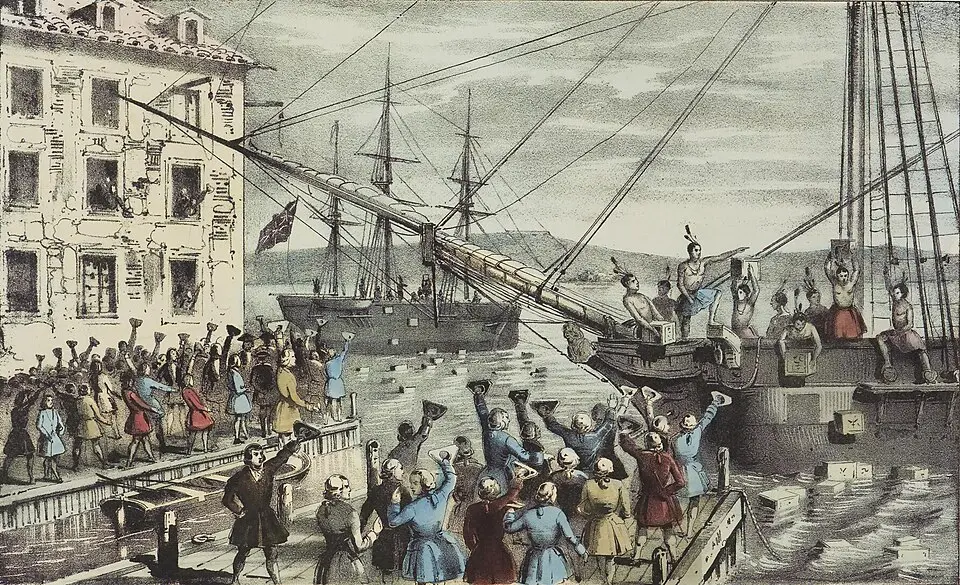
In the city of Boston, a memorial stone commemorates one of the most formative events in American history, the so-called Boston Tea Party. The date, December 16, 1773, marks the climax of a long-running conflict between the thirteen North American colonies and the British motherland. On that day, citizens who had symbolically disguised themselves as Native Americans boarded ships in the harbor and threw the entire cargo of three vessels into the water. It amounted to 342 chests of tea weighing 45 tons, all of it belonging to the British East India Company. The site where this action took place is now an important historic landmark that lets visitors immerse themselves in the complex political and social tensions of the late colonial era.
The roots of this conflict go back to the period after the Seven Years' War, which had placed a heavy burden on the British treasury. To pay down its large debts and cover the costs of the troops stationed in the colonies, Parliament in London passed several laws taxing the colonists. These included the Sugar Act and the Stamp Act, among others. Although the tax burden in North America was considerably lighter than in Britain itself, it met with bitter resistance. The colonists invoked the principle that they were not directly represented in Parliament and coined the famous slogan "no taxation without representation." This led to a profound constitutional conflict, since the British Crown was unwilling to give up its sovereign right to levy taxes.
Another trigger was the so-called Boston Massacre of 1770, in which five colonists were killed by British troops. The incident significantly worsened the mood in the city. Afterward, the British government tried to defuse the conflict by repealing most direct taxes and instead introducing duties on imported goods such as paper, glass, and tea. The colonists responded with boycotts and smuggling, which sharply reduced sales of British tea in North America. The East India Company, which held a trade monopoly, fell into an economic crisis as tons of unsold tea rotted in London warehouses.
To avert the company's looming bankruptcy, Parliament passed the Tea Act in 1773. This law allowed the East India Company to sell tea directly to the colonists while waiving the import duties in Britain. As a result, tea in the colonies became cheaper than the Dutch tea that had previously been smuggled in. The colonists, however, saw this measure not as an economic advantage but as a political attack. They feared that the Crown would use the new revenue to extend its control over the colonies and undermine local self-government. Influential local merchants also felt their interests were threatened, since the new system made the middleman trade superfluous.
The situation escalated in Boston in November 1773, when the ship Dartmouth arrived in the harbor with a large cargo of tea. Governor Thomas Hutchinson, whose sons had business interests in the East India Company, forbade the captain from leaving port again until the duties were paid. He threatened to have the tea forcibly unloaded and sold if the demands were not met within three weeks. The governor's uncompromising stance and the presence of British troops guarding the ship made for a tense atmosphere in the city. Leading figures such as Samuel Adams and John Hancock organized to prevent the tea from being unloaded.
On the evening of December 16, 1773, members of the resistance group the Sons of Liberty gathered at the Old South Meeting House. Samuel Adams called on those present to protest the impending unloading of the tea. When a final petition to the governor was rejected, about fifty men ran to the harbor, shouting war cries. Most of them had disguised themselves as Mohawk Indians, which amounted to a feather in the hat, blackened faces, and a simple blanket draped over the shoulders. The disguise served not only to conceal their identities but also carried strong symbolic meaning. It stood for a new American identity that set itself apart from its European origins and embodied freedom from outdated laws and class boundaries.
Once at the harbor, the disguised men stormed the ships Dartmouth, Eleanor, and Beaver in three groups. In a spectacular yet nonviolent operation lasting several hours, they dumped the entire cargo of 45 tons of tea into the harbor. Thousands of onlookers watched the nighttime proceedings from the shore without intervening. The discipline of the participants was remarkable: afterward, they cleaned up the ships and apologized to the harbor guards for a broken lock. The carefully planned sequence of events shows that this was an organized political act that had already been debated at town meetings in the preceding weeks. The action was a clear break with British authority and a sign of resistance to colonial policies perceived as unjust.
The consequences of the Boston Tea Party were far-reaching. The British government responded with the so-called Intolerable Acts, which, among other things, closed the Port of Boston and curtailed the colonies' liberties. These measures further radicalized the colonists and led to the convening of the First Continental Congress in Philadelphia. There, the colonial delegates resolved to form their own militia and impose economic sanctions on Britain. The escalation ultimately led to the outbreak of the American Revolutionary War in April 1775. The Boston Tea Party is therefore regarded as a decisive catalyst for the independence of the United States.
Today, the site of the Boston Tea Party is a popular destination for history buffs and tourists. The memorial stone commemorates the events of that night and serves as a starting point for tours that explain the background and significance of the protest. Here, visitors can get a feel for the atmosphere of the time and understand the political ideals of the Founding Fathers. The story of the Boston Tea Party is also woven into popular culture, appearing in novels, films, and songs. It remains a symbol of the struggle for freedom and self-determination that still resonates in American culture today. The site invites you to reflect on the complex interplay of economics, politics, and identity in the early modern era.
At a glance
- Category
- Sight › Monuments
- Rating
- no reviews yet · write a review
- Address
- Harborwalk
02210 Boston, USA - Phone
- —
- Website
- —
- —
- Coordinates
- 42.35432° N · -71.05094° E
- Data quality
- confidence 0.23
- Identifier
- ID d30d9b0e-53b…
Location & surroundings
Toggle layersRatings & comments
none yetNear Boston Tea Party Marker
closest 5 per category · 2 kmSights
Restaurants
Museums
Hotels
More:Monuments in Boston (64)All sights in Boston (623)
277 places within 2 km loaded.
Don't miss in Boston
All sights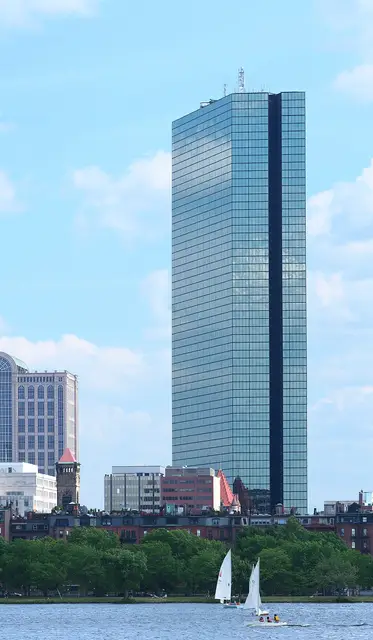 Historic sites01
John Hancock Tower
200 Clarendon St · Boston○ Website● Phone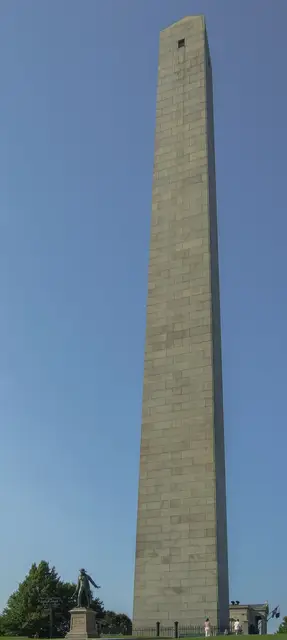 Monuments02
Bunker Hill Monument
100 Monument Sq · Boston● Website● Phone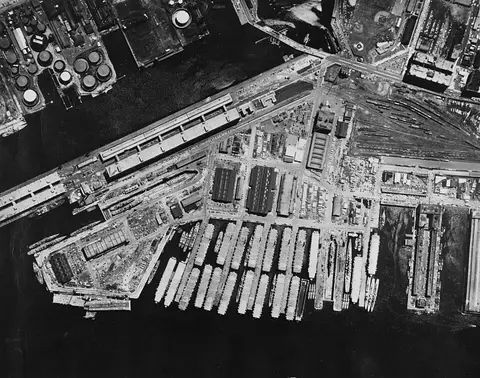 Historic sites03
Boston Naval Shipyard
Boston, Massachusetts · Boston● Website● Phone Forts04
You need a free account to leave reviews and photos – that keeps comments genuine and lets you edit them later.