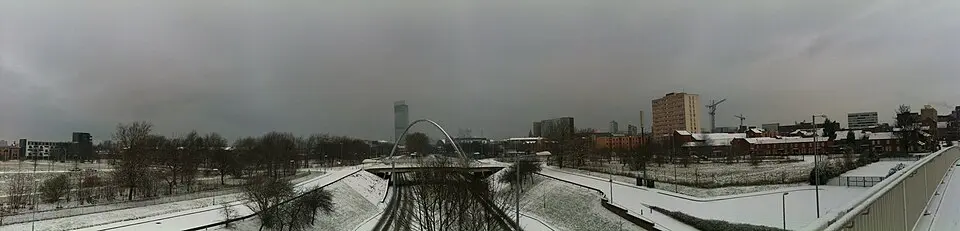
About Hulme, Manchester
Hulme is a district in the south of Manchester, stretching directly south of the city center and historically defined by its heavy industrial character. The name derives from the Old Norse word for a small island or land surrounded by water, which points to early settlement by Scandinavian settlers. Originally a rural area, it was transformed rapidly in the 19th century by the Industrial Revolution. Its proximity to the Bridgewater Canal and the coal mines fueled the rise of the textile industry, leading to massive population growth. This expansion, however, came with the construction of poor-quality housing and heavy air pollution from factory chimneys, which made living conditions extremely hard for the many immigrant workers, including large numbers of Irish.
One particularly interesting aspect of local history is the connection to the automobile industry. In the late 19th and early 20th centuries, Hulme was home to the first workshop of Henry Royce, who later co-founded the Rolls-Royce brand. Early models such as the Silver Ghost were developed and built here before the company's headquarters moved to Derby. Today, street names and sculptures recall this era. After World War II, during which the district was heavily bombed, it underwent a radical redevelopment. The demolished Victorian residential streets were replaced by modern high-rises and the so-called Hulme Crescents, an innovative concept of deck access that was later considered a failure and was torn down again in the 1990s.
Today, Hulme has become a popular place to live for young professionals, appealing with its mix of social and private housing as well as cultural venues. Close to the city center, you can relax in Hulme Park or in the community garden, which promotes sustainability and urban gardening. Culturally, the area is shaped by venues such as the Zion Arts Centre and the Work for Change complex with its artists' cooperatives. The former St. George's Church, a remarkable example of 19th-century architecture with a tall tower, has been converted into housing and bears witness to the religious and architectural history of the neighborhood.
At a glance
- Category
- Sight › Historic sites
- Rating
- no reviews yet · write a review
- Address
- —
Manchester, United Kingdom - District
- Manchester
- Phone
- —
- Website
- —
- —
- Coordinates
- 53.46360° N · -2.25000° E
- Data quality
- confidence 0.81
- Identifier
- ID 472fb2a7-c4b…
Location & surroundings
Toggle layersRatings & comments
none yetNear Hulme, Manchester
closest 5 per category · 2 kmSights
Restaurants
Museums
Hotels
More:Historic sites in Manchester (256)Sights in Manchester (160)All sights in Manchester (279)
264 places within 2 km loaded.
Don't miss in Manchester
All sights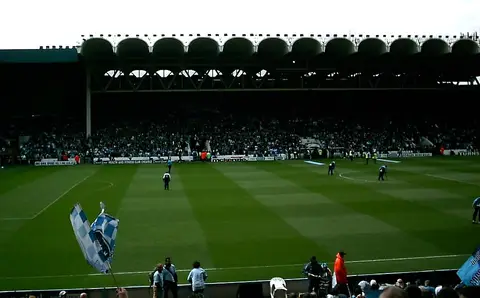 Historic sites01
Maine Road
Carnival Pl · Manchester● Website○ Phone Historic sites02
Hacienda
11- 5DD, The Hacienda, 15 Whitworth St W · Manchester● Website○ Phone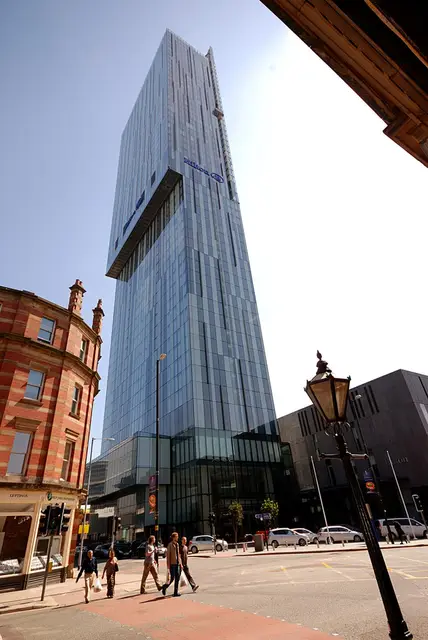 Historic sites03
Beetham Tower
301 Deansgate · Manchester● Website● Phone Monuments04
You need a free account to leave reviews and photos – that keeps comments genuine and lets you edit them later.