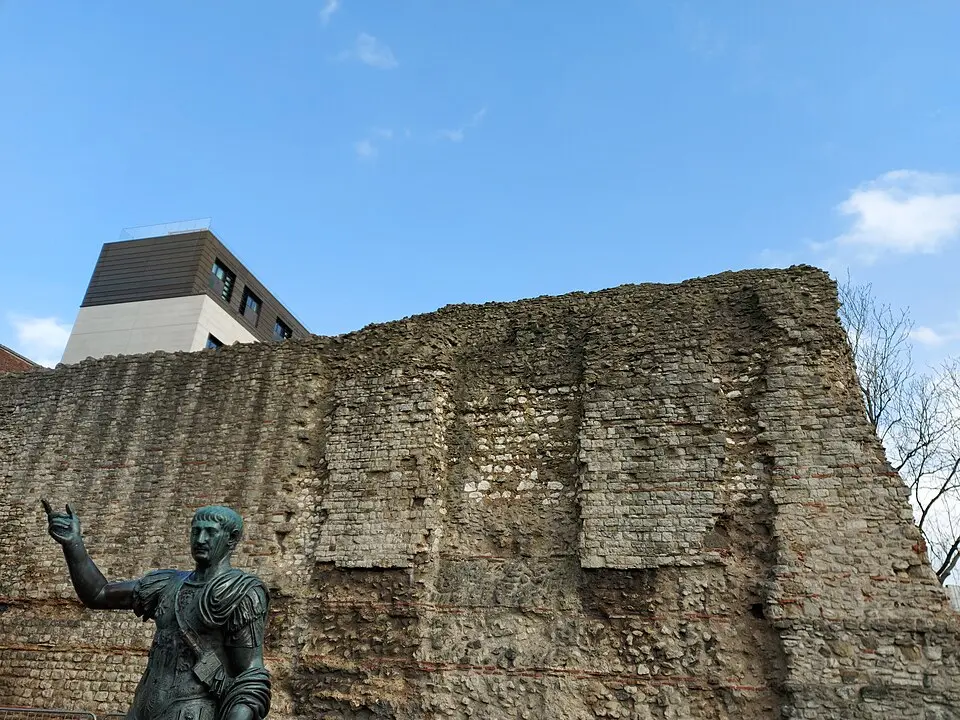
About One London Wall
One London Wall is a modern high-rise complex located on the historic London Wall, the surviving stretch of the Roman city wall. The wall was built in the late 2nd or early 3rd century to protect the strategically important city of Londinium. It ranks among the last major building projects of the Romans in Britain and was made of stone transported by ship from Kent. The fortifications enclosed an area of 130 hectares (about 320 acres) and were secured by a ditch and numerous bastions. The exact reason for its construction is disputed among historians, but it is often linked to incursions by the Picts or to internal political power struggles.
The city wall defined the boundaries of London until the late Middle Ages. It had several city gates, such as Ludgate, Newgate, and Aldgate, which provided access to the Roman roads. Over time, more gates were added and the walls were reinforced. Today, the street London Wall recalls this historic boundary, while the modern architecture of One London Wall highlights the contrast between the ancient past and contemporary urban development in London. At this spot, you can experience the connection to the metropolis's Roman history.
At a glance
- Category
- Sight › Historic sites
- Rating
- no reviews yet · write a review
- Address
- "2 London Wall Place, 1"
EC2Y 5EA London, United Kingdom - District
- City of London
- Phone
- —
- Website
- www.onelondonwall.net
- —
- Coordinates
- 51.51733° N · -0.09573° E
- Data quality
- confidence 0.99
- Identifier
- ID 2dda9715-52d…
Location & surroundings
Toggle layersRatings & comments
none yetNear One London Wall
closest 5 per category · 2 kmSights
Restaurants
Museums
Hotels
More:Historic sites in London (3,142)Sights in City of London (133)All sights in London (3,487)
300 places within 2 km loaded.
You need a free account to leave reviews and photos – that keeps comments genuine and lets you edit them later.
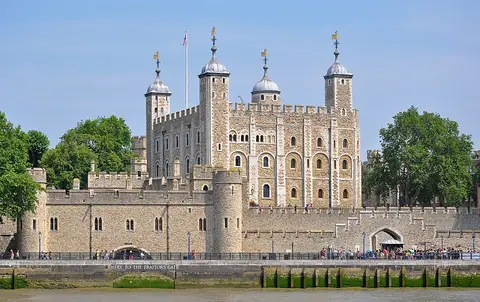
Remains of the wall that surrounded the City of London for almost two thousand years. The parts around the Barbican are mostly Tudor due to maintenance (Roman remains can be seen in and around the Tower of London). Other local remains are the and the .
Source: Wikivoyage, „London/City of London“ · authors per page history · CC BY-SA 4.0