About Great Pagoda
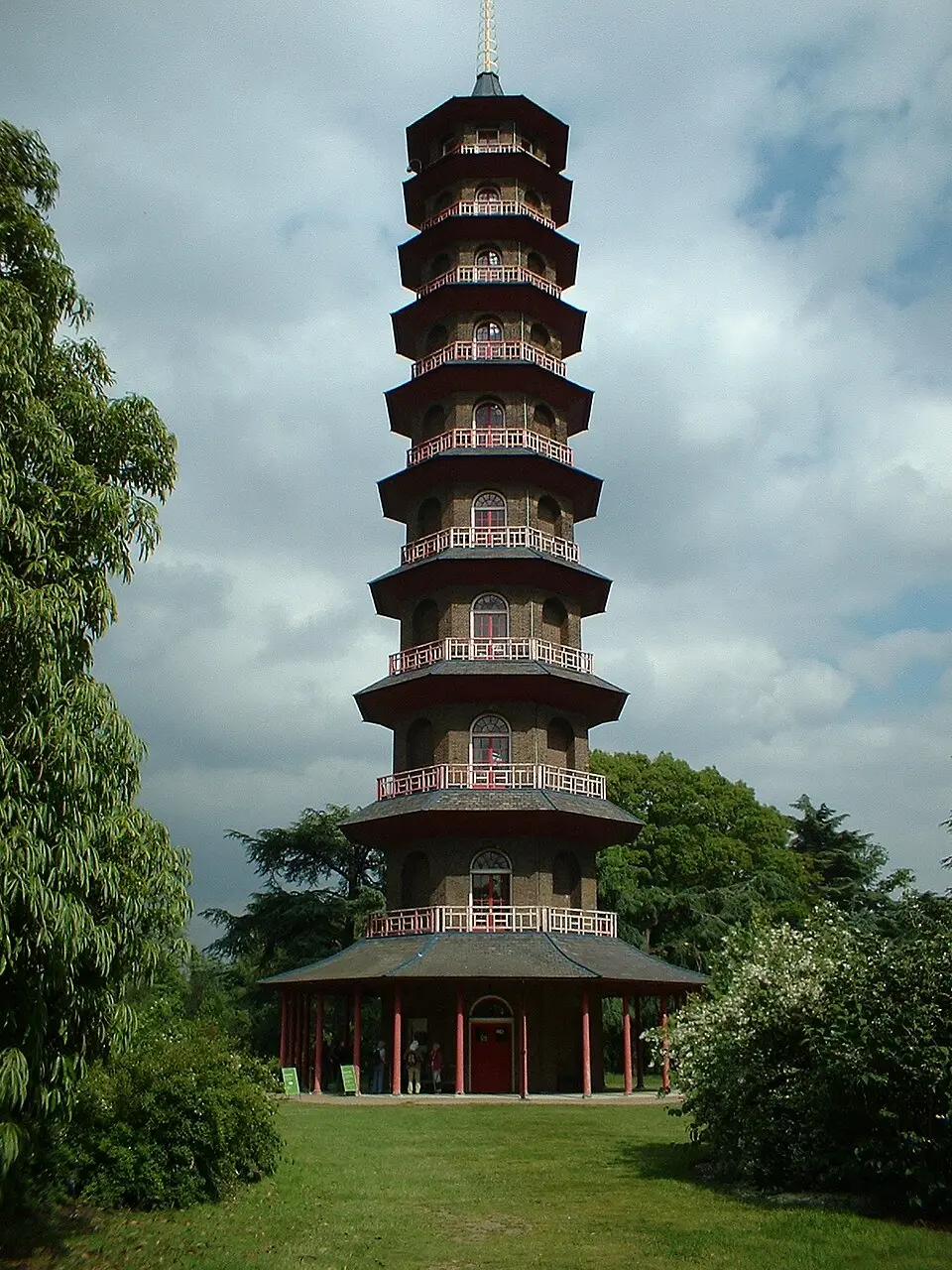
The Great Pagoda in Kew Gardens in southwest London is a striking gray brick structure built in 1761 by Sir William Chambers. Created as a gift for Princess Augusta, the founder of the botanical garden, the ten-story tower rises to a height of about fifty meters (roughly 164 feet). A total of 253 steps lead up to the viewing gallery. The building is considered an important example of the Chinoiserie style, an artistic interpretation of Chinese motifs that was popular in 18th-century Europe. After a long closure for extensive restoration, the Pagoda reopened to visitors in 2018. A Grade I listed building, the highest category of protection, it is once again drawing attention today, having previously served as a munitions testing site during World War II and been found in a dilapidated state in the late 20th century.
Architecturally, the ground floor rests on wooden columns, while the upper stories are marked by arcaded balconies with curved roofs and Chinese Chippendale railings. The roofs are now covered in lead, although they were originally clad in green and white tiles. A special feature is the eighty dragon figures that crown the roofs. These were newly made as part of the restoration; some were carved from African cedar, while others were produced from nylon using 3D printing technology to reduce the weight on the roofs. The work was based on historical evidence in order to restore the original appearance as authentically as possible.
The creation of the Pagoda is closely tied to its architect, William Chambers, who was trained as a Palladian but had gained deep insight into Chinese architecture through his travels to China in the 1740s. He saw Chinese structures as inspiration for garden decoration rather than for full-fledged architecture. Pagodas in Guangzhou, which Chambers may have seen during his expeditions, are thought to have served as possible models for the design. The rapid completion in just six months was a source of pride for Chambers, who insisted on a flawless brick wall without cracks. Today the structure is regarded as the most important surviving Chinoiserie building in Europe and offers visitors an impressive glimpse into the cultural exchange between East and West in the 18th century.
At a glance
- Category
- Sight › Historic sites
- Rating
- no reviews yet · write a review
- Address
- Royal Botanic Gardens
TW9 3AE London, United Kingdom - District
- London Borough of Richmond upon Thames
- Phone
- +442083325655
- Website
- —
- —
- Coordinates
- 51.47118° N · -0.29574° E
- Data quality
- confidence 0.99
- Identifier
- ID 7d1a91b7-764…
Location & surroundings
Toggle layersFAQ about Great Pagoda
quick answersWhat is the Great Pagoda in London?
The Great Pagoda is a ten-story pagoda of gray brick in the Royal Botanic Gardens (Kew Gardens) in the London Borough of Richmond upon Thames. Sir William Chambers built it in 1761 as a gift for Princess Augusta, the founder of the botanic garden. It is considered the most important surviving chinoiserie building in Europe and is a listed building in the highest protection category.
How tall is the Great Pagoda in Kew Gardens, and how many steps does it have?
The Great Pagoda in Kew Gardens in London is about 50 meters (164 feet) tall and has ten stories. You climb 253 steps to reach the viewing gallery. The ground floor rests on wooden columns, and the upper levels have arcaded balconies with sweeping roofs and Chinese Chippendale railings.
What's the story behind the dragons on the Great Pagoda?
The roofs of the Great Pagoda in Kew Gardens, London, are crowned by eighty dragon figures that were newly made during the extensive restoration. Some are carved from African cedar, while others were 3D-printed in nylon to reduce the weight on the roofs. The work drew on historical evidence, and since the reopening in 2018, the pagoda is once again open to visitors.
What is the history of the Great Pagoda in London?
The Great Pagoda in Kew Gardens was built in 1761 in just six months to designs by William Chambers, who had traveled to China in the 1740s. Possible models include pagodas in Guangzhou, which Chambers may have seen on his travels. During World War II, the structure served as an ordnance test site, and by the late 20th century it had fallen into disrepair. The roofs, which are now covered in lead, were originally clad in green and white tiles.
What can you see around the Great Pagoda in Kew Gardens?
Several other historic buildings stand near the Great Pagoda in the Royal Botanic Gardens in London. travelguide195 lists Queen Charlotte's Cottage about 280 meters away, the Ruined Arch about 355 meters away, King William's Temple about 626 meters away, and the Temple of Bellona about 738 meters away, among others. For a break, travelguide195 lists about 4 restaurants within 500 meters.
Ratings & comments
none yetNear Great Pagoda
closest 5 per category · 2 kmSights
Restaurants
Museums
Hotels
More:Historic sites in London (3,142)Sights in London Borough of Richmond upon Thames (107)All sights in London (3,487)
171 places within 2 km loaded.
You need a free account to leave reviews and photos – that keeps comments genuine and lets you edit them later.