About Caxton Hall
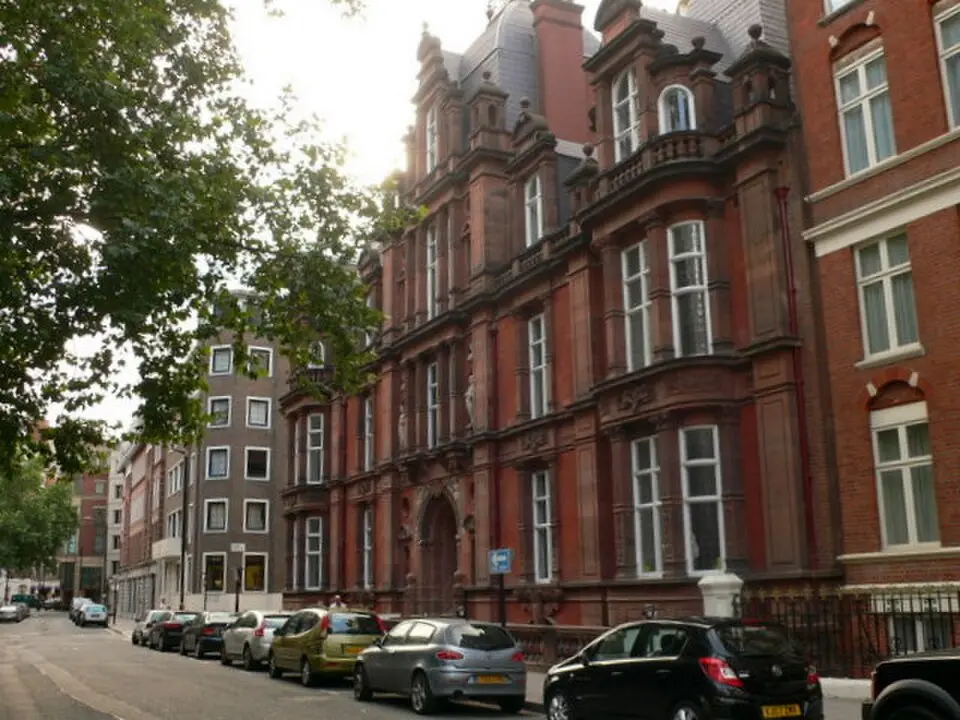
Caxton Hall stands at the corner of Caxton Street and Palmer Street in London's borough of Westminster. Opened in 1883, the building was originally conceived as Westminster Town Hall and designed by the architects William Lee and F.J. Smith in the elaborate style of François I. The facade stands out for its combination of red brick and pink sandstone, while the roofs are covered in slate. The foundation stone was laid in 1882 by the philanthropist Baroness Burdett-Coutts. After the expansion of the City of Westminster in 1900, the building lost its function as a local government center and was renamed Caxton Hall in memory of the printer William Caxton, who worked near Westminster Abbey.
The history of the site is closely tied to important political and social events. Among other things, the first Pan-African Conference took place here in 1900, as did regular meetings of the British suffragettes, who formulated their demands for women's right to vote. During World War II, the hall served as a venue for press conferences held by Prime Minister Winston Churchill. Other historic moments include the publication of the Russell–Einstein Manifesto in 1955, warning of the dangers of nuclear war, and the founding of the National Front in 1967. The 1940 assassination of the Irish colonial administrator Michael O'Dwyer by the Indian nationalist Udham Singh also took place here.
From 1933 to 1978, Caxton Hall served as a register office for civil marriages and became a popular venue for celebrities and members of the high aristocracy. Well-known couples who were married there include Anthony Eden, Elizabeth Taylor, Roger Moore, and Ringo Starr. After the register office closed, the building stood empty for years and fell into disrepair until it was designated a listed building in 1984. During the renovation in 2006, the historic facade and the front section of the building were preserved and converted into luxury apartments. The rear section with the former halls, on the other hand, was demolished and replaced by a circular office building.
At a glance
- Category
- Sight › Historic sites
- Rating
- no reviews yet · write a review
- Address
- 8-10 Caxton St
SW1H 0AQ London, United Kingdom - District
- City of Westminster
- Phone
- —
- Website
- en.wikipedia.org
- —
- Coordinates
- 51.49864° N · -0.13489° E
- Data quality
- confidence 0.76
- Identifier
- ID cab82d87-572…
Location & surroundings
Toggle layersFAQ about Caxton Hall
quick answersWhat is Caxton Hall in London?
Caxton Hall is a listed historic building at the corner of Caxton Street and Palmer Street (address: 8-10 Caxton St) in the London borough of the City of Westminster. It opened in 1883 as Westminster Town Hall and was designed by the architects William Lee and F.J. Smith in the François I style, with a façade of red brick and pink sandstone. The foundation stone was laid in 1882 by the philanthropist Baroness Burdett-Coutts. After the expansion of the City of Westminster in 1900, the building was renamed in honor of the printer William Caxton, who worked near Westminster Abbey.
What historic events took place at Caxton Hall?
Caxton Hall in London was the scene of numerous political and social events. The first Pan-African Conference met here in 1900, and British suffragettes regularly held meetings here in support of women's suffrage. During World War II, Prime Minister Winston Churchill gave press conferences here, in 1940 Udham Singh shot Michael O'Dwyer in the building, and in 1955 the Russell-Einstein Manifesto was released here. The founding of the National Front in 1967 also took place at Caxton Hall.
Which celebrities got married at Caxton Hall?
Anthony Eden, Elizabeth Taylor, Roger Moore, and Ringo Starr are among those who said "I do" at Caxton Hall in London. From 1933 to 1978, the building in Westminster served as a register office for civil marriages. During that time, it became a popular wedding venue for celebrities and members of the high aristocracy.
What has become of Caxton Hall today?
Today, Caxton Hall in London is a residential building with luxury apartments behind the historic façade. After it ceased to function as a register office in 1978, the building stood empty and fell into disrepair for years, until it was listed in 1984. In the 2006 renovation, the façade and the front section of the building were preserved, while the rear section with the former halls was demolished and replaced by a round office building.
What can you see around Caxton Hall?
Right by Caxton Hall in London is the Suffragette Memorial, only about 125 feet away – fitting for a building with a history as a meeting place for the suffragettes. About 400 feet away, you'll also find the historic Artillery Mansions in Westminster. For a break, travelguide195 lists around 110 restaurants within 500 meters (about 1,640 feet) of Caxton Hall.
Ratings & comments
none yetNear Caxton Hall
closest 5 per category · 2 kmSights
Museums
Hotels
More:Historic sites in London (3,142)Sights in City of Westminster (559)All sights in London (3,487)
300 places within 2 km loaded.
You need a free account to leave reviews and photos – that keeps comments genuine and lets you edit them later.