About Beargarden
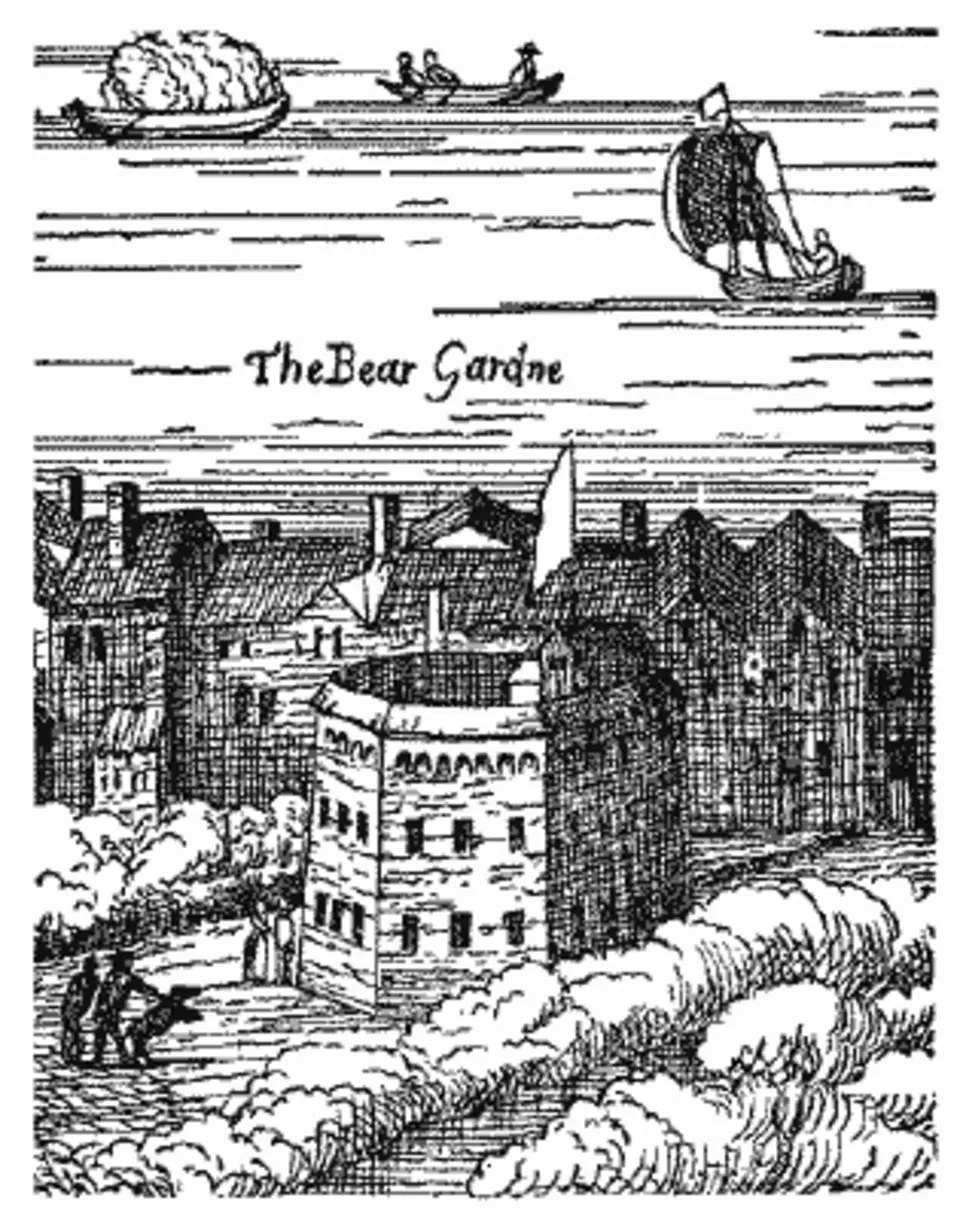
The Beargarden, also known as the Bear Pit, was a famous entertainment venue in 16th- and 17th-century London, though one that is ethically shocking by today's standards. The open, round or polygonal building stood on Bankside on the south bank of the Thames in Southwark, directly across from the City of London. The exact location of the site shifted over the centuries, which is explained by new construction and the relocation of nearby structures. Originally known as Paris Garden, the place gradually became synonymous with animal baiting, particularly bear- and bullbaiting. These events drew a wide audience, from ordinary citizens to foreign ambassadors and prominent figures such as Sir Walter Raleigh. The building served not only as an arena but was often part of a larger complex that also housed theatrical performances, underscoring the close connection between entertainment and spectacle in the Elizabethan era.
The shows consisted of brutal animal fights in which bears, bulls, or horses were tied to stakes and attacked by dogs. The animals were often tormented by having their claws and teeth removed, and the fights ended only when the animal was exhausted or killed. Alongside the main fights, there was an extensive supporting program of music, fireworks, and interactive elements, in which spectators ran into the arena and scrambled over fruit that was thrown to them. These shows were known for their staging, which brought in different animal species one after another and was dramatized with theatrical effects such as burning roses and falling apples. Despite the high entertainment value, the events were accompanied by great danger for the audience, as the tragic collapse of a grandstand in 1583, in which several spectators lost their lives, makes clear.
The Beargarden remained a fixture of London's cultural life for centuries, until society increasingly turned against such cruelty to animals. The last recorded spectacle took place in April 1682, when a horse was baited and finally killed in honor of a Moroccan ambassador. These practices were not finally abolished until the 19th century, through legal bans. Today only an alley at the old site recalls the former arena, while the name Beargarden is now used by a manufacturer of stuffed animals. The place thus stands as a historical testament to the entertainment habits and moral limits of its time, which for today's visitors represent a fascinating but also unsettling chapter of London's history.
At a glance
- Category
- Sight › Historic sites
- Rating
- no reviews yet · write a review
- Address
- —
London, United Kingdom - District
- Southwark
- Phone
- —
- Website
- it.wikipedia.org
- —
- Coordinates
- 51.50833° N · -0.09556° E
- Data quality
- confidence 0.82
- Identifier
- ID ae2576a5-166…
Location & surroundings
Toggle layersFAQ about Beargarden
quick answersWhat is the Beargarden in London?
The Beargarden, also known as the Bear Pit, was a well-known arena for animal baiting in 16th- and 17th-century London, especially bear- and bullbaiting. The site was originally called Paris Garden. The open, round or polygonal building drew ordinary citizens as well as foreign ambassadors and figures such as Sir Walter Raleigh. The arena often belonged to a larger complex that also staged theater performances.
Where was the Beargarden, and what can you still see of it today?
The Beargarden stood on Bankside on the south bank of the Thames in the London Borough of Southwark, directly across from the City of London. Its exact location shifted over the centuries as nearby buildings were rebuilt and relocated. Today, only an alley at the old site recalls the former arena in London; no original building survives.
What happened at events at the Beargarden in London?
At the Beargarden in London, bears, bulls, or horses were tied to stakes and attacked by dogs until the animal was exhausted or dead. The animals often had their claws and teeth removed. The program also included music, fireworks, and effects such as burning roses and falling apples, and spectators ran into the arena to scramble for free fruit. It was dangerous for the audience, too: in 1583, a grandstand collapsed, killing several spectators.
When did the animal baiting at the Beargarden in London end?
The last recorded spectacle at the Beargarden in London took place in April 1682. A horse was baited and ultimately killed in honor of a Moroccan ambassador. Such animal baiting was not abolished for good until the 19th century, through legal bans.
What can you see around the Beargarden in London?
Several sights lie within walking distance of the former site of the Beargarden in Southwark. travelguide195 lists, among others, The Rose Bankside about 130 meters away, the Tate Modern in the former Bankside Power Station about 250 to 280 meters away, and the Clink Prison Museum about 280 meters away. Within a 500-meter radius, travelguide195 also lists around 165 restaurants.
Ratings & comments
none yetNear Beargarden
closest 5 per category · 2 kmSights
Restaurants
Museums
Hotels
More:Historic sites in London (3,142)Sights in Southwark (191)All sights in London (3,487)
300 places within 2 km loaded.
You need a free account to leave reviews and photos – that keeps comments genuine and lets you edit them later.