About Musée de Wimbledon
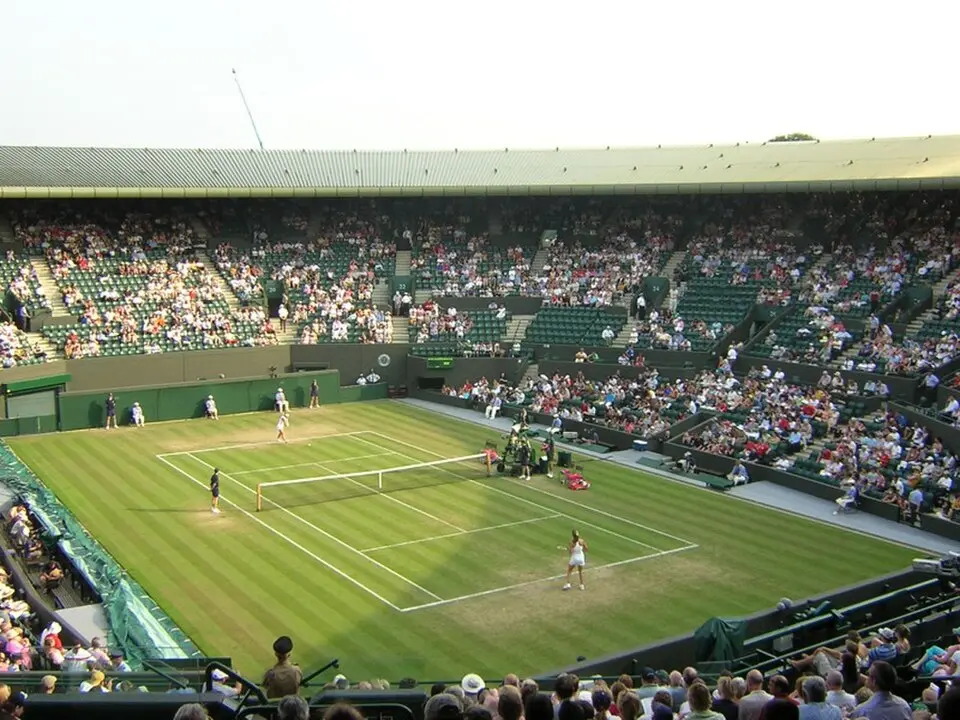
Wimbledon is far more than a sporting event; it is a cultural institution in southwest London that draws thousands of visitors every year. At the heart of the grounds is the All England Lawn Tennis and Croquet Club, home to the oldest and most prestigious tennis tournament in the world. Starting in late June, the Lawn Tennis Championships are held here over two weeks, an event that, thanks to its long history and special traditions, has preserved a conservative, refined character that sets it apart from all the other Grand Slam tournaments. The neighborhood itself, SW19, is inseparably linked with the history of tennis and gives you the chance to step into a world where elegance, discipline, and top athletic performance meet.
The tournament's roots go back to 1877, when the first championships were held on a site on Worple Road. The trigger was a bill for a new lawn roller, which was to be paid for with revenue from admission fees. What began as a small event grew into a global phenomenon. After interruptions during both world wars and the COVID-19 pandemic in 2020, the tournament is once again a fixture of the international sports calendar. The grounds on Church Road, which opened in 1922, now hold tens of thousands of spectators and are regarded as the Mecca of tennis. The historical significance of the place is also reflected in the names of the various areas, which often recall legendary players or historic figures of the sport.
A central experience for every visitor is seeing the iconic courts, especially Centre Court and Court No. 1. Both are fitted with modern retractable roofs that can be closed within minutes when it rains, protecting play from the weather. The roof of Centre Court is made of translucent fabric that lets natural light reach the grass. This architectural solution combines the tradition of outdoor play with the need for modern infrastructure. Centre Court holds nearly 15,000 people, while the second most important court, Court No. 1, seats about 12,300 spectators. Together with the other courts, more than 42,000 seats are available in total, underscoring the immense size and importance of the event.
You can take in the atmosphere of the tournament not only from the stands but also through the many culinary traditions associated with Wimbledon. Strawberries and cream are an essential part of the experience and are considered a cultural symbol of the event. Tens of thousands of servings are dished out every year, with the strawberries picked fresh from a farm in Kent. Another highlight is the Pimm's Cup, a gin-based cocktail that has been consumed in large quantities since the 1970s. Champagne, fish and chips, and traditional British baked goods such as scones are also on offer. These culinary treats contribute significantly to the relaxed yet festive mood that defines the crowd.
A distinctive feature of Wimbledon is its strict dress code, in place since 1884. Players' clothing must be at least 90 percent white, which gives the tournament its characteristic, uniform look. This rule extends to the umpires, who wear a specific uniform. The white tennis balls that were long the tournament's trademark were replaced by yellow balls in 1986 to improve visibility, but the name Slazenger Wimbledon Official Tennis Ball remains. The balls are stored under special conditions and are a coveted souvenir for spectators, who can buy used balls at a reduced price.
For tennis fans, the grounds also house the Wimbledon Lawn Tennis Museum, which opened in 1977. The collection includes more than a million objects, among them photographs, rackets, clothing, trophies, and historical documents. The museum offers a deep look into the history of tennis and the development of the tournament over more than 140 years. Admission is moderate, and the museum is an ideal place to understand the athletic and cultural significance of Wimbledon. It is located near the official shop, making it a natural stop on the way to the courts.
Caring for the grass is a science in itself and a fascinating aspect for visitors who want to look behind the scenes. The turf is 100 percent ryegrass and is mowed and watered daily during the tournament. A team of groundskeepers monitors the health of the plants, the moisture of the subsoil, and the hardness of the courts. After the tournament, the soil is sterilized and reseeded to be ready for the next season. Differences in ball bounce speed between individual courts are a well-known phenomenon that challenges the players and keeps the game exciting.
Members of the so-called Last 8 Club enjoy a special privilege. It is an elite circle of players who have previously reached the quarterfinals in singles or later rounds in doubles and mixed doubles. These members have lifelong access to the grounds and enjoy exclusive perks such as a lounge with free food and drinks. The club thus honors outstanding achievements that did not lead to the title but are nonetheless of great significance. This area is not freely accessible to the general public, but the existence of the club underscores the elite character of the event.
The safety and comfort of visitors are top priorities. A large team of security staff, firefighters, and stewards ensures that the tournament runs smoothly. Since a tragic incident in the 1990s, security personnel have stood behind the players during changeovers to protect them. The grounds are equipped with modern surveillance technology, and bag checks take place at the entrances. Despite the strict security measures, the atmosphere remains friendly and welcoming, which is further encouraged by the volunteer work of military and fire service members who serve as stewards.
Wimbledon is also a place of innovation and progress. The Electronic Line Calling System, known as Hawk-Eye, is increasingly replacing human line judges and ensures precise calls. There are also new technologies for blind and visually impaired spectators, who can experience the match through a 3D soundscape. These measures show that Wimbledon not only holds on to tradition but is also open to new ideas and to improving accessibility. The tournament thus remains a living place that combines history and modernity in a unique way.
In summary, a visit to Wimbledon is an unforgettable experience that goes far beyond sport. It is a combination of historic site, cultural event, and top athletic performance. Whether you come as a passionate tennis fan or a curious tourist, the atmosphere, the traditions, and the architecture of the grounds offer plenty to discover. The meticulous care of the grounds, the special culinary offerings, and the deeply rooted rituals make Wimbledon a one-of-a-kind place that stays with visitors long after they leave. It is a place where the history of tennis comes alive and where every rally carries special meaning.
At a glance
- Category
- Museum › Museums (general)
- Rating
- no reviews yet · write a review
- Address
- —
London, United Kingdom - District
- London Borough of Merton
- Phone
- —
- Website
- aeltc.wimbledon.org
- —
- Coordinates
- 51.43472° N · -0.21333° E
- Data quality
- confidence 0.73
- Identifier
- ID 3222da71-48d…
Location & surroundings
Toggle layersRatings & comments
none yetNear Musée de Wimbledon
closest 5 per category · 2 kmSights
Restaurants
Museums
Hotels
More:Museums in London Borough of Merton (16)All museums in London (825)
129 places within 2 km loaded.


You need a free account to leave reviews and photos – that keeps comments genuine and lets you edit them later.