About Fulham Palace
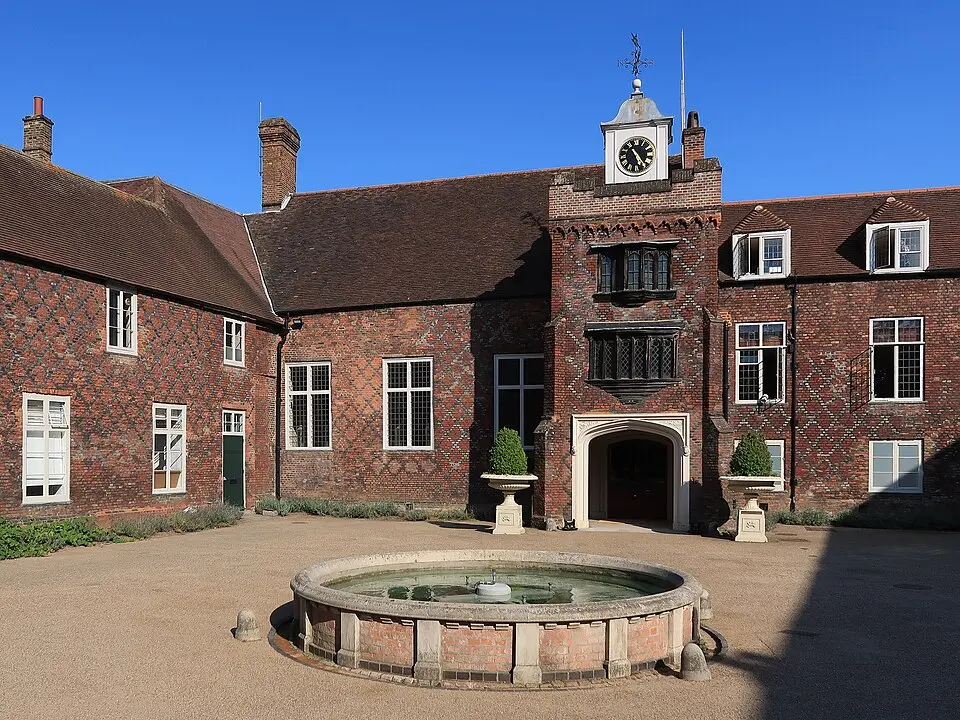
Fulham Palace is a historic manor house in London's Fulham district that served as the country residence of the Bishops of London from the eleventh century. Settlement of the site can be traced back to the seventh century, and archaeological finds during the restoration in the early 2000s also uncovered traces of Neolithic and Roman settlements. After more than 1,300 years in the possession of the Church of England, the estate was given up in 1975, as maintaining the large building had become too costly for the institution. Today the property still belongs to the Church but is managed by the Fulham Palace Trust and the local borough council. The grounds border Bishop's Park and include, besides the palace itself, an extensive botanical garden as well as the longest moat in England.
The gardens have a rich botanical history that flourished in particular in the 17th century under Bishop Henry Compton. He introduced numerous exotic plant species, including the swamp magnolia, tulip trees, and the first American azaleas in England. In his greenhouses he also grew the first coffee tree in the country. Despite later destruction and the conversion of parts of the grounds into allotment gardens during World War I, which still exist today, many old trees have survived. A large holm oak, which was named a Great Tree of London, is said to be about 500 years old. Today you can admire the knot garden, the wisteria, and the historic old trees in the walled gardens.
Inside the palace is a museum housed in former rooms such as Bishop Howley's dining room and the Porteus Library. The collection includes paintings, stained-glass windows, fragments of masonry, and liturgical vestments that document the history of the site. Particularly well known is the discovery of William Bradford's lost manuscript, an important founding document of the United States, which was found in the library in 1855. A separate art gallery shows further works, including paintings by Benjamin West, Adriaen van Diest, and John Hoppner. Admission to the palace and the gardens is free, and the grounds are open to the public daily from sunrise to sunset.
At a glance
- Category
- Museum › Children's museums
- Rating
- no reviews yet · write a review
- Address
- Bishop's Ave
SW6 6EA London, United Kingdom - District
- London Borough of Hammersmith and Fulham
- Phone
- +442077363233
- Website
- www.fulhampalace.org
- mail@fulhampalace.org
- Coordinates
- 51.47070° N · -0.21595° E
- Data quality
- confidence 1.00
- Identifier
- ID 82bc5ddb-08f…
Location & surroundings
Toggle layersRatings & comments
none yetNear Fulham Palace
closest 5 per category · 2 kmSights
Museums
Hotels
More:Museums in London Borough of Hammersmith and Fulham (19)All museums in London (825)
186 places within 2 km loaded.
You need a free account to leave reviews and photos – that keeps comments genuine and lets you edit them later.
The former retreat of the Bishops of London until 1973 now incorporates Bishop's Park and is a lovely green area in a heavily built part of London as well as home to some important historic buildings. Also a museum which charts the history of the palace back to the 11th century (and the area itself back to prehistoric times). Of note in the museum includes an entire room dedicated to Bishop Henry Compton's botanical exploits where he would gather all kinds of plants from the North American colony and grow them in the palace garden. Sadly the garden itself was destroyed when "Capability" Brown's landscaping became fashionable and Compton's codex of plants is missing with exception of a few preserved copies of its pages. There is a small cafe.
Source: Wikivoyage, „London/Hammersmith and Fulham“ · authors per page history · CC BY-SA 4.0