About Royal Pavilion
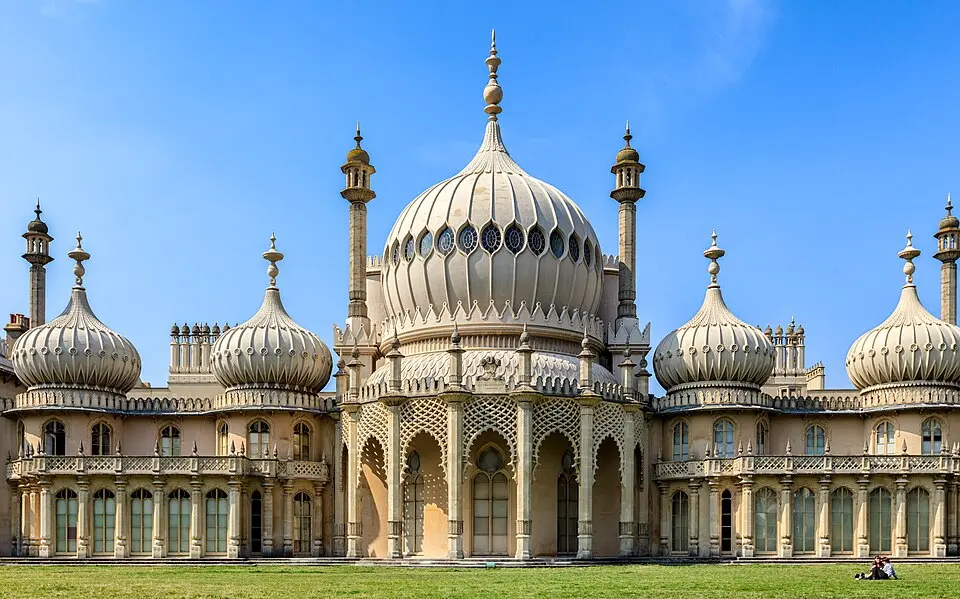
The Royal Pavilion in Brighton is a historic royal seaside residence that is now one of the most important sights on England's south coast. Originally acquired as a modest farmhouse, the property was gradually expanded under George IV, then still the Prince of Wales. Between 1815 and 1823, the architect John Nash transformed the building into its present form, giving it a distinctive look that combines elements of an Indian Mughal palace with Anglo-Chinese interiors. Visitors encounter a fascinating blend of Gothic and Oriental design elements, as seen in the entrance hall and in the library with its distinctive vaulting. After its use by the British Crown, the building passed into the ownership of the city in 1850 and even served for a time as a military hospital. Today, following extensive restoration, the Pavilion is a popular destination that draws hundreds of thousands of guests each year and offers a glimpse into the extravagant aesthetics of the early 19th century.
At a glance
- Category
- Sight › Historic sites
- Rating
- no reviews yet · write a review
- Address
- 4/5 Pavilion Buildings
BN1 1EE Brighton, United Kingdom - Phone
- +443000290900
- Website
- www.brighton-hove-rpml.org.uk
- visitor.services@brighton-hove.gov.uk
- Coordinates
- 50.82232° N · -0.13772° E
- Data quality
- confidence 1.00
- Identifier
- ID f42a5ef5-c7f…
Location & surroundings
Toggle layersFAQ about Royal Pavilion
quick answersWhat is the Royal Pavilion in Brighton?
The Royal Pavilion is a former royal summer residence in Brighton on England's south coast, and today it is one of the best-known historic sites in Britain. You'll find it at 4/5 Pavilion Buildings in Brighton, a city of around 134,000 residents. After extensive restorations, the Royal Pavilion draws hundreds of thousands of visitors every year and offers a glimpse into the extravagant aesthetic of the early 19th century.
What architectural style defines the Royal Pavilion in Brighton?
The Royal Pavilion in Brighton combines the exterior of an Indian Mughal palace with an Anglo-Chinese interior. The building took its present form between 1815 and 1823 under the architect John Nash. Inside, Gothic and Oriental style elements blend together, best seen in the entrance hall and the library with their distinctive vaulting.
What is the history of the Royal Pavilion in Brighton?
The Royal Pavilion in Brighton began as a modest farmhouse that was gradually expanded into a royal residence under George IV, then still the Prince of Wales. After its use by the British Crown, the building passed into the ownership of the city of Brighton in 1850. At one point the Royal Pavilion even served as a military hospital before it was restored and opened to the public as an attraction.
What can you see around the Royal Pavilion in Brighton?
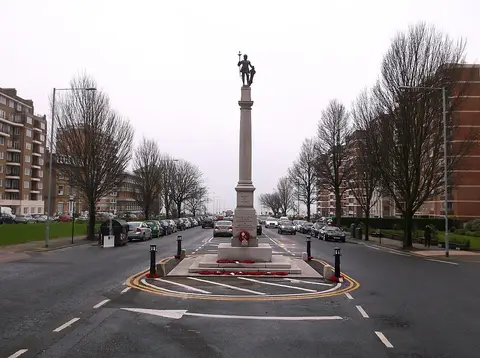
Right near the Royal Pavilion in Brighton, about 135 meters away, is the Brighton War Memorial. The historic Steine House stands about 134 meters from the Royal Pavilion as well. Both sites are easy to combine with a visit to the Royal Pavilion.
Are there restaurants near the Royal Pavilion in Brighton?
Yes, there is a wide choice of restaurants around the Royal Pavilion in Brighton. travelguide195 lists around 327 restaurants within 500 meters of the Royal Pavilion. That makes it easy to combine a visit to the former summer residence with a meal nearby.
Ratings & comments
none yetNear Royal Pavilion
closest 5 per category · 2 kmSights
Restaurants
Museums
Hotels
More:Historic sites in Brighton (107)All sights in Brighton (119)
257 places within 2 km loaded.
You need a free account to leave reviews and photos – that keeps comments genuine and lets you edit them later.
An interesting architectural attraction, transformed between 1815 and 1823 by the architect John Nash, at the direction of the then Prince Regent (later King George IV), into a sumptuous pleasure palace by the sea. The exterior has an Indian theme, whilst the interior was decorated with Chinese decor. Guided tours available and well worthwhile. Accessibility: two floors; only the ground floor is wheelchair accessible. Accessible toilets.
Source: Wikivoyage, „Brighton“ · authors per page history · CC BY-SA 4.0 · as of 11/30/2017