Uppsala County: Royal Burial Mounds, a Cathedral and Ironworks
Travel guide · editorialUppsala County is the ancient heartland of the Swedish realm: pagan royal estates once stood here, archbishops were crowned here, and in 1477 Scandinavia's oldest university was founded here. A vacation in Uppsala County combines a lively student city with Iron Age burial mounds, Baroque palaces and the ironworks towns of the Uppland iron trade.
Uppsala: Cathedral and Scholars
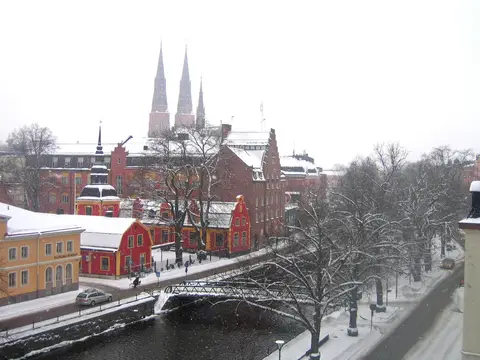
Uppsala, Sweden's fourth-largest city, is dominated by the two towers of its cathedral, the largest church in Scandinavia, where Gustav Vasa and Carl Linnaeus are buried. Across from it rises the pink 16th-century castle. The Gustavianum, the university's old main building, houses an anatomical theater beneath a dome and the Augsburg Art Cabinet. The Linnaeus Garden and the botanist's former home commemorate the city's most famous scholar; his country estate, Hammarby, lies to the southeast. Cafés line the Fyris River, and the student nations shape city life with balls and the Walpurgis celebration on April 30. Below the castle lies the Botanical Garden, and from Castle Hill you can look out over rooftops and plains at sunset.
Sights in Uppsala County
North of the city lies Gamla Uppsala, with three large royal mounds from the 6th century, a museum and a medieval church on the site of the old temple. On Lake Mälaren stands Skokloster Castle, a Baroque building with collections of weapons and art from the Thirty Years' War. In the north of the county, the Walloon ironworks of Österbybruk, Lövstabruk and Forsmark tell the story of the iron production for which smiths were recruited from Wallonia in the 17th century; manor houses, workers' houses and parks are well preserved. The coast near Öregrund and Östhammar, with its wooden houses and skerries, is a popular summer destination. Enköping in the west calls itself Sweden's park city and is known for its gardens. Richly furnished boat graves were found at Vendel and Valsgärde, and an entire era, the Vendel period, is named after them. Ferries run from Öregrund to the island of Gräsö.
Landscape and Nature
Uppland is mostly flat, with fields, forests and many runestones along the roadside; nowhere else in the world are there so many. At Färnebofjärden in the north, the Dalälven River forms a national park of islands and rapids, much of which lies in the neighboring counties. The Baltic coast is shaped by land uplift, so new islands and bays are constantly emerging. Ekoln, a northern arm of Lake Mälaren, and the plains around Uppsala are ideal for cycling tours; in spring, large numbers of migratory birds stop to rest here.
Food, Getting There and Best Time to Visit
At Walpurgis, herring and sparkling wine are part of the students' picnics, and in summer crayfish and cinnamon buns are served in the cafés along the river. Uppsala is about 40 minutes from Stockholm by train, and Arlanda Airport is only 20 minutes away. The best time to visit runs from May to September; in spring, Walpurgis Night is a special experience. Uppsala has a lively café and pub scene shaped by the student nations; visitors can also eat inexpensively in their pubs and dining halls.