Timiș County: Timișoara and the Wide Banat
Travel guide · editorialTimiș County in the far west of Romania is flat, fertile and has always been a melting pot: Romanians, Serbs, Hungarians, Banat Swabians and many others have all left their mark here. A vacation in Timiș revolves around Timișoara, a European Capital of Culture in 2023, and can easily be combined with visits to wineries and quiet villages.
Timișoara: Little Vienna on the Bega
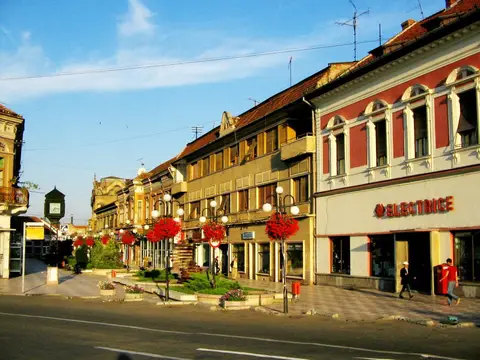
After driving out the Ottomans in 1716, the Habsburgs turned Timișoara into a fortress city, and their Baroque legacy still shapes the center today. On Union Square (Piața Unirii), the Roman Catholic cathedral and the Serbian Orthodox cathedral face each other, flanked by colorful Baroque buildings. Victory Square connects the opera house with the Orthodox cathedral, whose brightly glazed roof tiles recall both Transylvania and Byzantium. Magnificent Art Nouveau facades went up around 1900, and in 1884 Timișoara became one of the first cities in Europe to get electric street lighting. Along the Bega Canal, riverside paths and parks invite you to stroll.
Where the Revolution Began
In December 1989, resistance to Ceaușescu was sparked in Timișoara when citizens rallied to defend the Reformed pastor László Tőkés against his eviction. Within days, the protests spread across the country. A memorial museum in the city center documents the events with photographs, films and personal belongings of the victims. This history matters to many locals and helps explain the city's confident, civic character.
Sights in Timiș Beyond the County Seat
Lugoj, on the Timiș River, has an iron bridge, a Baroque Orthodox church and a long musical tradition. Near Recaș, vineyards stretch across the hills; the wineries here are among the largest in the country and welcome visitors. Buziaș is a small spa town with mineral springs and a long wooden colonnade from the Habsburg era. In Sânnicolau Mare, a famous treasure of gold was found in the 18th century; it is now in the Kunsthistorisches Museum in Vienna. Numerous villages still show the dead-straight streets and gabled houses of the Banat Swabians, even though most of them emigrated to Germany after 1990.
Timișoara Today
Since its Capital of Culture year in 2023, Timișoara has invested heavily in squares, galleries and riverside paths. In the Fabric district, once an independent industrial quarter with a brewery and a synagogue, studios, cafés and event spaces have moved in. The city's brewery is considered one of the oldest in Romania. Students from the large universities keep the pubs around Piața Unirii lively, and in summer beach bars open along the banks of the Bega. Among the sights in Timiș is also the Banat Village Museum in the woods on the edge of the city, which shows farmhouses of the region's various ethnic groups.
Banat Cuisine, Getting There and the Best Time to Visit
Banat cuisine has a Central European flavor: paprikash, schnitzel, stuffed peppers and strudel are on the menu alongside Serbian grilled meats and plum brandy. At church-consecration festivals in late summer, some villages still dance in traditional costume. Timișoara Airport is well connected to Germany, and highways lead to Arad and to the Hungarian border. By train you can reach Budapest and Bucharest. The best time to visit Timiș is spring and early fall; summers on the plain are hot, and winters are foggy and damp.