Constanța: Romania's Black Sea Coast and Ancient Tomis
Travel guide · editorialFor most Romanians, a vacation in Constanța means one thing above all: summer on the Black Sea. Constanța County covers almost the entire Romanian coast south of the Danube Delta, along with the steppe-like Dobruja region, with its vineyards, Tatar villages, and ruins from Greek and Roman times.
The City of Constanța: Ovid, a Mosque, and an Art Nouveau Casino
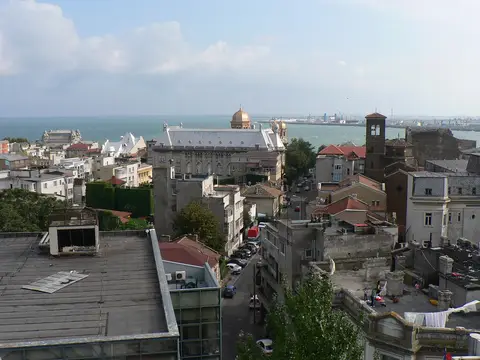
The port city is one of the oldest settlements in the country. Greek colonists founded Tomis here, and the Roman poet Ovid spent his last years in exile in this place – his statue stands on the square of the same name in the Old Town. Right next to it, a building protects the remains of a large Roman floor mosaic. The Art Nouveau casino on the cliff above the sea is the city's landmark, and the minaret of the Carol I Mosque offers sweeping views over the rooftops and the harbor. The port is the largest on the Black Sea and still shapes the city's economy and daily life.
Seaside Resorts from Mamaia to Vama Veche
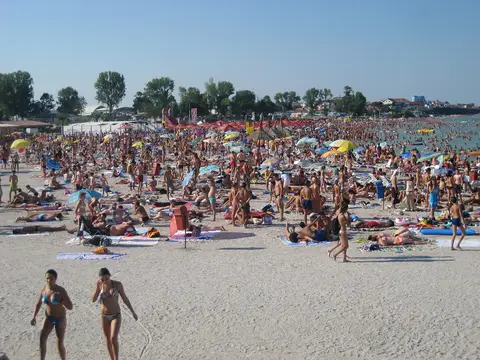
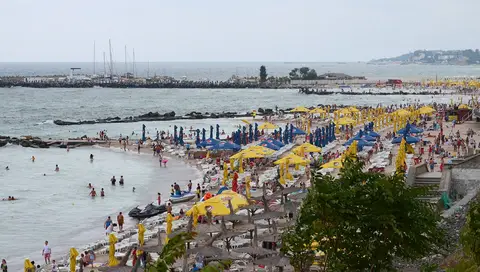
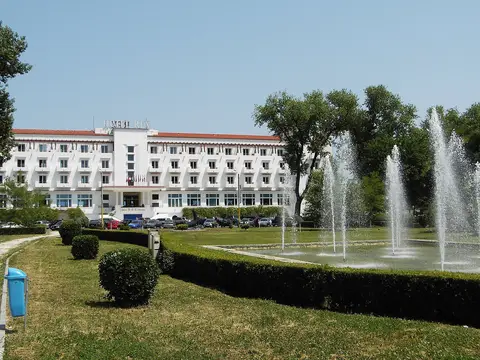
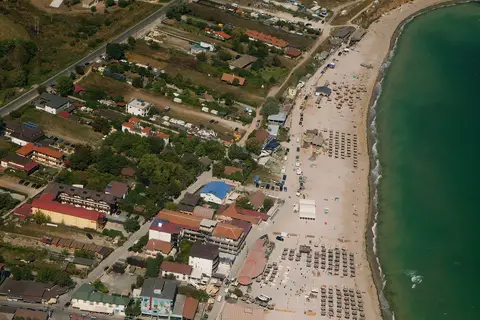
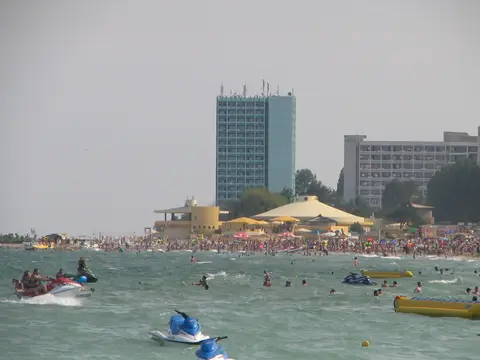
North of the city, Mamaia stretches along a narrow strip of land between Lake Siutghiol and the sea: hotels, beach clubs, and a cable car running above the promenade, loud and crowded in July and August. At the northern end, Mamaia-Sat and Năvodari offer quieter guesthouses. To the south come Eforie Nord and Eforie Sud, known for Lake Techirghiol, whose black healing mud has drawn spa guests for over a hundred years. Costinești is the traditional resort of choice for students, with the rusting wreck of the Evangelia lying off the beach. At the very south, just before the Bulgarian border, 2 Mai and Vama Veche have kept their reputation as alternative coastal spots, with tents on the beach, live music, and sunrises after nights of partying.
Sights Around Constanța Away from the Beach
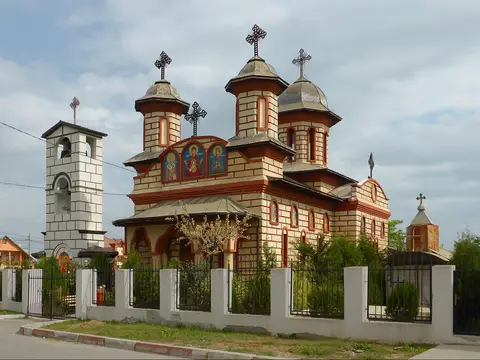
If you leave the sun loungers behind, you'll find remarkable traces of history in Dobruja. Histria, the oldest Greek city on Romanian soil, sits on a lagoon at the edge of the Danube Delta; waterbirds nest among the foundations. At Adamclisi, the reconstructed victory monument Tropaeum Traiani commemorates Emperor Trajan's campaigns against the Dacians. Around Murfatlar, wines grow on chalky hills that rank among the best known in the country, and in villages such as Cobadin and Medgidia, Tatar and Turkish communities and their mosques shape the scene.
Traveling Along the Coast
Buses and shared taxis run between the resorts, and in season trains also run from Constanța to Mangalia. Mangalia itself, ancient Callatis, has a small 16th-century mosque and a marina. The resorts of Neptun, Jupiter, Venus, and Saturn were built in the 1960s and 1970s as socialist hotel towns and are gradually being modernized. If you're looking for nature, head to the northern edge of the county to the lagoons near Corbu, where wild beaches and the birdlife of the Danube Delta begin to announce themselves.
Food, Getting There, and the Best Time to Visit
By the sea, you eat fish: grilled mackerel, fried sprats, and mussels with garlic sauce, plus plăcintă dobrogeană, a flaky pastry filled with cheese. Tatar cuisine brings dumpling-style pastries like suberek to the table. From Bucharest, the A2 motorway takes you to the coast in a little over two hours; trains take about two and a half hours. Mihail Kogălniceanu Airport sees most of its flights in summer. The best time to visit is between June and September; June and the first half of September are quieter and cheaper than the high season, when half of Bucharest heads to the coast. Outside the season, many hotels close, but the city of Constanța is worth a visit even in winter.