Caraș-Severin: Herculane Spa and the Banat Mountains
Travel guide · editorialCaraș-Severin in southwestern Romania is a green highland between the Banat and the Danube, sparsely populated and rich in gorges, waterfalls, and industrial history. A trip to Caraș-Severin takes you to the imperial spa town of Băile Herculane, to turquoise karst springs, and to the Danube at the Iron Gates.
Băile Herculane and the Cerna Valley
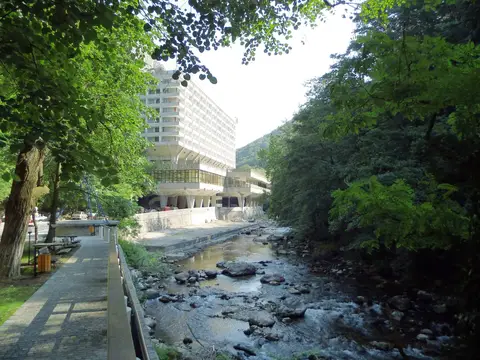
Băile Herculane, known in German as Herkulesbad, was already used by the Romans; in the 19th century the Habsburgs had magnificent spa houses, baths, and a statue of Hercules built here, and Empress Elisabeth was a guest. Many of the historic buildings are now crumbling, which lends the town a melancholy atmosphere, yet thermal springs and new hotels continue to draw visitors. The Cerna Valley above the town is part of a national park with limestone cliffs and primeval beech forests. Hiking trails lead to caves such as the Robbers' Cave, where traces of Stone Age inhabitants were found, and to viewpoints high above the valley. If you'd like to bathe outdoors, you'll find small pools of warm spring water along the Cerna.
Sights in Caraș-Severin
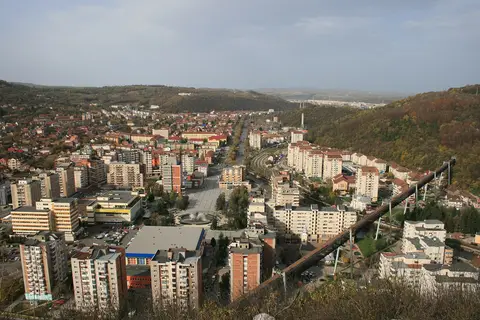
In Cheile Nerei-Beușnița National Park you'll find Ochiul Bei, a small lake of vivid turquoise, and the Beușnița Waterfall. Not far away, at the Bigăr Waterfall, a spring flows over a moss-covered rock. Reșița, the county seat, was founded in 1771 as an ironworking town; an open-air museum displays steam locomotives from the region. Oravița is home to one of the oldest theaters in Southeast Europe, and the Oravița–Anina mountain railway is considered the oldest in the country. On the southern edge, the Danube forms the Iron Gates gorge. Caransebeș is a good starting point for the Semenic Mountains and the village of Gărâna, which hosts an open-air jazz festival every year.
Culture, Cuisine, and Getting There
Banat Mountain Germans, Czechs, Croats, and Romanians have all shaped the region, which is reflected in the look of the villages and in the food: goulash, schnitzel, strudel, and plum dumplings. The nearest large city with an airport is Timișoara, and Băile Herculane lies on the rail line between Timișoara and Craiova. May to October is the best time to visit; the gorges carry especially large amounts of water in early summer. For the national parks, you'll want your own car, as buses to the mountain villages run only rarely.