Călărași: The Danube, the Bărăgan Plain, and Painted Houses
Travel guide · editorialA trip to Călărași takes you to the lower Danube, where the river forms the border with Bulgaria and splits into side channels. This county in southeastern Romania surprises visitors with a village full of painted houses and traces of one of Europe's oldest cultures.
Landscape along the Danube and the Borcea
Almost the entire county lies in the Bărăgan Plain. The Danube flows along the south, branching off the Borcea arm near Călărași, with islands, marshes, and fish ponds in between. In the west, the Mostiștea and its long, narrow lakes make for a haven for anglers and bird-watchers. Summers are long and hot, so wheat, corn, and vegetables are the main crops. Across the river from Călărași lies Silistra in Bulgaria, and a ferry at Chiciu also connects the city with Ostrov in Dobruja.
Sights in Călărași
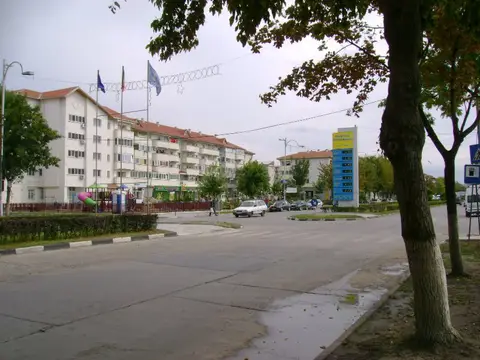
The best-known destination is Ciocănești on the Danube. Residents traditionally decorate their house facades with colorful patterns, flowers, and animal motifs; several hundred houses are adorned this way, and the village has been protected as a cultural village. A small museum displays traditional costumes and tools. In Oltenița, where the Argeș flows into the Danube, the museum recalls the Gumelnița culture, a Neolithic culture from the 5th millennium B.C. that is named after a nearby site and left behind famous ceramic figurines. The county seat, Călărași itself, is an industrial city with broad boulevards, a riverside promenade on the Borcea arm, and a city museum. Things are quieter in the fishing villages along the Borcea, where boats lie among willows and reeds and you can buy fresh catch right at the dock.
Food, getting there, and the best time to visit
Fish plays a major role: carp and catfish served as saramură or in tangy ciorbă, accompanied by polenta and garlic sauce. Melons and vegetables come from the plain. The best time to visit is from May to September; spring and fall are also good for bird-watching. Călărași lies about 120 kilometers (75 miles) southeast of Bucharest; by way of the A2 and an access road or via the DN3, the city can be reached in about two hours, and regional trains run there as well.