Bistrița-Năsăud: The Nösnerland and the Bârgău Pass
Travel guide · editorialBistrița-Năsăud in northeastern Transylvania was a stronghold of the Transylvanian Saxons, who called it the Nösnerland, and became world-famous through Bram Stoker's Dracula. A trip to Bistrița-Năsăud takes you to a small town with a Gothic church tower, over the Bârgău Pass and up into the peaks of the Rodna Mountains.
Bistrița and the Nösnerland
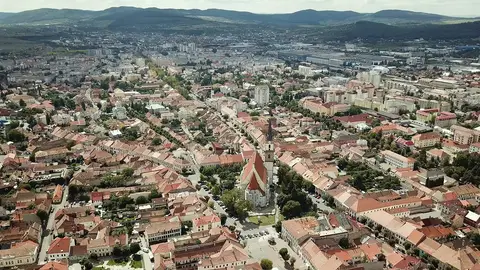
Bistrița (Bistritz) was a wealthy Saxon trading town in the Middle Ages. Its landmark is the Evangelical parish church, with a tower roughly 75 meters (about 246 feet) high that was damaged by fire in 2008 and subsequently restored; today you can climb it. On the main square stand the arcaded houses of Sugar Row. In Stoker's novel, Jonathan Harker spends the night in Bistrița at the Golden Krone Hotel before traveling on to the Count; a hotel by that name actually exists today. Many Saxon villages in the surrounding area have fortified churches or church castles, even though only a few Saxons still live here. Remains of the town wall with the Coopers' Tower have survived, and the county museum displays archaeological finds, Saxon crafts and traditional costumes. The surrounding hills are covered with orchards, whose plums are distilled into the region's potent brandy.
Sights in Bistrița-Năsăud
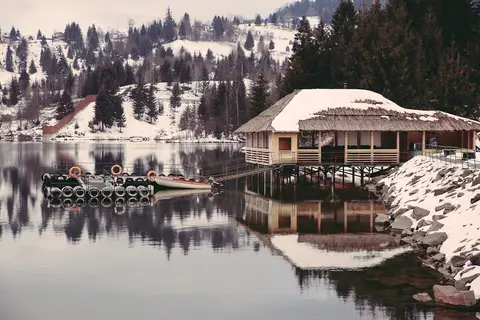
East of Bistrița, the road climbs to the Bârgău Pass (Tihuța), where Stoker placed the Count's castle; today a castle-style hotel stands there. Along the way you pass Lake Colibița, a reservoir surrounded by spruce forests and vacation cottages, a popular spot for swimming and boating. To the north, the Rodna Mountains, with Pietrosul Rodnei rising above 2,300 meters (about 7,500 feet), form a national park with glacial lakes and chamois. Sângeorz-Băi is a spa town known for its mineral water, and in Năsăud a museum recalls the border regiments of the Habsburg era.
Food, Getting There and Best Time to Visit
The cuisine blends Romanian, Hungarian and Saxon traditions: stuffed cabbage rolls, bean soup served in a bread bowl, Hanklich (yeast cake) and fruit brandies. The nearest airport is in Cluj-Napoca, about a two-hour drive away; Bistrița can also be reached by train. May through October is the best time to visit, and the Rodna Mountains are especially rewarding in high summer. In winter, the Bârgău Pass often gets heavy snow, and the snowy forests suit the gloomy backdrop of the novel well.