
Argeș: Transfăgărășan, Poenari and the Princely Towns
Travel guide · editorialArgeș County stretches from the highest peaks of the Southern Carpathians to the rolling hills of Wallachia. A vacation in Argeș combines one of Europe's most famous mountain roads with old princely residences, monasteries and vineyards.
Curtea de Argeș and Câmpulung: Cradle of Wallachia
In the 14th century, the first Wallachian princes resided in Câmpulung, known in German as Langenau, and later in Curtea de Argeș. Curtea de Argeș is home to the Princely Church of St. Nicholas, with frescoes from the 14th century. Even more famous is the monastery church that Prince Neagoe Basarab had consecrated in 1517: a delicate structure of pale stone with twisted towers. According to legend, Master Manole walled in his own wife so that the walls would hold. The church is the resting place of the Romanian kings Carol I and Ferdinand and their wives, while King Michael I and Queen Anne lie in a new cathedral next door. Câmpulung preserves the Negru Vodă Monastery and an old town with houses dating from the era of the merchants who traveled over the pass to Transylvania.
Sights in Argeș: Poenari and the High Road
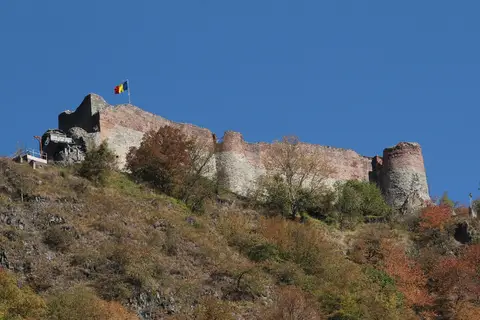
North of Curtea de Argeș, the Transfăgărășan road climbs into the Făgăraș Mountains. Near Căpățânenii Ungureni, the ruins of Poenari Castle cling to a rocky ridge; Vlad Țepeș had it expanded in the 15th century, and about 1,480 steps lead up to it. Because of the many bears in the area, the climb is occasionally restricted. Farther up, the Vidraru Dam, completed in 1966, impounds a long mountain lake, and from its crest the daring bungee-jump into the depths. The high road then winds on to Lake Bâlea on the border with Sibiu County; it is usually only open all the way through from July to October. In the northeast, the road crosses the Rucăr-Bran Pass, passing the Dâmbovicioara Gorge and the rock faces of Piatra Craiului.
Pitești and the Hill Country
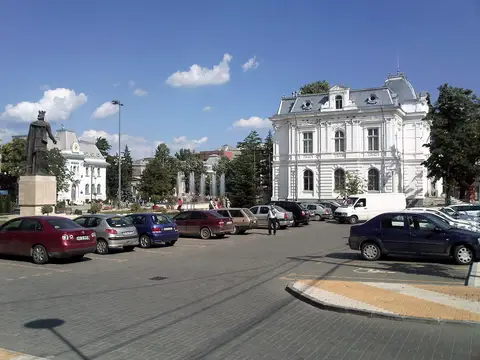
The county seat, Pitești, is a lively industrial city. In neighboring Mioveni, Dacia builds the cars that now drive across half of Europe, shaping the economy of the entire region. In April, Pitești celebrates spring with the Tulip Festival, when hundreds of thousands of tulips bloom in the city park. Grapevines grow around Ștefănești, and the hills have long been known for their plums, which are distilled into țuică.
Monasteries and Villages at the Foot of the Mountains
Away from the major destinations, it's worth detouring to the villages between Câmpulung and Curtea de Argeș. Cotmeana Monastery is one of the oldest in Wallachia, and in Rucăr and Dragoslavele, farmhouses with wooden porches stand amid orchards. In autumn, plum jam is cooked down and brandy distilled everywhere, and roadside stands sell honey, cheese and mushrooms from the forests. Near Nămăiești, a small cave monastery nestles into a rock face. Among the Argeș destinations for nature lovers is also Piatra Craiului National Park, whose limestone ridge is visible from far away on clear days.
Getting There and Best Time to Visit
Pitești lies on the A1 motorway, about two hours west of Bucharest; the nearest airports are Bucharest Otopeni and Sibiu. You'll need a car for the mountains, as public buses run infrequently. The best time to visit for the Transfăgărășan and for hiking is July to September, the Tulip Festival draws visitors in April, and in autumn the beech forests around Lake Vidraru glow with color.