Vila Real District: Douro Terraces and Trás-os-Montes
Travel guide · editorialA vacation in the Vila Real district takes you to the Douro's vineyard terraces, which climb the hillsides in countless steps. To the north begins the rugged highland of Trás-os-Montes, with hot springs, Roman bridges, and remote villages.
Landscape Between the Douro and the Mountains
The district lies in northeastern Portugal "behind the mountains," which is what Trás-os-Montes means. In the south, the Douro forms the boundary; on its slopes and those of the tributaries Corgo and Pinhão lies the heartland of the Alto Douro wine region, a UNESCO World Heritage Site since 2001. Slate and sun give the grapes for port wine their strength. In the north, the land becomes higher and cooler: the Serra do Alvão and the Serra do Marão are shaped by heath and granite, and in Alvão Natural Park the Fisgas de Ermelo, one of the highest waterfalls in Portugal, tumble over rocky ledges. In the far north, in the Barroso region around Montalegre, traditional farming is still practiced.
Vila Real and Peso da Régua
Vila Real, the district capital, sits above the Corgo gorge. A few miles to the east stands the Solar de Mateus, a Baroque manor house with gardens and a reflecting pool, which became world famous as the label of Mateus rosé wine. In Bisalhães, black pottery is fired in earthen kilns, a craft that UNESCO lists as endangered cultural heritage. Peso da Régua on the Douro, with its district of Godim, is the gateway to wine country; the Museu do Douro explains the history of port wine, and boat trips depart from the river. Upstream lies Pinhão, with a train station whose tile pictures depict the grape harvest.
Sights in the Vila Real District
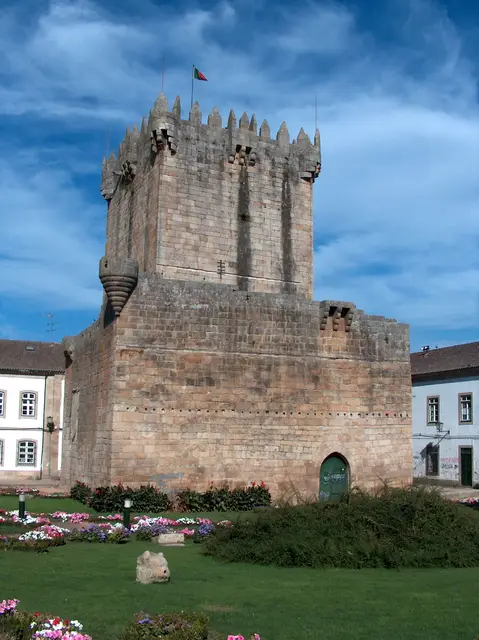
Chaves in the north near the Spanish border has a Roman bridge over the Tâmega dating from the time of Emperor Trajan and hot springs that the Romans already used. The keep and old town invite strolling, and the Pastel de Chaves, a puff pastry filled with veal, is known throughout the country. Montalegre is overlooked by a castle and celebrates a Night of the Witches on every Friday the 13th. The quintas (wine estates) in the Douro Valley offer tours, tastings, and overnight stays among the vines. The train ride along the Douro upstream from Régua is spectacular.
Food and Drink
Besides port wine, the Douro produces robust red wines. The cuisine of Trás-os-Montes is hearty: cozido à transmontana with many kinds of sausage, grilled cabrito (kid), Barrosã beef from the Barroso, and smoked sausages such as alheira. In autumn chestnuts are roasted, and in winter stews of beans and cabbage warm you up.
Getting There and Best Time to Visit
From Porto, the A4 highway runs through the Marão Tunnel to Vila Real; the drive takes about an hour. The Douro railway line connects Porto with Régua and Pinhão. The best time to visit is from May to October; during the grape harvest in September the valley is especially lively, and in October the vines turn red and yellow. Summers in the Douro Valley are very hot, while in winter the mountains of Trás-os-Montes often see snow. If you're looking for peace and quiet, stay at one of the quintas or in a country house in the Barroso, where you can experience the daily life of mountain farmers up close.