Viana do Castelo District: Green Northern Portugal on the Minho
Travel guide · editorialA vacation in the Viana do Castelo district takes you to the far northwest of Portugal, where the Minho River forms the border with Spain. Here you'll find a port city with a big festival, the country's oldest small town on the Lima River, fortresses on the border, and granite villages in Peneda-Gerês National Park.
Between the Atlantic and the Mountains
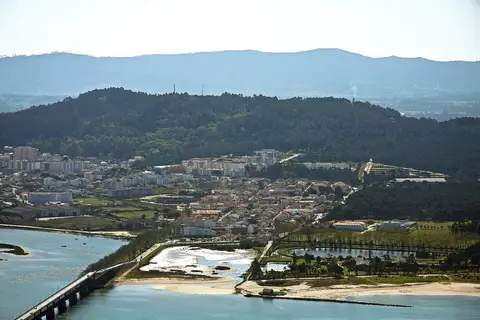
The district covers the northernmost part of the Minho province. Along the coast, beaches line up from Viana to Caminha, where the Minho flows into the sea. Two river valleys, the Lima and the Minho, shape the landscape; their slopes are covered with grapevines, cornfields, and forests. To the east rise the Serra da Peneda and the Serra do Soajo, part of Peneda-Gerês National Park, with granite domes, wild horses, and villages such as Soajo and Lindoso, where stone granaries known as espigueiros stand in clusters on the rocks.
Viana do Castelo and the Coast
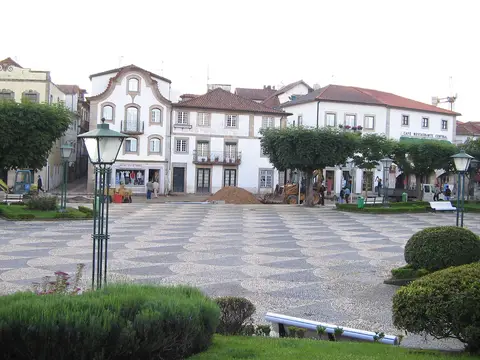
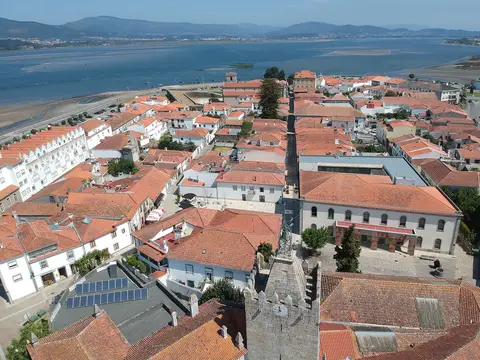
The district capital lies at the mouth of the Lima. Above it, on Santa Luzia hill, stands a Neo-Byzantine basilica reached by a funicular; the view over the estuary and the coast is considered one of the finest in the country. In the old town, Renaissance buildings surround the Praça da República, and at the harbor the hospital ship Gil Eannes serves as a museum. Every August the city celebrates the Romaria of Nossa Senhora da Agonia with processions, flower carpets, and women in red costumes draped in heavy gold filigree. Farther north, Vila Praia de Âncora and Caminha, with its clock tower, invite you to swim and stroll.
Sights in the Viana do Castelo District
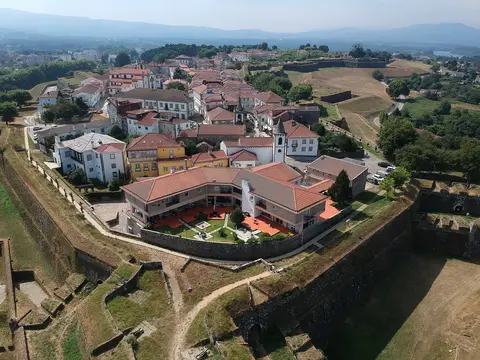
Ponte de Lima was granted a town charter in 1125, the first place in Portugal to receive one. The long bridge with its arches, partly Roman and mostly medieval, is a waypoint on the Portuguese Way of St. James; the Feiras Novas fair takes place here in September. Valença is a star-shaped fortress on a hill, facing the Spanish town of Tui across the river; many pilgrims on the Camino cross the bridge on their way to Santiago. Monção, also on the border, is the center of Alvarinho wine. In Arcos de Valdevez, hikes into the Peneda begin, and the pilgrimage sanctuary of Nossa Senhora da Peneda sits impressively beneath a granite cliff.
Food and Drink
Typical dishes include arroz de sarrabulho, a dark rice dish made with pork and blood, and, in spring, Minho lamprey, which is considered a delicacy. Wash it down with Vinho Verde, especially the aromatic Alvarinho from Monção and Melgaço. From the mountains come Cachena beef and smoked sausage; from Viana, bolas de Berlim and convent sweets.
Getting There and Best Time to Visit
The nearest airport is Porto, about an hour away via the A28 motorway. A rail line connects Porto with Viana, Caminha, and Valença. The best time to visit is from May to September; the festivals are liveliest in August, while spring and fall are ideal for hiking. Winter is rainy but mild. If you're walking the Camino, you'll often start in Ponte de Lima or Valença, since only a few stages remain from there to Santiago de Compostela. Cyclists use the Ecopista, a former railway embankment along the Minho between Valença and Monção.