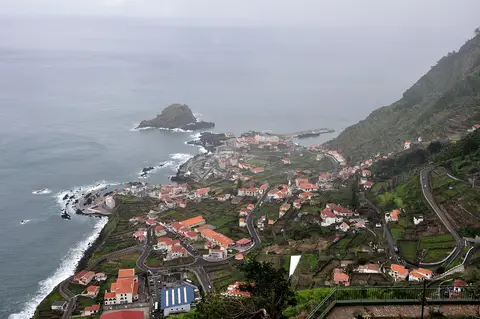
Madeira: The Flower Island of the Atlantic
Travel guide · editorialA vacation on Madeira means hiking along irrigation channels through laurel forests, flowers that bloom nearly year-round, and steep coastlines rising from the deep-blue Atlantic. The Autonomous Region of Madeira includes the main island, the beach paradise of Porto Santo, and several uninhabited island groups.
A Volcanic Island with Many Climate Zones
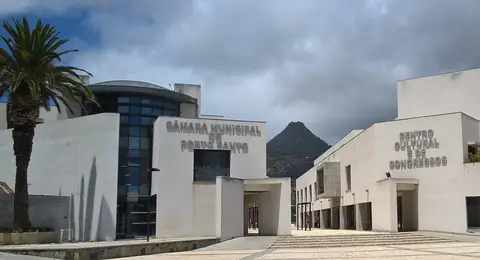
Madeira lies about 1,000 kilometers southwest of Lisbon and roughly 700 kilometers off the coast of Morocco. The island is volcanic in origin and extremely steep: the mountains climb from the coast to Pico Ruivo at 1,862 meters, while Pico do Arieiro, at 1,818 meters, can be reached by road. The damp north is covered by laurel forest, the Laurisilva, a relic of the Tertiary period and a UNESCO World Heritage Site since 1999. The sunnier south, home to Funchal, is densely populated, with terraces of bananas and grapevines stretching up the slopes. Porto Santo, about 40 kilometers to the northeast, has a golden sandy beach roughly nine kilometers long.
Funchal and the Island's Towns
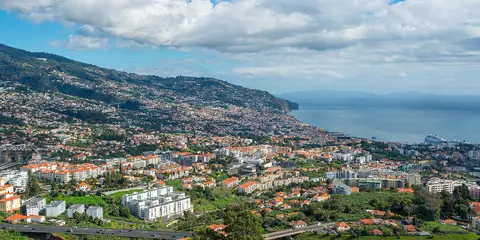
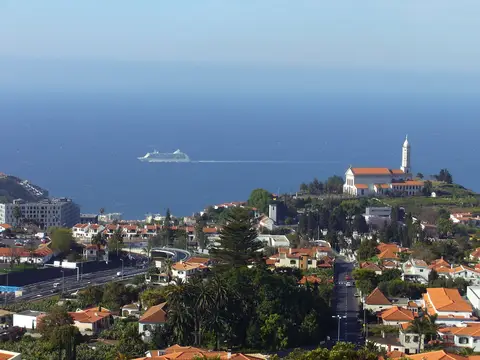
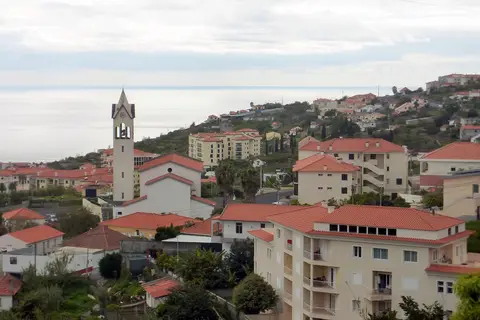
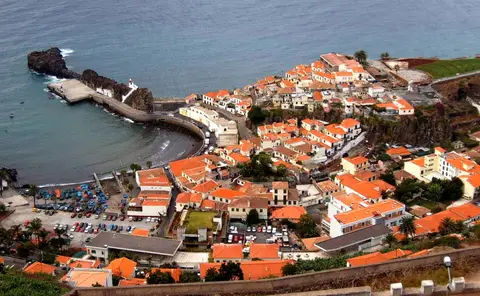
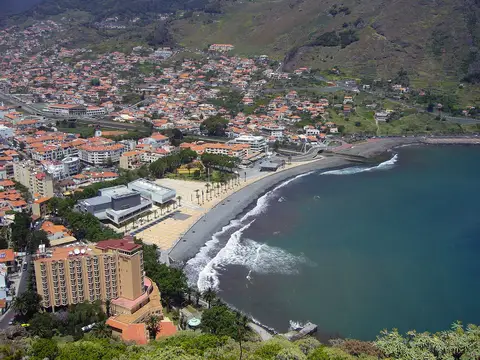
Funchal, the capital, rises like an amphitheater from the harbor up the mountainside. Exotic fruits glow in the Mercado dos Lavradores market hall, and in the old town, front doors have been painted by artists. A cable car takes you up to Monte, from where you can slide back down the streets in a wicker toboggan, a tradition dating to the 19th century. São Martinho in the west is the hotel district, while Caniço, in the municipality of Santa Cruz, is a quiet seaside resort. In Câmara de Lobos, where Winston Churchill painted, colorful fishing boats bob in the harbor, and at Cabo Girão you can look about 580 meters down from a glass platform. Machico is where Portuguese navigators landed in 1419. In the north you'll find São Vicente with its lava caves and Porto Moniz with natural swimming pools in the volcanic rock.
Madeira Attractions for Hikers
The levadas are the island's trademark: irrigation channels more than 2,000 kilometers long, lined with narrow paths that lead through forest and along rock walls. Popular hikes lead to the 25 Fountains near Rabaçal and to the Caldeirão Verde near Santana, where you'll also find the thatched triangular houses. The high-altitude trail from Pico do Arieiro to Pico Ruivo is considered one of the most beautiful mountain hikes in Europe. Most routes require sure-footedness and a flashlight for the tunnels.
Porto Santo and the Sea
The small neighboring island of Porto Santo is the counterpart to the green main island: dry, flat, and home to a beach whose fine sand is said to have healing properties. Christopher Columbus lived here for a time, and a small museum in his supposed residence commemorates it. Boat excursions around Madeira offer the chance to spot dolphins and whales, and divers explore the rocky coasts. The Desertas Islands are a protected area, home to the rare monk seal.
Food, Festivals, and the Best Time to Visit
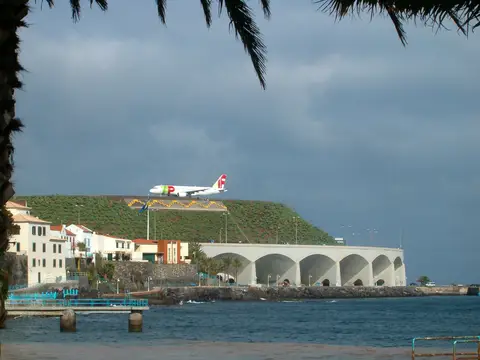
Typical dishes include espada, black scabbardfish, often served with banana; espetada, beef on a bay-laurel skewer; and bolo do caco, a flatbread served with garlic butter. To drink, try poncha, made with sugarcane spirit, honey, and lemon, or one of the famous Madeira wines. In spring, the Flower Festival parades through Funchal, and the New Year's Eve fireworks over the bay are known worldwide. Thanks to the mild climate, with temperatures mostly between 17 and 25 degrees Celsius (63 to 77°F), Madeira is a year-round destination; the airport near Santa Cruz is served from many European cities, and a ferry connects Funchal with Porto Santo.