Bragança District: Wild Northeastern Portugal
Travel guide · editorialA vacation in the Bragança district takes you to the most remote corner of Portugal, Trás-os-Montes in the northeast. Here you'll find a language of its own, masked figures at the winter festival, a medieval citadel, and nature parks where wolves still roam.
Landscape and Towns
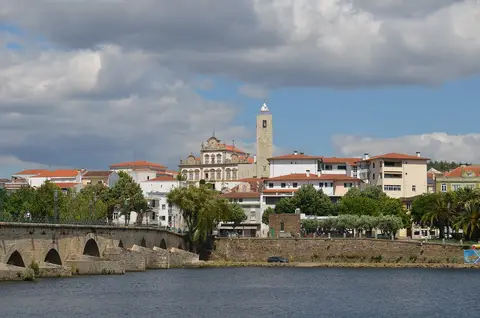
The district borders Spain to the north and east. In the north lies Montesinho Natural Park, with oak and chestnut forests, slate villages, and the Iberian wolf. In the east, the Douro River, which forms the border, has cut deep into the granite landscape; Douro Internacional Natural Park, with its sheer cliffs, is home to vultures and golden eagles. Bragança, the district capital, is dominated by a citadel with a castle and keep; inside the walls you'll still find a small village and the Domus Municipalis, a rare Romanesque town hall. Mirandela, on the Tua River, is known for its long bridge and for alheira, a sausage made from poultry and bread. Macedo de Cavaleiros lies on Azibo Reservoir, with its swimming beaches, and within the UNESCO Terras de Cavaleiros Geopark.
Sights in the Bragança District
In Miranda do Douro, on the border, people speak Mirandese, which has been Portugal's second official language since 1999. The Pauliteiros, men in skirts who perform a stick dance, appear at festivals. In Podence, near Macedo, the Caretos run through the village during Carnival, figures in colorful fringed costumes and tin masks that have been part of UNESCO's intangible cultural heritage since 2019. Rio de Onor is a village that straddles the border with Spain. In spring, almond blossoms turn the slopes around Torre de Moncorvo and Freixo de Espada à Cinta into a sea of white.
Food, Getting There, and Best Time to Visit
The Posta Mirandesa, a thick steak from Mirandesa cattle, is the most famous dish, along with smoked sausages, chestnuts, and honey. From Porto, the A4 motorway takes you to Bragança in a little over two hours, and buses connect the towns. The best time to visit is from May to October. Locals describe their climate with the saying "nine months of winter and three months of hell" – summers can get very hot, and winters often bring frost.