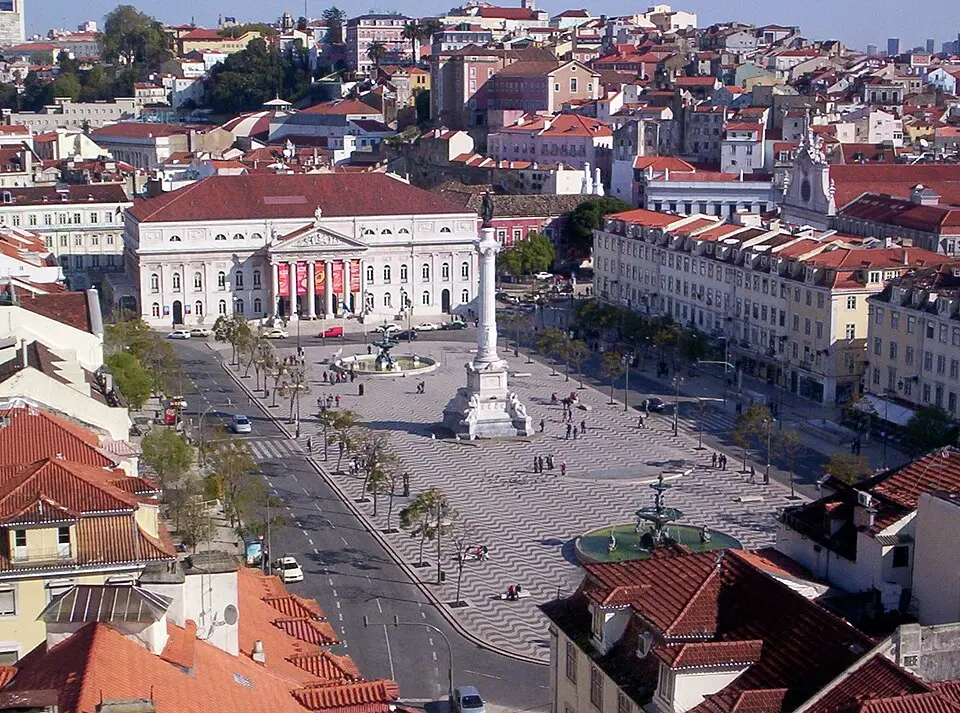
About Praça do Rossio
Rossio, officially Praça de D. Pedro IV, is one of Lisbon's most important city-center squares, located in the historic heart of the Baixa Pombalina. One of the capital's three principal public spaces, alongside Praça da Figueira and Praça do Comércio, it has been the pulsing heart of the city since the Middle Ages. The name derives from an old Portuguese word for an uninhabited field, a nod to its origins in the 13th and 14th centuries, when the city expanded toward the banks of the Tagus and the castle hill. Today the square is above all a popular meeting place for locals and visitors alike, and it also serves as a major transportation hub, where the Rossio metro station and the Rossio terminus of the Portuguese railways come together.
The history of the area is closely tied to the misfortunes that have struck Lisbon. After the devastating earthquake of 1755, which destroyed almost every building on the square, a comprehensive reconstruction took place under the direction of the Marquês de Pombal. The architects Eugénio dos Santos and Carlos Mardel shaped the new look in the Pombaline style. The striking Arco do Bandeira, an arch that links the square with Rua dos Sapateiros, also dates from this era. In the 19th century, Rossio received its characteristic wave-patterned pavement of gray and white stones, as well as two French fountains. Another highlight is Rossio Station, built in 1886, whose neo-Manueline façade recalls the historic rail connection to Sintra.
At the center of the square rises a bronze statue of King Pedro IV, commemorating the Portuguese ruler who later became emperor of Brazil. Around the square you will find further historic landmarks, including the Teatro Nacional D. Maria II, which was built on the site of the former Palace of the Inquisition after a fire. A statue of the playwright Gil Vicente crowns the theater's pediment. Rossio thus offers visitors a compelling glimpse into Lisbon's architectural and political history, where medieval traditions meet the orderly structure of the Pombaline reconstruction.
At a glance
- Category
- Sight › Historic sites
- Rating
- no reviews yet · write a review
- Address
Lisbon, Portugal- District
- Santa Maria Maior
- Phone
- +351213420744
- Website
- en.wikipedia.org
- —
- Coordinates
- 38.71385° N · -9.13936° E
- Data quality
- confidence 0.97
- Identifier
- ID ed9c36be-3dc…
Location & surroundings
Toggle layersRatings & comments
none yetNear Praça do Rossio
closest 5 per category · 2 kmSights
Restaurants
Museums
Hotels
More:Historic sites in Lisbon (240)Sights in Santa Maria Maior (44)All sights in Lisbon (297)
300 places within 2 km loaded.
Don't miss in Lisbon
All sights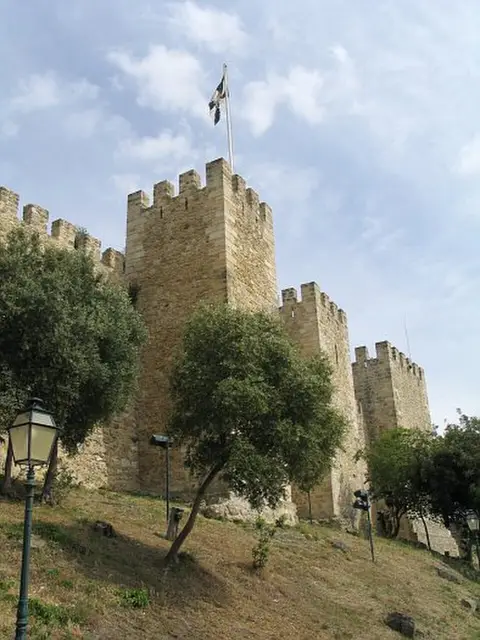 Castles01
Castelo de São Jorge
R. de Santa Cruz do Castelo · Lisbon● Website● Phone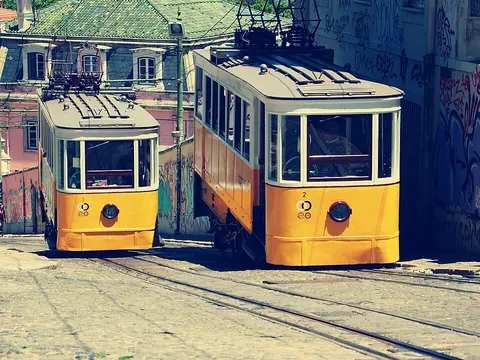 Historic sites02
Ascensor da Glória
Calçada da Glória · Lisbon● Website● Phone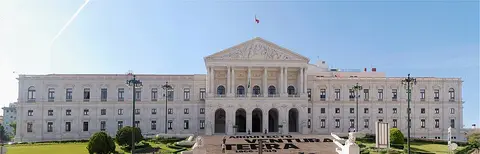 Monuments03
Palácio de São Bento
Praça de São Bento · Lisbon● Website● Phone Historic sites04
You need a free account to leave reviews and photos – that keeps comments genuine and lets you edit them later.