Greater Poland: Poznań, Gniezno and the Cradle of Poland
Travel guide · editorialPoland's history began in Greater Poland: on Cathedral Island in Poznań and in Gniezno, the first Piast rulers were baptized and crowned. A vacation in Greater Poland takes you to early medieval fortified settlements, Renaissance town halls, palaces and lakes, in a region known for being especially hardworking and orderly.
Flat Country along the Warta
The Greater Poland Voivodeship, Wielkopolska in Polish, lies in western Poland and is the country's second-largest by area. The Warta River runs through it from southeast to northwest, surrounded by a gentle moraine landscape of fields, forests and numerous lakes, for example in the Gniezno Lake District. In the north, the region extends to the Noteć River near Piła, and in the south to Kalisz and Ostrów Wielkopolski. Around 3.5 million people live here. Greater Poland was Prussian from 1793, and the Greater Poland Uprising of 1918/19 returned the region to Poland after World War I, an event locals are still proud of today.
Poznań: Goats, Town Hall and Cathedral Island
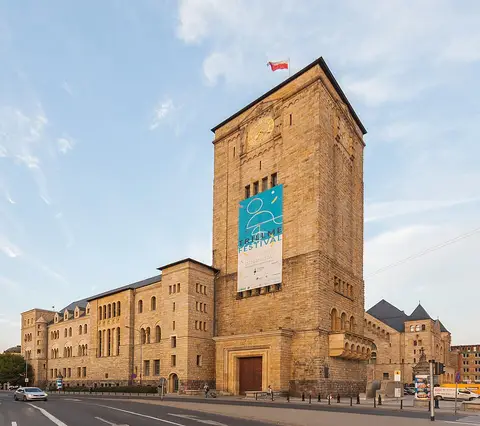
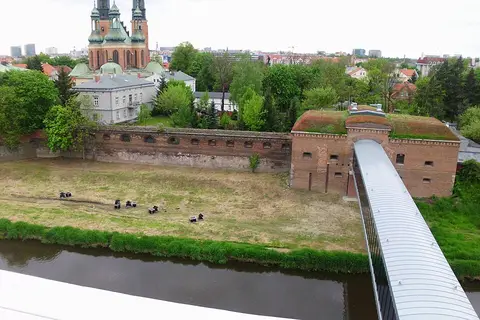
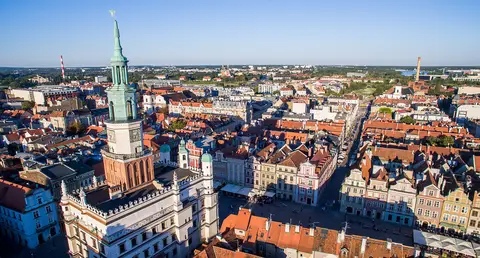
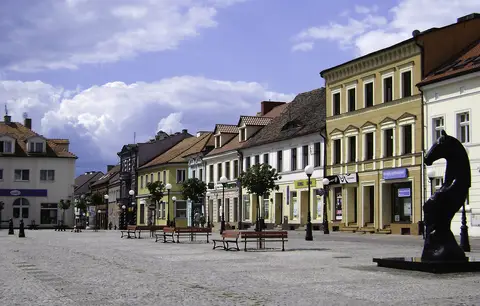
Poznań is a lively university and trade-fair city. The Old Market Square, with its colorful merchants' houses, is dominated by the Renaissance town hall, where two mechanical billy goats butt heads twelve times on the tower every day at noon. The Baroque parish church of St. Stanislaus, with its pink facade, is just a few steps away. On Cathedral Island, Ostrów Tumski, stands the cathedral in which Poland's first rulers were buried; across from it, the interactive Porta Posnania museum tells the story of the baptism of Mieszko I in 966. The Imperial Castle, built by Wilhelm II, is now a cultural center. Rowers and joggers take to the shores of Lake Malta, and a theater festival is held here in summer.
Sights in Greater Poland
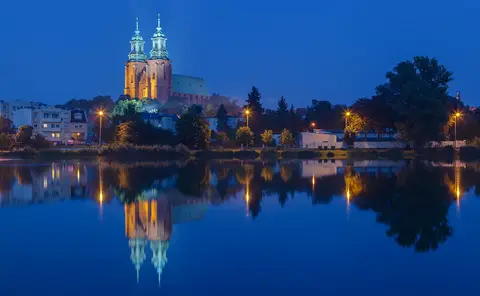
The Piast Route connects the sites where the Polish state was founded. Gniezno, the first capital, has a Gothic cathedral with a famous Romanesque bronze door from the 12th century depicting the life of St. Adalbert. On Ostrów Lednicki island lie the remains of a 10th-century palace complex, and in nearby Biskupin, just across the border in Kuyavia-Pomerania, an Iron Age settlement has been reconstructed, its wooden houses standing on a peninsula. Kalisz is considered one of Poland's oldest cities; Ptolemy already mentioned a place called Calisia. Rogalin Palace with its gallery and ancient oaks, Kórnik Castle with its library, and the wooden Antonin Hunting Lodge are popular excursions around Poznań. Leszno and Września have pretty old towns, and Konin is an industrial city near Licheń, home to a Marian shrine and the largest church in Poland.
Lakes, Palaces and Steam Locomotives
South of Poznań, Greater Poland National Park protects an Ice Age moraine landscape of lakes and forests, which you can reach from the city on bike and hiking trails. In Kórnik, the castle grounds include one of Poland's oldest arboretums. Gołuchów Castle near Kalisz was rebuilt in the style of the Loire châteaux and is surrounded by a large park where European bison roam. In Rydzyna near Leszno stands a Baroque palace that now serves as a hotel. Railway enthusiasts are drawn to Wolsztyn, where a locomotive shed maintains steam locomotives and a steam locomotive parade takes place every spring. In the north stretches the Noteć Forest (Puszcza Notecka), a huge pine forest area between the Warta and Noteć rivers, popular with mushroom pickers.
Food and Drink
The rogal świętomarciński, a croissant filled with white poppy seed paste, is eaten in huge quantities on St. Martin's Day, November 11, and is protected as a regional product. Pyry z gzikiem, boiled potatoes in their jackets with quark and onions, is a typical everyday dish, and roast duck with red cabbage and potato dumplings is a Sunday staple. Incidentally, people in Poznań call potatoes "pyry," a word hardly known elsewhere in Poland.
Getting There and Best Time to Visit
Poznań lies on the Berlin–Warsaw rail line, and the EuroCity takes just under three hours from Berlin; the city is just as quick to reach via the A2 motorway. Poznań-Ławica Airport (POZ) offers connections to several European cities. The best time to visit is May through September, when you can explore the lakes and palaces by bike. In November, the St. Martin's festival in Poznań, with its parade and croissants, is well worth a visit.