Trøndelag: Trondheim, Nidaros Cathedral, and the Coast
Travel guide · editorialTrøndelag is the historic heart of Norway: this is where Saint Olav was buried, where kings were crowned, and where the pilgrim route from the south ends. A vacation in Trøndelag combines the university city of Trondheim with the mining town of Røros, fertile farms along the fjord, and a coastline dotted with islands.
Landscape and Location
The Trondheimsfjord stretches roughly 130 kilometers inland and is surrounded by some of Norway's most fertile farmland. To the east, the land rises to the mountains along the Swedish border, and to the south lies Dovrefjell, home to musk oxen. Off the coast, skerries and island groups such as Hitra and Frøya make a paradise for anglers. In the north, the province extends to the forests and lakes around Namsos. Hitra is known for salmon farming and red deer, Frøya for a wide archipelago with lighthouses. The climate is relatively mild along the fjord, but cold and dry inland around Røros.
Sights in Trøndelag
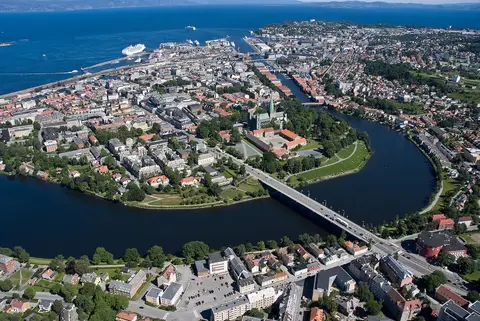
Trondheim, Norway's third-largest city, was founded in 997 by Olav Tryggvason. Nidaros Cathedral is the largest medieval church in Scandinavia and the destination of the St. Olav Ways; the crown regalia are kept in the Archbishop's Palace next door. The colorful warehouses along the Nidelva, the Old Town Bridge, and the café-lined Bakklandet district are among the most beautiful scenes in Norway. The Trampe bicycle lift carries you up the hillside, and Kristiansten Fortress offers views over the city. About 150 kilometers to the southeast lies Røros, a copper-mining town of wooden houses with slag heaps and a smelter, a UNESCO World Heritage Site and one of the coldest places in the country. Along the fjord, worthwhile stops include the monastery island of Munkholmen, the Sverresborg open-air museum, and the rock carvings near Stjørdal. In Trondheim, you should also visit Rockheim, the national museum of pop music in a converted warehouse, and the Nordenfjeldske Museum of Decorative Arts. In February, Røros hosts the Rørosmartnan, a large winter market with horse-drawn sleighs. Near Oppdal in the south is a well-known ski area on the edge of Dovrefjell.
Culture and History
The Battle of Stiklestad in 1030, in which King Olav fell, is regarded as the birth of Christian Norway; every year at the end of July it is reenacted in an open-air play. Today Trondheim is home to the Norwegian University of Science and Technology (NTNU) and a center of research. The St. Olav Ways, a medieval pilgrim path from Oslo to Trondheim, is now waymarked and walked by hikers from around the world.
Food, Getting There, and Best Time to Visit
Trøndelag has made a name for itself as a gourmet region and was European Region of Gastronomy in 2022. Typical specialties include sodd, a meat soup with dumplings, salmon from the fjords, cheese from farms in Inderøy, and potato lefse. The Golden Route near Inderøy links farm shops, breweries, and craft studios. Værnes Airport is about 30 kilometers east of Trondheim, and trains run to Oslo, Bodø, and via Røros. The Hurtigruten coastal steamer calls at the harbor. The best time to visit is summer, and Trondheim is especially lively during the Olavsfest around July 29. Farm shops along the fjord sell cheese, beer, and lamb, and Trondheim has a growing scene of Michelin-starred restaurants and bistros.