Montenegro: Fjord Coast, Mountain Villages, and the Adriatic
Travel guide · editorialMontenegro is barely bigger than Connecticut, yet the Adriatic and the 2,000-meter peaks of Durmitor are often only two hours apart by car. If you're planning a vacation in Montenegro, you'll find Venetian old towns, steep switchbacks, and mountain villages where sheep's cheese still ripens in wooden barrels.
The Bay of Kotor and the Coast
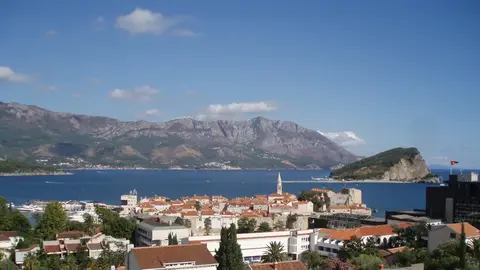
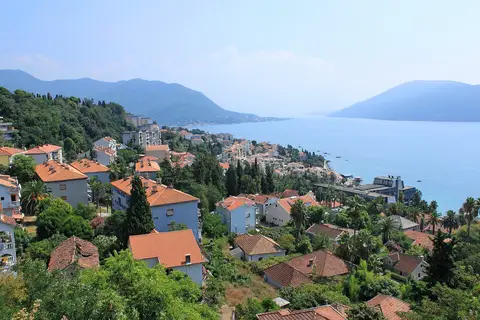
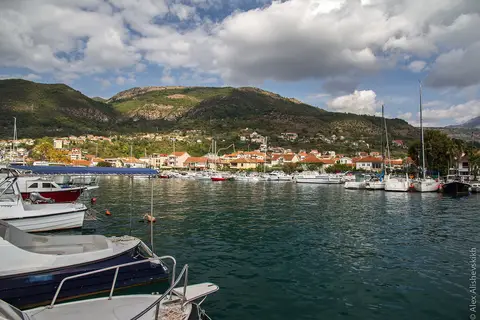
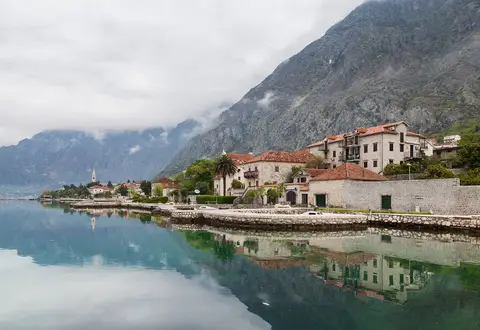
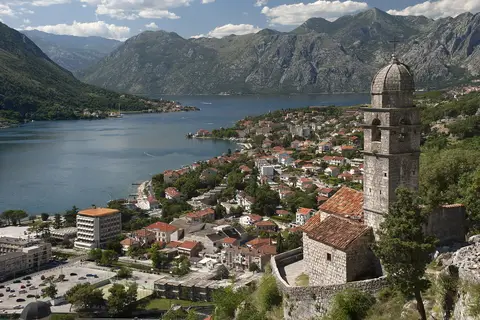
The Bay of Kotor (Boka Kotorska) cuts about 19 miles (30 km) inland like a fjord, ringed by limestone cliffs that rise almost vertically out of the water. Kotor sits at the very back of the bay, an old town of pale stone with alleys barely wide enough for two people to walk side by side, and a city wall that zigzags up the mountainside. If you climb the roughly 1,350 steps to San Giovanni Fortress early in the morning, the cruise ships won't have arrived yet. Across the bay lie Perast, with its captains' palaces, and the two small islands just offshore, one of them, Gospa od Škrpjela, built up artificially by sailors who dropped stones into the sea over centuries. Dobrota stretches along the shore as a long ribbon of stone houses, while Tivat, with its Porto Montenegro marina, is the modern counterpart. Herceg Novi at the entrance to the bay is greener and quieter, with staircases winding between mimosas and palms.
Budva, Bar, and Ulcinj: Beach Towns with History
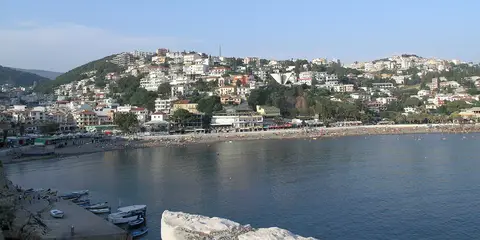
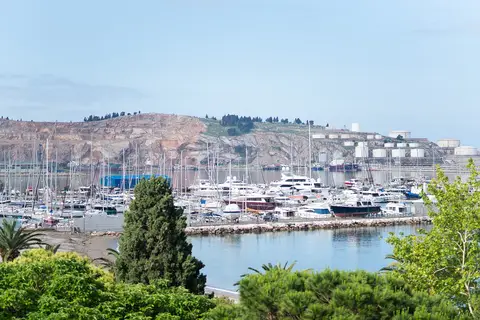
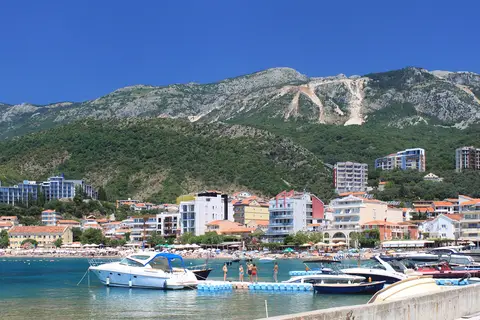
South of the bay, the Riviera begins. Budva is the country's best-known beach resort, loud in summer, with a small walled old town that was rebuilt stone by stone after the 1979 earthquake. A few miles farther on are Bečići and Rafailovići with their long pebble beaches, and the famous peninsula of Sveti Stefan, a fishing village that is now a luxury hotel and is mostly photographed from the outside. Bar has the largest port and one of the oldest olive trees in Europe, its age estimated at over 2,000 years. In the far south, almost at the Albanian border, Ulcinj is shaped by its Albanian population: minarets next to church towers, grilled fish instead of ćevapi, and, with Velika Plaža and the district of Štoj, a sandy beach of a good seven and a half miles (12 km) where kitesurfers are out in the fall.
Mountains, Canyons, and National Parks
Among the most impressive sights in Montenegro is the interior. Durmitor National Park around Žabljak is a UNESCO World Heritage Site, with glacial lakes like Black Lake and peaks above 2,500 meters. The Tara Canyon, up to 1,300 meters deep, is considered one of the deepest in Europe; rafting trips start in summer at the Đurđevića Tara Bridge. In Lovćen National Park, a road with 25 hairpin turns climbs up from Kotor, and at the top the poet-prince Petar II Petrović-Njegoš rests in his mausoleum. Lake Skadar on the Albanian border is the largest lake in the Balkans, with fields of water lilies, pelicans, and small wine villages like Virpazar. In the northeast you'll find Biogradska Gora, home to one of Europe's last primeval forests, and the Prokletije Mountains, still barely developed to this day.
Culture, Monasteries, and the Old Royal Capital
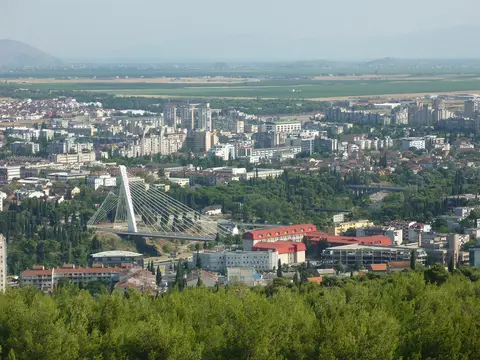
Montenegro's history is one of holding its own between Venice, the Ottoman Empire, and Austria. Cetinje, the former royal capital, feels almost like an open-air museum, with its 19th-century embassy villas and the monastery where a relic of John the Baptist is venerated. Ostrog Monastery, built into a rock face, draws pilgrims of all faiths, and many climb the last stretch barefoot. Podgorica, the capital, by contrast, is sober and youthful, with cafés along the Morača River, the Millennium Bridge, and remnants of the Ottoman old town of Stara Varoš. Independence is still recent: Montenegro only split from Serbia in 2006, by referendum. Since then it has used the euro, even though the country is not part of the eurozone.
Food and Drink Between Sea and Mountains
Mediterranean cuisine dominates on the coast: grilled squid, mussels from the bay, fish soup, and olive oil from Bar. In the mountains, the food is heartier. Kačamak is a porridge of cornmeal, potatoes, and young cheese that is stirred for a long time until it turns stringy. From the village of Njeguši come air-dried ham and a spicy hard cheese, best tried with a glass of Vranac, the full-bodied red wine of the region around Podgorica and Lake Skadar. Rakija, homemade from grapes or plums, is often served to finish a meal, and if you're a guest in a local home, you'll hardly get out of it without a Turkish-style coffee.
Getting Around Montenegro
Most Montenegro destinations are best reached by rental car. The coastal road is often jammed in summer, and mountain roads are narrow and winding but perfectly drivable. Long-distance buses connect all the larger towns, and the railway line from Bar through Podgorica toward Belgrade is considered one of the most spectacular routes in the Balkans, with hundreds of tunnels and bridges. If you only have a few days, it's popular to combine the Bay of Kotor with a side trip to Dubrovnik in Croatia, which lies only about an hour past the border.
Best Time to Visit Montenegro
The best time to visit Montenegro is May, June, September, and early October. Then the Adriatic water temperature is 68 to 75°F (20 to 24°C), the air a pleasant 72 to 81°F (22 to 27°C), and the old towns are noticeably emptier. In July and August, temperatures on the coast climb above 86°F (30°C), and Podgorica ranks among the hottest cities in the region. June through September is the time for hiking in Durmitor; in winter there is snow, and Žabljak becomes a small ski resort, while the coast sees mild, often rainy weather.