Bălți: The Capital of the North
Travel guide · editorialBălți is Moldova's second-largest city and the center of the agricultural north. A trip to Bălți reveals a city off the tourist track, with Soviet architecture, Orthodox churches, a lively market, and wide fields stretching out around it.
The City
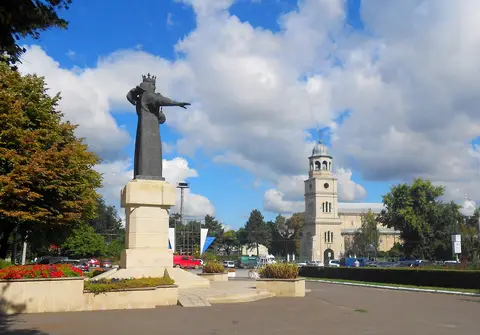
The name means "swamps" in Romanian – the city grew up around wetlands on the Răut River. In the 19th century, Bălți developed into a trading center for grain, livestock, and sugar, and a large Jewish community shaped city life until World War II. The Constantine and Helena Cathedral in the center, the Vasile Alecsandri Theater, and the Alecu Russo State University are among the most important buildings. The main square, Piața Independenței, and the city park with its lake invite you to stroll. The city is predominantly Russian-speaking, but many residents also speak Romanian and Ukrainian.
Soviet-era apartment-block neighborhoods stretch out around the center, with small markets and cafés tucked in between. The Central Market is one of the largest in the country and is well worth a visit for fresh fruit, vegetables, and honey from the villages. In summer, concerts and city festivals take place on the main square.
Surroundings and Day Trips
Northern Moldova is a steppe landscape of sunflower, sugar beet, and wheat fields. Day trips lead to the rocky banks of the Dniester near Soroca, with its round 15th-century fortress, a good hour to the northeast. The monasteries of Japca and Rudi lie on the Dniester. Small wineries and orchards produce apples, plums, and walnuts.
Bălți is also an industrial hub: sugar factories, grain mills, and food-processing plants handle the harvest of the north. The region is considered the country's breadbasket, and in late summer the sunflower fields glow all the way to the horizon.
Food, Getting There, and Best Time to Visit
On the table you'll find mămăligă, sarmale, plăcintă, borscht, and pelmeni, served with compote and homemade country wine. Bălți can be reached from Chișinău in about two hours by bus or train, and a road continues on to the Romanian border. The best time to visit is May through September, when the fields are in bloom.