Guerrero: Acapulco, Taxco, and the Pacific Coast
Travel guide · editorialA vacation in Guerrero usually means the Pacific: In the 1950s and '60s, Acapulco was Hollywood's glamorous beach resort, and Zihuatanejo and Ixtapa remain popular coastal destinations today. Inland lies Taxco, one of Mexico's most beautiful silver towns. The state also struggles with crime, however, so travelers should check the current situation before they go.
Coast and Mountains
Guerrero stretches for around 500 kilometers (about 310 miles) along the Pacific, from the Costa Grande in the northwest to the Costa Chica in the southeast. Behind the coast, the Sierra Madre del Sur rises steeply, cut by canyons and by the valley of the Río Balsas, which flows through the north. The capital, Chilpancingo, sits in a mountain valley at about 1,250 meters (4,100 feet), while Taxco in the north lies at around 1,800 meters (5,900 feet). The climate ranges from hot and humid on the coast to temperate at higher elevations.
Acapulco and the Beaches
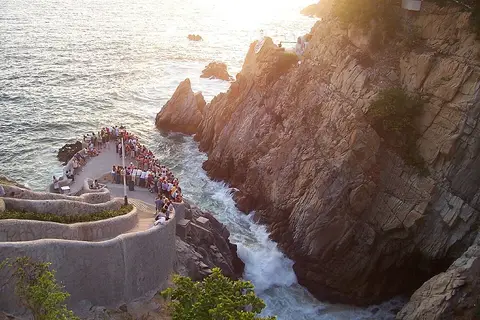
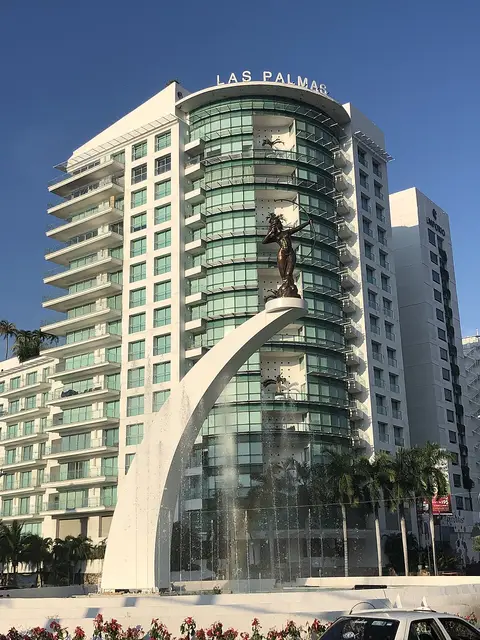
Acapulco Bay is one of the best-known in Mexico. The cliff divers of La Quebrada are famous; since the 1930s they have plunged from a height of about 35 meters (115 feet) into a narrow rocky channel. Fort San Diego recalls the days when the Manila galleon docked here and brought goods from Asia to New Spain. Puerto Marqués and Playa Revolcadero to the south are quieter beaches. In October 2023, Hurricane Otis devastated the city, and Hurricane John followed a year later; the rebuilding of hotels and infrastructure is well advanced but not yet complete everywhere.
Zihuatanejo, Ixtapa, and the Costa Grande
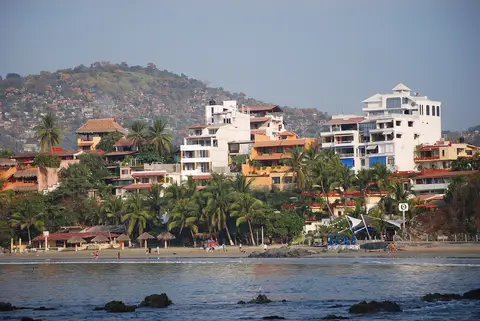
About 240 kilometers (150 miles) to the northwest lies the twin destination of Ixtapa-Zihuatanejo. Zihuatanejo is an organically grown fishing town with a waterfront promenade, small coves such as La Ropa and Las Gatas, and fish markets in the morning. Ixtapa was planned in the 1970s as a resort with large hotels; offshore lies Isla Ixtapa, with good snorkeling. Farther north, the waves at Troncones and La Saladita attract surfers. This region is among the Guerrero destinations considered relatively calm.
Taxco and the Interior
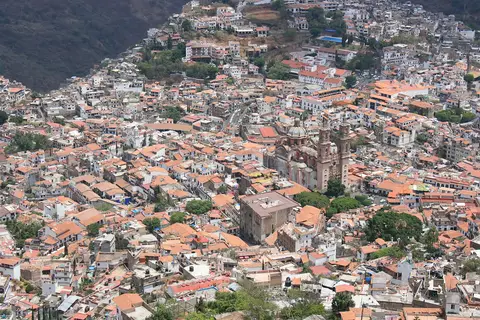
Taxco is one of the top sights in Guerrero. White houses with red tile roofs cling to steep hillsides, and in the middle rises the pink Baroque church of Santa Prisca, funded in the 18th century by the silver baron José de la Borda. Since the 1930s, when the American William Spratling trained silversmiths here, Taxco has been a center of silver craftsmanship; hundreds of workshops and shops sell jewelry. Nearby, the Cacahuamilpa Caves, a national park with enormous dripstone chambers, are a draw. Iguala is historically significant: the Plan of Iguala was proclaimed here in 1821 and the Mexican flag was designed.
Culture, Cuisine, and Safety
The mountains are home to the Nahua, Mixtec, Tlapanec, and Amuzgo peoples, whose handicrafts, such as lacquerwork from Olinalá and painted amate bark paintings, are known throughout the country. Culinarily, Guerrero is known for pozole verde, traditionally eaten on Thursdays in many places, for pescado a la talla, grilled with chili paste, and for Acapulco-style ceviche with tomato. Keep in mind that parts of the state, especially in the interior, are affected by violence from criminal groups. Several governments advise against travel to certain areas; exceptions sometimes apply to the tourist centers and the direct routes to them. You should check current travel advisories before every trip.
Getting There and Best Time to Visit
Acapulco and Zihuatanejo have their own airports with connections to Mexico City and, seasonally, to North America. The Autopista del Sol connects Mexico City with Acapulco via Cuernavaca and Chilpancingo in about four to five hours; Taxco lies near the border with Morelos. Long-distance buses are comfortable. The best time to visit is between November and April, when it is dry and sunny. June through October is the rainy season, when tropical storms can also occur. Easter and the Christmas holidays are peak season for Mexican vacationers, when hotels in Acapulco and Zihuatanejo are often fully booked and prices are significantly higher. If you want peace and quiet, travel in January or February, when the sea is warm and the beaches are emptier.