Yamanashi Prefecture: Fuji's Lakes, Wine, and Fruit
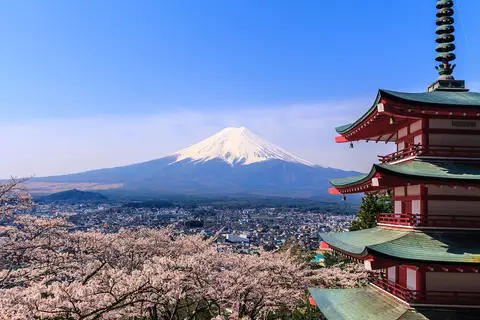
Travel guide · editorialThe classic postcard view of Mount Fuji with a pagoda and cherry blossoms comes from Yamanashi. A vacation in Yamanashi Prefecture means lakes at the foot of the volcano, vineyards in the Kōfu Basin, orchards, and hikes in the Southern Alps. Despite its proximity to Tokyo – about two hours by bus or train – the prefecture has remained rural and quiet.
Landscape and Location
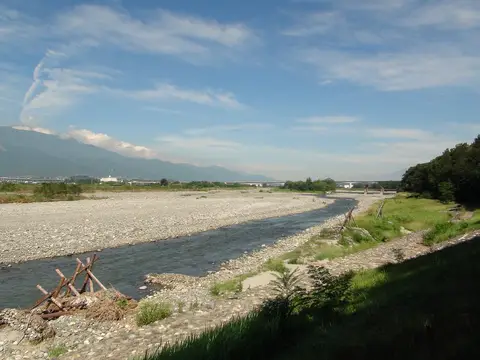
Yamanashi is surrounded on all sides by mountains. To the south rises Mount Fuji, which the prefecture shares with Shizuoka; to the west are the Southern Alps with Mount Kita, Japan's second-highest peak. To the north lie the Yatsugatake Mountains and the Chichibu Mountains. At the center is the Kōfu Basin with Kōfu, Kai, Fuefuki, and Showa, where summers are hot and winters dry. At the northern foot of Mount Fuji, the Fuji Five Lakes are spread out, including Kawaguchi, Yamanaka, and Motosu.
Sights in Yamanashi Prefecture
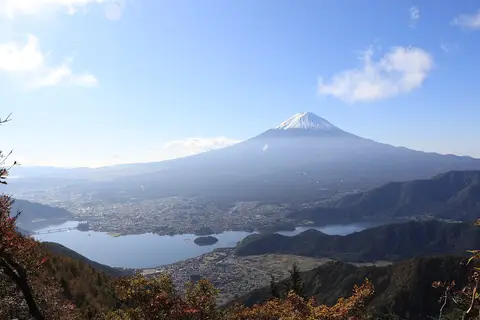
The Chūreitō Pagoda at Arakura Sengen Shrine in Fujiyoshida is reached by about 400 steps and offers the famous view of Mount Fuji, the pagoda, and the town. At Lake Kawaguchi, the heart of the Fujikawaguchiko area, lakeside paths, the Itchiku Kubota Art Museum with its elaborately dyed kimonos, and a ropeway up to the Tenjō lookout mountain invite you to linger. Oshino Hakkai is a village with eight clear spring-fed ponds, fed by the volcano's meltwater. On the western shore, the Aokigahara Forest stretches across hardened lava, with ice caves and wind caves. The view of Mount Fuji from Lake Motosu long graced the 1,000-yen bill. Fuji-Q Highland in Fujiyoshida is known for its extreme roller coasters.
Kōfu and the Basin
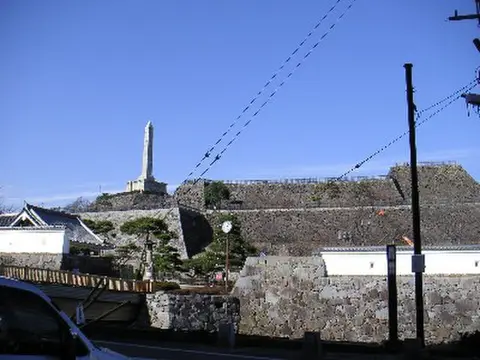
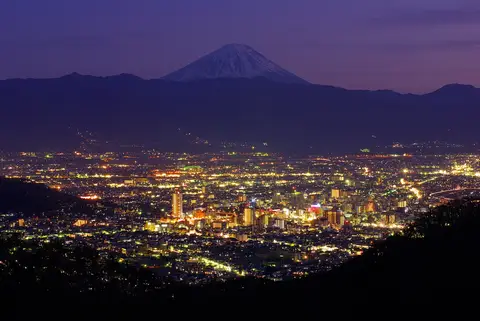
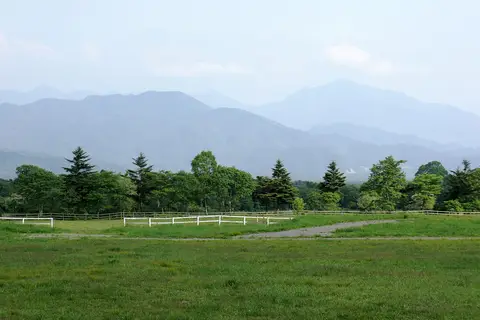
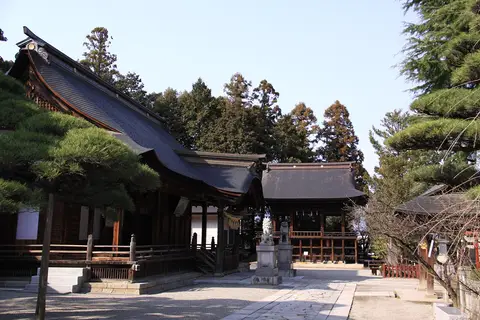
Kōfu was the power base of the warlord Takeda Shingen, who ranked among Japan's most feared commanders in the 16th century. Takeda Shrine stands on the grounds of his former residence, and in April the Shingen Festival sends a large samurai parade through the city. The ruins of Maizuru Castle lie right next to the train station. North of the city, the Shōsenkyō Gorge winds past granite cliffs and waterfalls. Hokuto, at the foot of the Yatsugatake, is an area of whisky distilleries, horse farms, and mountain springs; in Kiyosato, families come for a summer retreat. Minobu in the south is home to Kuon-ji, the head temple of the Nichiren school, with a magnificent weeping cherry tree. Kōfu is also a center of gemstone cutting, since rock crystal was once mined in the mountains; a museum displays jewelry and crystals. On the edge of the basin lies Isawa Onsen, whose hotels look out over vineyards and peach orchards, and the Fruit Park Fuefukigawa on the hillside is famous for its nighttime view over the sea of lights.
Food and Drink
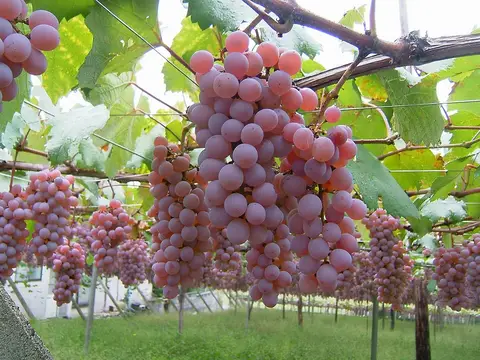
Yamanashi is Japan's leading wine region. The white grape variety Koshu has been grown around Katsunuma for centuries and yields light, fresh wines that pair well with Japanese food. Numerous wineries open their cellars for tastings. The prefecture is also Japan's largest producer of peaches and grapes; in spring, peach blossoms turn the basin around Fuefuki pink. Hōtō, a thick stew of wide noodles, pumpkin, and miso, is the signature dish, especially at Lake Kawaguchi. Shingen mochi, rice cakes with soybean flour and brown sugar syrup, is a popular souvenir. Yoshida udon from Fujiyoshida are especially firm and hearty.
Climbing Mount Fuji and Hiking
The most popular ascent route up Mount Fuji, the Yoshida Trail, begins at the Fifth Station in Yamanashi. Since 2024, a visitor cap with a fee and online reservation has applied on this route, and access is restricted in the afternoon to prevent overnight climbs without a hut booking. The climbing season runs from July to early September. Hikers will find more rewarding routes with views of Mount Fuji in the Southern Alps and on Mount Mitsutoge and Mount Daibosatsu.
Getting There and Best Time to Visit
Express buses run from Shinjuku to Kawaguchiko in about two hours, and there is also the Fuji Excursion, a direct train. You can reach Kōfu on the Azusa or Kaiji Express in about an hour and a half. There is no airport; the future Chūō Shinkansen maglev line is slated to have a station in Kōfu. The clear months from October to February are considered the best time for views of Mount Fuji. In April, cherry trees bloom at Lake Kawaguchi and peach trees in the basin, and in autumn the Momiji Corridor on the north shore glows with color. In summer, the mountain often disappears into clouds.