Fukui Prefecture: Dinosaurs, Zen and Crab
Travel guide · editorialA vacation in Fukui Prefecture was long considered an insider tip, but since the Hokuriku Shinkansen was extended to Tsuruga in 2024, the prefecture has moved much closer to Tokyo. It offers one of Japan's most important Zen monasteries, basalt cliffs by the sea, the winter Echizen-gani crab and one of the world's most significant dinosaur museums.
Landscape and Location
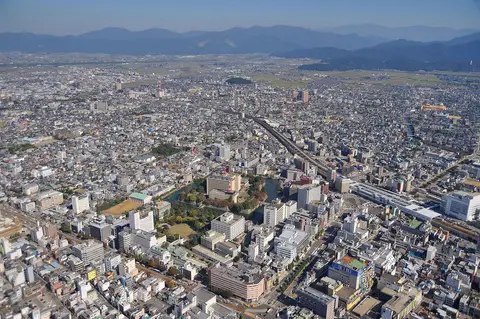
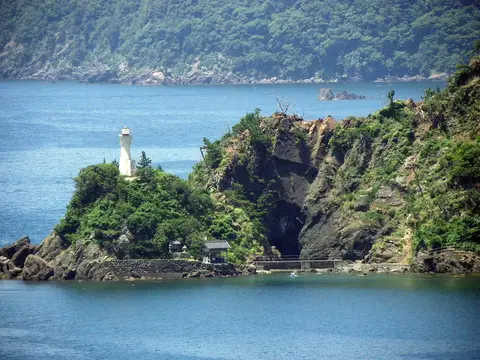
Fukui lies on the Sea of Japan and is divided into two parts. The north, Reihoku, comprises the Fukui Plain with Fukui, Sakai, Awara, Sabae and Echizen as well as the mountainous area around Ono and Katsuyama. The south, Reinan, with Tsuruga and Obama, is a ria coast with sheltered bays that is closely tied culturally to Kyoto. At Cape Echizen, cliffs drop steeply into the sea, while Wakasa Bay is lined with pine-fringed beaches.
Sights in Fukui Prefecture
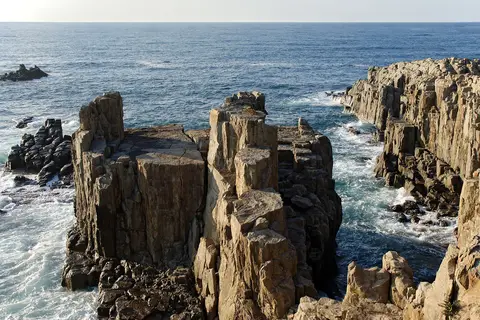
Eihei-ji was founded in 1244 by Dōgen and is the head temple of the Sōtō Zen school. In a cedar forest, covered corridors link around 70 buildings; hundreds of monks live and train here, and visitors can take part in zazen meditation and stay overnight. Tōjinbō near Sakai consists of basalt columns up to 25 meters (82 feet) high rising above the sea, which you can view from a boat or from the cliff edge. In Katsuyama, the Dinosaur Museum displays skeletons in a silver domed building; numerous new species have been found in the surrounding area. The Ichijōdani ruins near Fukui reveal an entire 16th-century castle town complete with gardens. Maruoka Castle in Sakai has one of the twelve original keeps still standing in Japan.
Towns and Crafts
Sabae produces more than 90 percent of Japan's eyeglass frames, and a museum tells the story. In Echizen, paper, knives and ceramics are made using centuries-old techniques; papermaking is one of the country's oldest crafts. Obama was the starting point of the "Mackerel Road," along which salted fish was carried to Kyoto, and it has many old temples. Tsuruga has a harbor with brick warehouses and commemorates the Jewish refugees who arrived here in 1940 with visas issued by the diplomat Chiune Sugihara. Awara Onsen is the prefecture's best-known spa town. Ōno is often called the castle in the sky because its castle appears to float above a sea of clouds on autumn mornings, and it maintains a morning market with a tradition going back more than 400 years.
Food and Drink
Echizen-gani, the male snow crab, is the only crab in Japan traditionally delivered to the imperial court; the season begins on November 6. Sauce katsudon, a thin cutlet with Worcestershire sauce over rice, is Fukui's everyday dish. Echizen oroshi soba is served with grated radish. Grilled mackerel comes from Obama, and satoimo taro from the mountains around Ono. Fukui is also known for Koshihikari rice, since this variety was developed here.
Getting There and Best Time to Visit
Since March 2024, the Hokuriku Shinkansen has stopped at Awara-Onsen, Fukui, Echizen-Takefu and Tsuruga; Tokyo is about three hours away, while Osaka and Kyoto can be reached by express train with a transfer at Tsuruga. There is no airport of its own. The best times to visit are April, when cherry blossoms bloom along the Asuwa River and at Maruoka Castle, and autumn. November through March is crab season, and the snow-covered buildings of Eihei-ji seem especially tranquil.