Discover Miyazaki: Palms, Myths, and Chicken Nanban
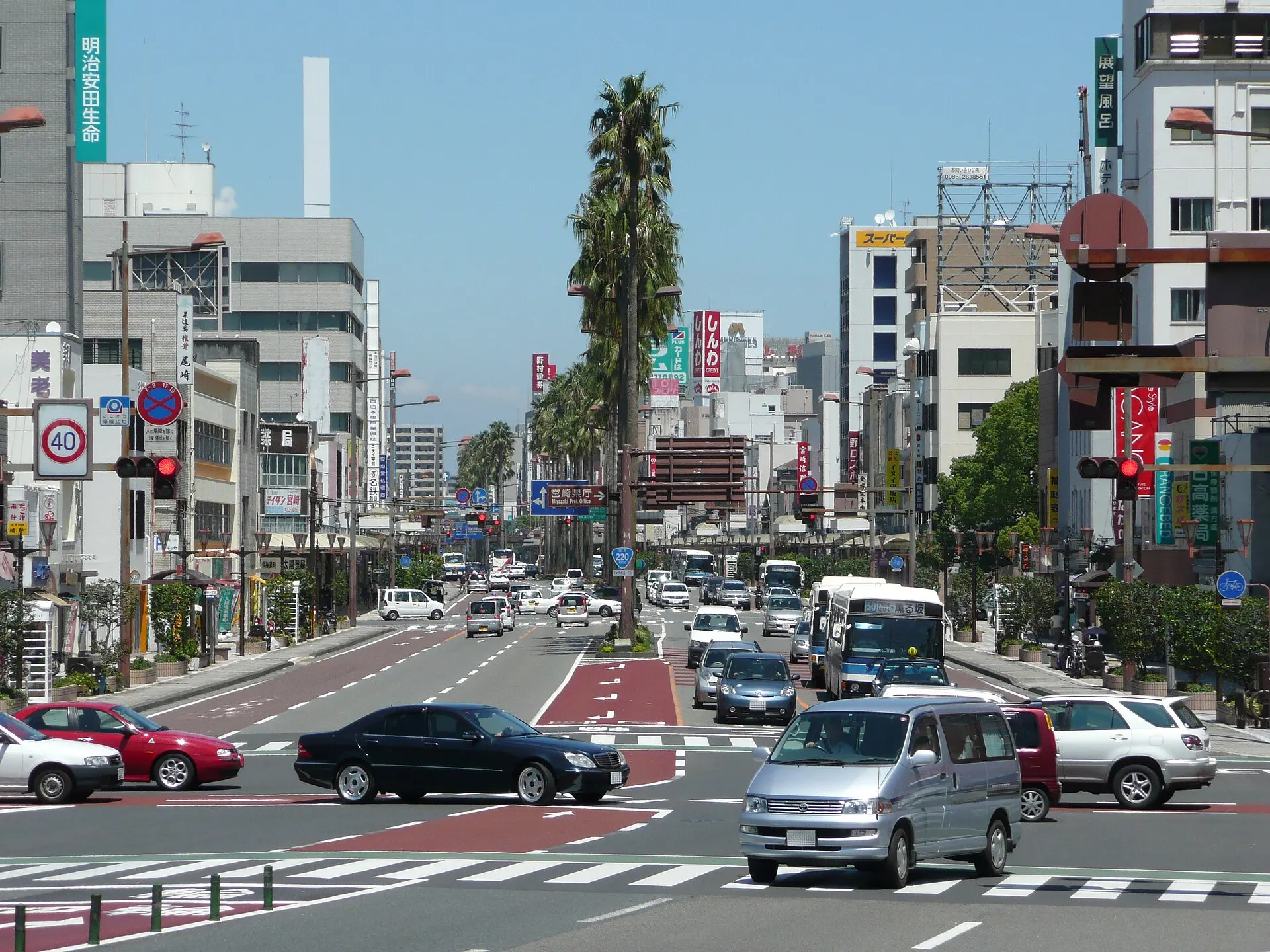
Travel guide · editorialPalm trees along the waterfront road, surfers in the morning light, and a climate that stays mild even in winter: in the 1960s, Miyazaki was Japan's most popular honeymoon destination. Today, a trip to Miyazaki is worth it for the Nichinan Coast, the myths surrounding the first emperor, and a cuisine that celebrates chicken in its own way.
Myths, Shrines, and Haniwa
The area around Miyazaki, the old Hyūga, is considered the cradle of the imperial dynasty in Japanese mythology. Miyazaki-jingū Shrine, north of downtown, is dedicated to the legendary first emperor, Jimmu, and sits in a quiet grove. In Heiwadai Park stands the 37-meter-high Peace Tower, built in 1940, surrounded by a garden with hundreds of replicas of haniwa clay figures from the Kofun period. If you want to see more, head to the Saitobaru Burial Mounds in the neighboring town of Saito, which are surrounded by rapeseed and cherry blossoms in spring.
Sights in Miyazaki: Aoshima and the Nichinan Coast
The small island of Aoshima is covered in subtropical forest and can be reached on foot via a causeway; at its center is a shrine that couples visit for luck in love. All around, the "Devil's Washboard" rises from the water, wave-shaped ridges of rock that stand out especially clearly at low tide. Farther south, Udo-jingū Shrine is built into a cave above the surf; visitors try to toss clay luck balls into a hollow on a turtle-shaped rock. Along the way you'll pass Sun Messe Nichinan, a park with replicas of the moai statues that were erected with the permission of Easter Island.
City Life Along the Ōyodo River
Downtown is compact: palm-lined Tachibana-dōri runs as the main axis from the train station to the Ōyodo River, whose banks are lined with walking paths and gardens. In the cultural park north of the center, the Prefectural Art Museum shows works by regional painters, and right next to it is the Museum of Nature and History. On the coast north of the city, a long pine forest stretches near Hitotsuba, home to the Phoenix Seagaia resort, and on weekends families gather on the beach for barbecues.
Eating in Miyazaki
Chicken nanban, fried chicken in a sweet-and-sour marinade with tartar sauce, originated in the prefecture and appears on almost every menu. In the izakaya of the Nishitachi nightlife district, jidori chicken is grilled over charcoal until it is smoky and charred. In summer, hiyajiru, a cold miso soup with fish, tofu, and cucumber served over rice, is a refreshing treat. Miyazaki is also famous for its mangoes, which are sold as a premium product under the name Taiyō no Tamago, "Egg of the Sun," at eye-watering prices.
Getting Around and Best Time to Visit
Miyazaki Airport (KMI) is only about ten minutes by train from the main station, and the flight to Tokyo takes about an hour and a half. By rail, Miyazaki can be reached by express trains from Kagoshima or Ōita; there is no Shinkansen. A rental car is recommended for the coast, although the Nichinan Line does run as far as Aoshima. The best time to visit is spring; in February, professional baseball teams set up their training camps here. In summer, the surf beaches near Kisakihama beckon, and in late summer typhoons are a risk. A day trip leads to Takachiho Gorge in the north of the prefecture.